US Stocks and Crypto Assets—Why Are They Linked, and Why Do They Sometimes Decouple?
This lesson explores common correlations and periodic divergences between the Nasdaq, interest rates, the US dollar, and BTC from the perspective of risk appetite and macroeconomic transmission. It explains how to map observations to different tools and clarifies the roles of Gate TradFi CFD and Gate Stocks in expressing macro views.
When you open a market software, you often notice an interesting phenomenon: BTC and the Nasdaq 100 Index frequently show similar price movements. When market sentiment is optimistic, both may rise together; when risk appetite declines, both may pull back at the same time. However, this relationship is not constant.
Sometimes, BTC will move independently due to halving events, ETF capital flows, or regulatory policies; other times, the Nasdaq Index is influenced by corporate earnings reports or changes in interest rates, while BTC remains relatively stable. Therefore, BTC and US stocks are connected, but it's not a simple synchronized relationship.
This lesson focuses on three questions:
-
Why do BTC and Nasdaq move together?
-
Under what circumstances might they decouple?
-
How should we understand the investment roles of different market instruments?
1. Nasdaq Index: A Key Reference for Global Risk Appetite
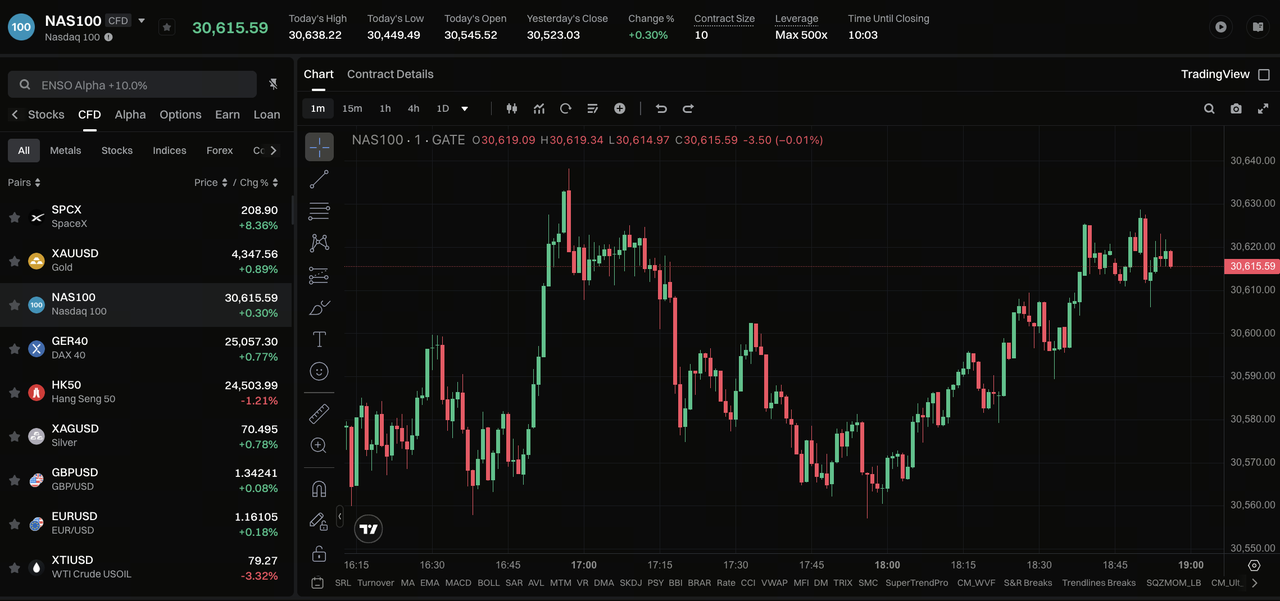 Source: Gate CFD page
The Nasdaq 100 Index is composed of major US tech companies and is often viewed as an important indicator of global risk appetite. When market capital is willing to take on higher risk, tech stocks are typically favored, and high-volatility assets like BTC may benefit at the same time.
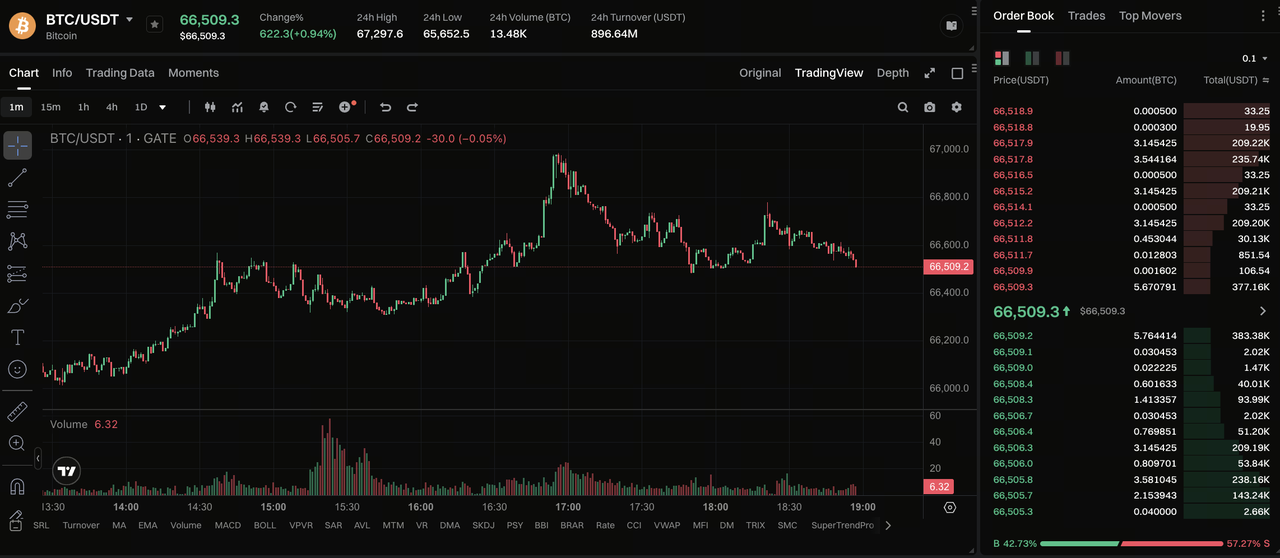 Source: Gate Market page
Conversely, when the market starts worrying about economic growth, tightening liquidity, or rising interest rates, risk assets tend to come under pressure, and both BTC and Nasdaq may decline together.
Therefore, market software often tracks BTC and the Nasdaq Index side by side. The Nasdaq reflects earnings and growth expectations of US tech companies, while BTC has its own supply mechanism, on-chain ecosystem, and market narrative.
They are connected, but should not be regarded as identical investment targets.
2. Why Do Interest Rate Changes Affect Both BTC and US Stocks?
Interest rates are a major factor influencing global risk assets. When rates rise, capital tends to become more cautious, growth asset valuations may be suppressed, and both tech stocks and BTC can face adjustment pressure. Conversely, when the market anticipates rate cuts or improved liquidity conditions, risk assets generally perform better.
However, their reaction speeds to interest rate changes are not exactly the same. BTC trades 24/7 and can respond to market news at any time; US stocks only trade during market hours, so there may be brief differences in price movements.
This timing gap is a key reason why BTC and US stocks often show "sequential reactions."
3. The US Dollar and Global Liquidity
Besides interest rates, the movement of the US dollar is also worth watching.
Generally:
-
When the dollar strengthens, global risk assets come under pressure;
-
When the dollar weakens, risk appetite may increase;
-
When global liquidity improves, growth assets tend to attract more capital.
Thus, when observing BTC and Nasdaq, attention is often also given to:
-
The US Dollar Index (DXY);
-
US Treasury yields;
-
S&P 500 implied volatility index;
-
Changes in global liquidity.
These indicators do not directly determine market ups or downs but help understand shifts in market sentiment.
4. Why Do They Sometimes Rise Together—and Sometimes Decouple?
The correlation between BTC and Nasdaq is not fixed. During periods of ample liquidity and optimistic sentiment, they often move closely together.
However, when the following factors dominate the market, correlation may decrease significantly:
-
BTC halving cycles;
-
Changes in crypto ETF capital flows;
-
Adjustments in crypto regulatory policies;
-
Shifts in on-chain ecosystem and market hotspots;
-
Exchange risk events.
At such times, even if Nasdaq remains strong, BTC may follow a completely different trend.
Therefore, linkage should be seen as a market state—not as a permanent rule.
5. Same Viewpoints—Different Products Play Different Roles
Within the Gate ecosystem, even if you are bullish on risk assets, different products have distinct roles.
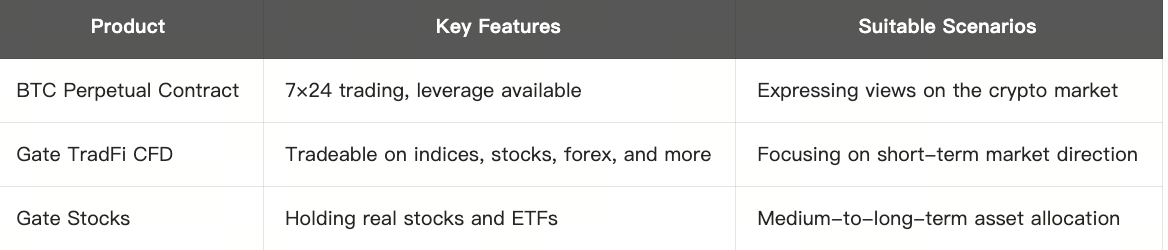
Linkage can be observed, but risks should not be simply combined
Although these products may all be related to Nasdaq trends, their trading mechanisms, risk structures, and fund management methods are not the same. Therefore, you should not treat different products as the same asset class just because you are optimistic about technology growth.
Market linkage helps to understand the relationships between assets. However, in actual investment, it is more important to identify whether risks are being repeatedly exposed.
For example:
-
Holding a technology ETF;
-
Going long on Nasdaq CFD at the same time;
-
Also holding BTC or ETH;
Although these appear to be different assets, when market risk appetite decreases, these assets may all decline simultaneously. Therefore, when allocating across markets, fund division and risk management are often more important than simply predicting market trends.
Summary of this lesson
There is a connection between BTC and Nasdaq, but this connection is not fixed. Risk appetite, interest rates, USD trends, and global liquidity all affect both types of assets; meanwhile, BTC also has its own independent factors such as halving cycles, on-chain ecosystem, and regulatory environment.
Thus, linkage is a market phenomenon, not a long-term rule. Through Gate's diverse product lineup, BTC Perpetuals, TradFi CFDs, and Gate Stocks can meet different investment needs, but their trading mechanisms, risk structures, and fund management methods are not the same. Understanding these differences is more important than merely focusing on the degree of correlation.
The next lesson will further discuss risk management in cross-market investments: When USDT is simultaneously involved in spot, derivatives, Stocks, and CFDs, how should funds be allocated, and why risk isolation is more important than seeking the next upward opportunity.
Lesson 1:Why Do Securities Markets Have Their Own Time Rules?
Lesson 2:Do Buying Stocks and Buying ETFs Solve the Same Problem?
Lesson 3:Why "Buying US Stocks with USDT" Is Not the Same Product
Lesson 4:Why Do Holdings Change Even When No Trades Occur?
Lesson 5:US Stocks and Crypto Assets—Why Are They Linked, and Why Do They Sometimes Decouple?
Lesson 6:Where Does the Real Risk Lie When Participating Across Markets?
Related Courses

Tokenized Stocks: The Real Path for Bringing TradFi Assets On-Chain and the Boundaries of Risk

Reconstructing the TradFi System: How Blockchain Is Transforming Financial Infrastructure

TradFi Asset Migration On-Chain: From Traditional Financial Products to Crypto Trading Instruments

TradFi Risk Pricing and Derivatives Logic: How Traditional Finance Is Reborn in the Crypto Market

Derivatives Market Structure Analysis: Capital Flows and Risk Pricing Mechanisms