Gateway to Learning
Learn crypto through the simplest words.
Featured Courses
More
Intermediate
The Rise of Crypto Payments: How On-Chain Finance Enters Daily Life
Over more than a decade of blockchain evolving from concept to reality, crypto payments have become a crucial bridge connecting the digital world with the real economy. This course, "The Rise of Crypto Payments: How On-Chain Finance Enters Everyday Life", aims to guide you, starting from an investment perspective, to understand how cryptocurrencies are transforming from assets into currencies. They are no longer merely speculative tools in financial markets but are becoming the new infrastructure reshaping the global payment system. Through a blend of technology, regulatory frameworks, and real-world case studies, we explore why payments represent the most natural—and most transformative—entry point for the Web3 ecosystem.

Intermediate
A New Paradigm for On-Chain Identity_ DIDs, Verifiable Credentials, and the Reconstruction of Web3 Trust
In the digital world, "identity“ has long been treated merely as a login tool, while the power structures and trust mechanisms behind it were rarely examined. As Web3, decentralized finance, and on-chain governance continue to evolve, identity is no longer just a key for system access—it now carries credit, permissions, and value distribution. This course starts from that fundamental shift and guides you to rethink the evolving role of identity in digital society, exploring how decentralized identity becomes a critical foundation for rebuilding trust in Web3.

Intermediate
AI Agents and Blockchain Applications: Fundamental Concepts and Application Guide
This course will systematically introduce the core concepts, operating mechanisms, and common classifications of AI Agents, and explain why they are becoming an important infrastructure in blockchain applications. Starting from the definition, capability boundaries, and technical components of Agents, the course will gradually extend to key scenarios such as on-chain wallets, smart contracts, data oracles, automated execution, and multi-agent collaboration.
Learn by Topic
Topics
Altcoins
Bitcoin
Blockchain
DeFi
Ethereum
Metaverse
NFT
Trading
Tutorial
Futures
Quant Trading
BRC-20
GameFi
DAO
Macro Trends
Wallets
Inscription
Technology
Meme
AI
SocialFi
DePin
StableCoin
Liquid Staking
Finance
RWA
Modular Blockchains
Zero-Knowledge Proof
Restaking
Crypto Tools
Airdrop
Gate Products
Security
Project Analysis
CryptoPulse
Research
TON Ecosystem
Layer 2
Solana
Payments
Mining
Hot Topics
P2P
Sui Ecosystem
Chain Abstraction
Options
Quick Reads
Video
Daily Report
Market Forecast
Trading Bots
ETF
Top Stories
XRP
Pi Network
In-Depth Research
Gate Ventures
Weekly Report
Investment News
Perpetual DEX
Web3 For Beginners
Tron
Base
Protocols
DApp
Crypto Card
BNB Chain
Gate Private Wealth Management
Platform Highlights
Brand Videos
Product Tutorial Videos
The Latest News
TradFi
Difficulty
Beginner
Intermediate
Advanced
Latest Courses
More
Intermediate
Gate TradFi: From Cryptocurrency to Global Multi-Asset Trading
As crypto and traditional finance increasingly converge, more users are turning their attention to traditional markets such as gold, forex, crude oil, and global indices. The goal of Gate TradFi is to enable users to conveniently access global multi-asset markets within a familiar crypto platform, while improving trading efficiency through a unified account and fund management system.
This course will start with the positioning of Gate TradFi, introducing its product structure, CFD mechanisms, multi-asset market logic, and real-world trading scenarios. It aims to help users build a foundational understanding of TradFi and grasp the future direction of multi-asset trading.

Intermediate
From Capital Efficiency to Multi-Scenario Yield: Gate Upgrades the GUSD Minting Mechanism
A Contract for Difference (CFD) allows participants to establish exposure to price movements across currencies, precious metals, equity indices, commodities, and individual stocks without holding the underlying assets, with profits and losses settled in cash. The course starts with "What is a CFD," clarifying its differences from spot and futures in common retail scenarios, then moves into the logic of buying and selling, sources of profit and loss, asset class coverage, margin and leverage mechanics and stop-out mechanisms, cost structures including spreads and overnight charges, as well as trading hours, liquidity, and cross-market correlations. It then focuses on risk management methods and discipline around major events, and uses case studies to walk through the complete process from analysis, order entry, stop-loss, to position closing and post-trade review. The concluding lesson consolidates opportunities, costs, risks, and target audiences, enabling learners to assess whether CFDs align with their own goals and constraints.
Intermediate
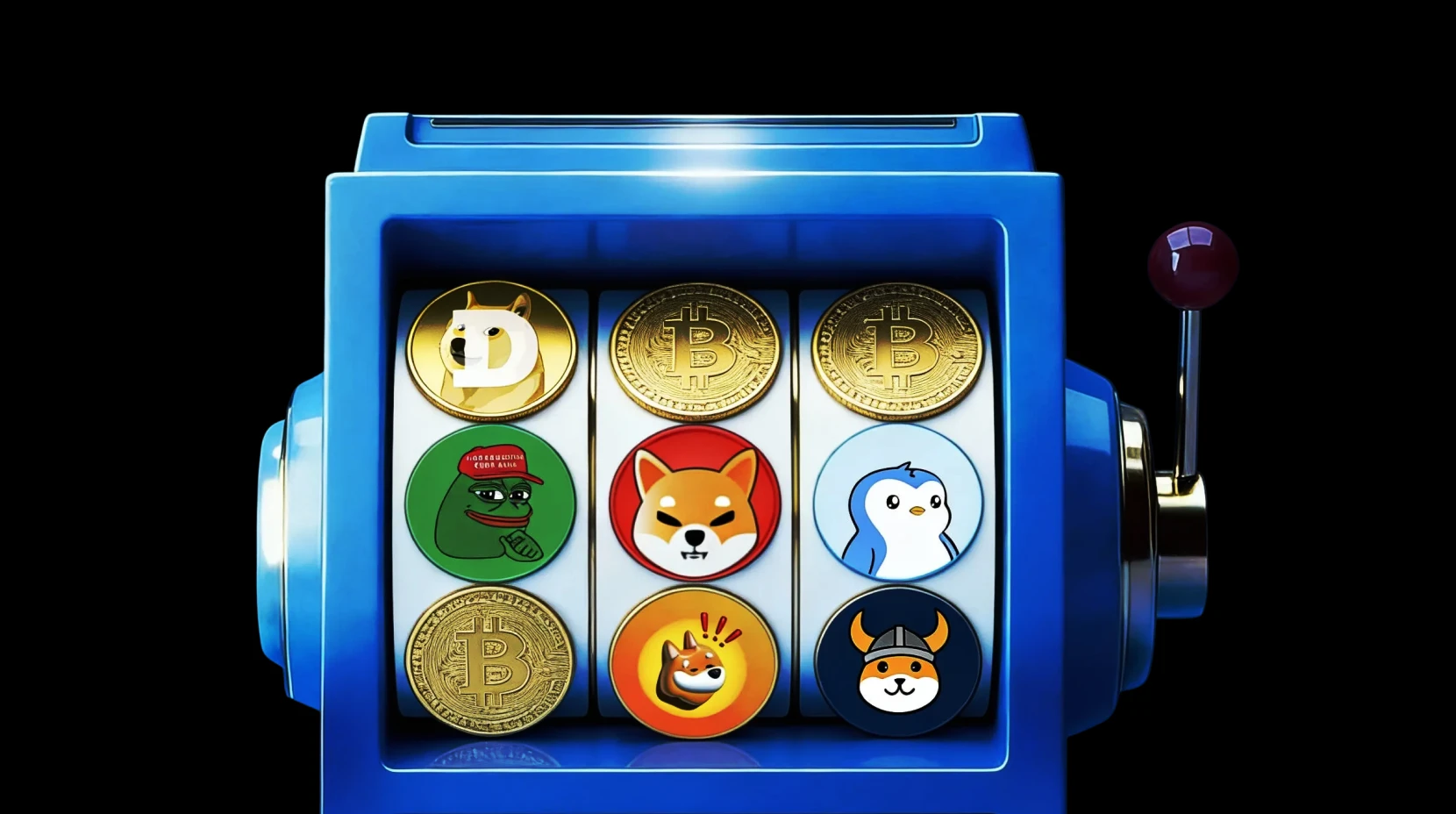
Understanding Meme Coins: Emotional Finance and Market Behavior
Meme coins have long been regarded as a market phenomenon characterized by high volatility and low barriers to entry. However, the dynamics behind them are not entirely random. This course systematically analyzes the operational mechanisms and risk boundaries of the meme coin market from three perspectives: emotional finance, on-chain behavior, and capital structure. The goal is to help learners develop a clearer framework for participating in the meme coin market.
Latest Articles
More
Beginner
What Is Awesome Oscillator (AO)?
The Awesome Oscillator (AO) is a momentum indicator that shows whether short-term market momentum is stronger or weaker than longer-term momentum. As crypto and other fast-moving markets have become more widely traded, AO has gained attention as a simple way to visualize shifts in buying and selling pressure. Understanding how it works helps traders interpret whether momentum is building, fading, or starting to change direction.
2026-06-01 05:43:21
Beginner
What Is Kinetiq (KNTQ)? A Comprehensive Analysis of Hyperliquid’s Liquid Staking Protocol and the kHYPE Ecosystem
Kinetiq (KNTQ) is a native liquid staking protocol built on the Hyperliquid ecosystem. Users who stake the network's native token, HYPE, receive a transferable and composable liquid staking receipt, kHYPE, enabling them to continuously earn validator staking rewards while deploying their capital across DeFi lending, market making, and perpetual margin scenarios. The protocol leverages StakeHub to automatically handle validator scoring and delegation rebalancing, and channels protocol revenue, validator commissions, and trading fees back to token holders via the governance token KNTQ and the staking receipt sKNTQ.
2026-06-01 10:24:29
Beginner
KNTQ Tokenomics: How to Drive Growth in the Kinetiq Liquid Staking Ecosystem?
KNTQ serves as the governance and value capture token for Kinetiq, the liquid staking protocol within the Hyperliquid ecosystem. With a maximum supply of 1 billion, the protocol channels revenue from diverse business lines—liquid staking (kHYPE), perpetual markets (Markets), and HIP-3 deployments (Launch)—back to token holders via buybacks, burns, and the sKNTQ distribution mechanism. This positions KNTQ as the core economic hub linking HYPE staking scale to protocol commercialization.
2026-06-01 10:24:57
Latest Research
More
Advanced
Gate Research: Macro Calendar Holds the Key to the Rebound’s Staying Power, Circle CPN Pushes Stablecoin Banking Further
Gate Research Daily Report: On April 10, Bitcoin remained in a wide trading range amid headline- and sentiment-driven noise, with price briefly returning toward the upper edge of its recent balance area; clearing higher resistance still likely requires a volume-backed breakout. Ethereum mostly tracked BTC, with a narrower range and uneven catch-up performance. Sentiment gauges still pointed to extreme fear, with only a partial recovery in risk appetite. Altcoins were dominated by structural rotation and thematic trading, so caution is warranted on leveraged products and thinly traded names that can see outsized swings. Among actively traded names, TNSR, CHILLGUY, and BLUR stood out on the day, mapping respectively to NFT infrastructure and the meme-sentiment complex. On the narrative side, stablecoins are moving faster into scalable institutional payment and clearing collaboration frameworks, while the traditional financial system shows expanding aggregate stablecoin and on-chain settlement activity alongside
2026-04-10 06:31:44
Advanced
Gate Research: Bitcoin Options Indicators Show No Sustained Bullish Outlook; DeFi Lending Protocol Seamless Announces Shutdown
Gate Research Daily Report: Over the past 24 hours, the crypto market has broadly strengthened. BTC broke above and held firm above $70,000 on increased volume, while ETH outperformed, with high-beta capital clearly rotating back in, though it is approaching overbought territory. SWARMS, JOE, and UNITAS all posted significant gains, driven respectively by the rising AI agent narrative, a rebound in the Avalanche ecosystem, and growing demand for stable payment solutions. Bitcoin’s rebound above $70,000 has boosted market sentiment, but options indicators do not yet signal sustained bullish expectations. Meanwhile, DeFi lending protocol Seamless has announced it will cease operations, with its official interface set to shut down on June 30. The U.S. FDIC has also proposed a new regulatory framework stating that stablecoins will not be eligible for deposit insurance.
2026-04-08 06:28:19
Advanced
Gate Institutional Weekly: Geopolitics and Macro in Dual Drive, Caution Ahead of FOMC and CPI (March 30–April 5, 2026)
Over the past week, markets saw heightened volatility driven by recurring geopolitical tensions and stronger than expected economic data. Shifting signals from the United States and Iran pushed oil prices higher, with WTI rising more than 7% on the week. Solid retail sales, ISM readings, and nonfarm payrolls supported a rebound in equities, while precious metals reached new highs. Crypto assets moved in line with improving risk appetite, with Bitcoin approaching the $70k resistance level. On the flow side, BTC ETFs recorded modest weekly net inflows of about $22.3 million, an improvement from the prior week but still limited, while ETH ETFs continued to see net outflows. Quarter end rebalancing and holiday effects led to quick reversals after initial inflows. On chain and trading activity concentrated in oil and precious metals, DEX structure reshuffled, and Meteora volumes increased significantly. Stablecoin supply remained elevated, with USDC edging lower while DAI and USDS absorbed incremental flows, and A
2026-04-08 10:29:09