TradFi
TradFi is the foundation of the modern financial system, encompassing regulated financial services such as banking, credit, savings, and foreign exchange. As a counterpart to crypto finance (DeFi and CeFi), TradFi is built around centralized institutions and emphasizes compliance, security, and stability, while facing growing challenges from new financial models in terms of efficiency and openness.
Articles (251)
Beginner
INTC vs AMD: What Are the Differences in Chip Architecture and Market Strategy?
INTC and AMD have long been among the most important CPU companies in the global semiconductor industry. Both companies operate across personal computers, data centers, and AI chip markets, but they differ clearly in chip architecture, manufacturing models, and market strategy.
2026-05-27 03:29:15
Beginner
How Does INTC Work? Intel’s Revenue Model and Chip Profit Structure Explained
INTC’s profit structure is built on its CPU business, data center chips, wafer manufacturing, and the enterprise computing market. Through its chip design and manufacturing capabilities, Intel has built a long-term industrial foundation and continues to influence the global semiconductor market.
2026-05-27 03:26:40
Beginner
What Is INTC? A Complete Guide to Intel Stock, Chip Business, and Market Ecosystem
INTC is the stock ticker used by Intel Corporation on the Nasdaq exchange. It represents Intel Corporation’s publicly listed shares. INTC is one of the key assets in the global semiconductor and technology sectors, with businesses spanning CPUs, data center chips, wafer manufacturing, AI computing power, and other areas.
2026-05-27 03:24:17
Beginner
How to Build a Global Investment Portfolio with Crypto Platforms: A Guide to US Stocks, ETFs, and Commodities Using Stablecoins
Global asset allocation through crypto platforms means using stablecoins such as USDT to trade US stocks, ETFs, gold, crude oil, and other traditional financial assets on the same platform. With the development of structures such as RWA (Real World Assets), tokenized stocks, and CFDs (Contracts for Difference), crypto platforms are gradually expanding from digital currency exchanges into gateways for global asset trading.
2026-05-26 08:10:19
Beginner
How to Buy US Stocks with USDT? The Complete Guide to Trading US Stocks, ETFs, and Nasdaq Assets Using Stablecoins
Compared with traditional overseas brokers, crypto platforms often deliver price exposure to assets like Apple, NVIDIA, Tesla, S&P 500, and NASDAQ ETFs through instruments such as CFDs (Contracts for Difference), tokenized stocks, and RWAs (Real World Assets), while also enabling settlement in stablecoins.
2026-05-26 08:07:07
Beginner
How to Buy US Stocks, Hong Kong Stocks, and Commodities on Crypto Platforms: How Stablecoins Connect Global Asset Markets
As global financial markets become increasingly digital, more investors are using crypto platforms to trade traditional financial assets such as US stocks, Hong Kong stocks, gold, crude oil, and ETFs. Compared with traditional brokerage accounts, crypto platforms often support direct settlement in stablecoins such as USDT, while providing exposure to global asset prices through structures such as CFDs, tokenized stocks, and RWAs, which stand for real world assets.
2026-05-26 08:03:13
Intermediate
What Is MetaMask USD? Understanding the Wallet-Native Stablecoin
MetaMask USD is a wallet-native stablecoin launched by MetaMask. It uses a 1:1 dollar peg and is backed by real world assets such as short-term U.S. Treasury bills. MUSD’s underlying issuance and settlement mechanisms are supported by Bridge and M0, and it can be used for onchain transfers, payments, swaps, and DeFi applications.
2026-05-25 05:56:03
Beginner
Understanding the Legal Structure of RWA: SPVs, Custody and Off-Chain Asset Mapping Mechanisms
The core of RWA, or Real World Assets, is not simply converting real-world assets into on-chain tokens. It is about building a trusted legal structure between the real world and the blockchain through SPVs, custodians, legal agreements and off-chain asset mapping mechanisms. In most RWA models, the on-chain token does not directly represent the asset itself. Instead, it corresponds to a form of income right, creditor claim or interest held through an SPV.
2026-05-22 09:19:18
Intermediate
What Are the Risks of RWA? Liquidity, Regulation and Asset Verification Challenges
RWA, or Real World Assets, uses blockchain to tokenize real-world assets such as U.S. Treasuries, real estate, gold and private credit, allowing these assets to be traded, settled and financed on-chain. But unlike native crypto assets, RWA does not rely on smart contracts alone. It also needs support from real-world legal structures, custody mechanisms and asset ownership verification systems, which makes its risk structure more complex.
2026-05-22 08:56:07
Intermediate
RWA vs ETF: Key Differences Between Asset Tokenization and Traditional Securities Products
RWA and ETF, or exchange-traded funds, can both provide investors with exposure to real-world assets, so they are often compared with each other. However, they differ significantly in underlying structure, trading mechanisms, ownership models and financial infrastructure. ETFs are essentially traditional securities products that rely on brokers, exchanges and centralized clearing systems. RWA, by contrast, maps real-world assets into on-chain tokens through blockchain, allowing assets to be traded, settled and distributed on-chain.
2026-05-22 08:53:44
Beginner
The Future of RWA: From Asset Tokenization to the Evolution of an On-Chain Financial Internet
RWA, or Real World Assets, is moving beyond simple asset tokenization and gradually becoming core infrastructure that connects traditional finance, or TradFi, with on-chain finance, or DeFi. As U.S. Treasuries, stablecoins, on-chain securities and private credit markets grow rapidly, more real-world assets are beginning to be issued, traded, settled and distributed through blockchain networks.
2026-05-22 08:50:57
Beginner
How Microsoft Powers AI and Data Centers Through Cloud Infrastructure
MSFT has become an important infrastructure platform for the global AI and data center industries. Through Azure cloud computing, AI GPU clusters, Copilot services, and enterprise AI platforms, Microsoft provides the core computing power needed for AI model training, cloud based inference, and enterprise automation.
2026-05-22 03:50:01
Beginner
How AI and Cloud Computing Influence MSFT Stock Performance
MSFT stock performance is increasingly tied to Azure cloud computing, AI infrastructure, and the enterprise software ecosystem. Microsoft is no longer just a traditional software company; it is also an important platform company in the global AI and data center industries.
2026-05-22 03:47:30
Beginner
What Is MSFT? A Complete Guide to Microsoft’s Business Model, AI Strategy, and Cloud Ecosystem
MSFT is the stock ticker for Microsoft Corporation, one of the world’s largest enterprise software, cloud computing, and AI infrastructure companies. Microsoft has built its business ecosystem around Windows, Office, Azure, LinkedIn, and AI services, and it holds a significant position in the global cloud computing and generative AI markets.
2026-05-22 03:44:36
Beginner
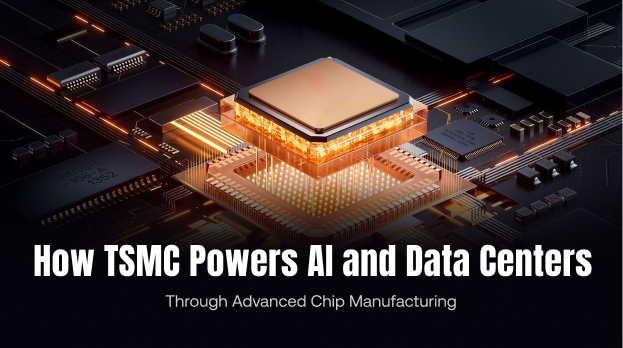
How TSMC Powers AI and Data Centers Through Advanced Chip Manufacturing
TSM has become a vital semiconductor infrastructure provider for the global AI and data center industries. Through advanced processes, CoWoS packaging, and high performance GPU manufacturing capabilities, TSMC provides core chip production support for AI model training, cloud computing platforms, and high performance computing systems
2026-05-22 01:24:45