What Are the Risks of RWA? Liquidity, Regulation and Asset Verification Challenges
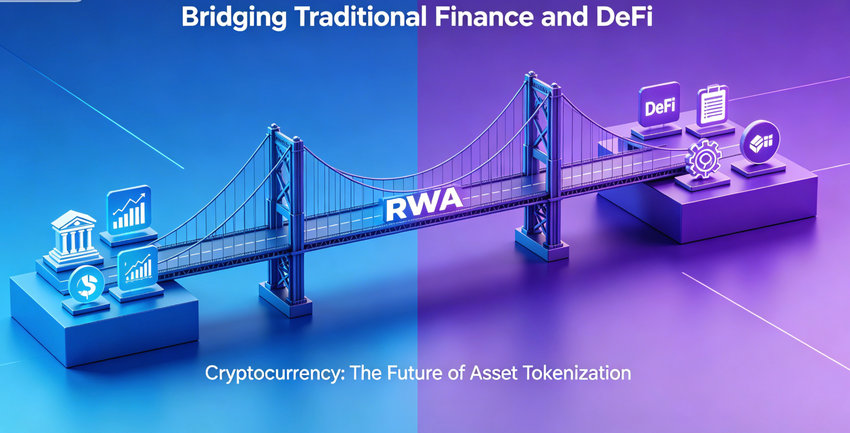
RWA, or Real World Assets, uses blockchain to tokenize real-world assets such as U.S. Treasuries, real estate, gold and private credit, allowing these assets to be traded, settled and financed on-chain. But unlike native crypto assets, RWA does not rely on smart contracts alone. It also needs support from real-world legal structures, custody mechanisms and asset ownership verification systems, which makes its risk structure more complex.As the market for real-world assets (RWA) grows rapidly, more traditional financial institutions and blockchain protocols are beginning to explore asset tokenization. From U.S. Treasuries and real estate to private credit and on-chain securities, RWA is gradually becoming an important bridge between traditional finance, or TradFi, and decentralized finance, or DeFi.
However, compared with native crypto assets, RWA does not operate solely on blockchain technology. Ownership verification, custody, income distribution and legal enforcement for real-world assets still depend on financial and legal systems in the real world.
As more institutions turn their attention to RWA, the market discussion has also shifted from “how assets can be brought on-chain” to “whether on-chain assets can truly be trusted.” As a result, liquidity, regulation and asset authenticity have become some of the most important sources of risk in today’s RWA market.
Why RWA Cannot Be Fully On-Chain Like Native Crypto Assets
For native crypto assets such as Bitcoin or ETH, ownership and transaction logic exist entirely within the blockchain. As long as users control their private keys, they can directly control their assets.
RWA is different. Real-world assets exist off-chain, and blockchain can only record the corresponding tokens. It cannot directly control physical properties, bonds or gold in the real world. This means RWA must rely on off-chain legal structures and custody systems to connect tokens with real-world assets.
For example, a real estate RWA project usually needs an SPV, or Special Purpose Vehicle, to hold the property, while the on-chain tokens correspond to part of the SPV’s rights and interests. If the legal structure in the real world fails, the on-chain tokens may still exist, but they may no longer truly correspond to the real-world asset.
Therefore, RWA is essentially a hybrid financial structure that combines “on-chain technology + off-chain law,” rather than a fully on-chain asset system.
Why Liquidity Remains One of RWA’s Biggest Problems
Although asset tokenization is often described as a way to improve liquidity, the reality is that most RWA assets still lack mature on-chain trading markets.
Traditional financial assets already differ widely in liquidity. For example, U.S. Treasuries have global liquidity, while assets such as real estate, private credit and art naturally lack active trading markets. Even if these assets are converted into on-chain tokens, their underlying liquidity problems do not automatically disappear.
In addition, many RWA projects are subject to compliance restrictions. For example, some tokenized securities can only be held by qualified investors, which limits the number of participants in the secondary market. While these restrictions may satisfy regulatory requirements, they can further reduce market trading activity.
For DeFi, insufficient liquidity also affects an asset’s ability to serve as collateral. If an asset lacks an effective market pricing mechanism, its risk in lending protocols increases significantly.
Therefore, “an asset can be brought on-chain” does not mean “the asset must have liquidity.” This is one of the most practical problems facing the RWA market today.
Why Asset Authenticity Is a Core Risk in RWA
The value foundation of RWA comes from real-world assets, so whether off-chain assets truly exist is one of the market’s biggest concerns.
Blockchain can ensure that on-chain token transaction records cannot be tampered with, but it cannot automatically verify whether real-world assets actually exist. For example, whether a gold RWA really has the corresponding gold reserves, or whether a bond RWA truly holds the corresponding bonds, still depends on real-world audit and custody systems.
If the size of off-chain assets does not match the number of tokens issued, the entire RWA model may lose its value support. Historically, some stablecoin and asset reserve projects have triggered market concerns because of insufficient reserve transparency.
For this reason, more RWA projects are introducing third-party audits, Proof of Reserve mechanisms and off-chain information disclosure systems in an effort to improve asset transparency and market trust.
Even so, users still need to trust real-world custodians and audit institutions. This is fundamentally different from crypto assets that rely entirely on code to operate.
Why Custody Risk Cannot Be Ignored
Because blockchain cannot directly hold real-world assets, custodians play an important role in RWA.
Custodians are usually responsible for asset safekeeping, reserve verification, income distribution and default liquidation. For example, in on-chain gold projects, physical gold is often held by professional vaults. In U.S. Treasury RWA projects, the related bonds may be held through bank or brokerage accounts.
But this also means that RWA inevitably reintroduces centralized risk. If a custodian runs into operational problems, legal disputes or management failures, on-chain token holders may not be able to redeem their assets smoothly.
In addition, custody laws and investor protection mechanisms differ across countries. For cross-border RWA projects, the actual ownership of assets and liquidation process may be even more complex.
Therefore, the credibility and regulatory qualifications of custodians have become important standards for institutions assessing RWA risk.
Why Regulatory Uncertainty Affects RWA Development
Regulation is another key risk facing the RWA market today.
Because RWA involves real-world assets, securities law and cross-border finance, different countries do not take the same regulatory approach to asset tokenization. Some jurisdictions allow certain forms of securities tokenization, while others may treat them as unlicensed securities offerings.
Tokenized securities, yield-bearing stablecoins and on-chain fund products in particular often need to comply with securities law, anti-money laundering, or AML, rules and KYC requirements at the same time. This means many RWA projects cannot operate in a fully open way like traditional DeFi protocols.
Regulatory changes may also affect asset circulation. For example, an on-chain security that was originally allowed to trade may face restrictions in the future because of policy changes.
For institutions, regulatory clarity is often more important than the technology itself. Whether the RWA market can continue expanding will therefore depend largely on whether global regulatory frameworks become clearer over time.
Why Oracles and Off-Chain Data Create Risk
The operation of RWA depends not only on the assets themselves, but also on the synchronization of real-world data.
For example, U.S. Treasury yields, gold prices or real estate net asset values usually need to be fed on-chain through oracles. If oracle data is delayed, incorrect or manipulated, the pricing and liquidation logic of on-chain protocols may also be affected.
Compared with native crypto assets, RWA depends more heavily on real-world market data, so it places higher demands on oracles. This is especially true in on-chain lending and collateral scenarios. If asset prices are not updated in time, it may lead to incorrect liquidations or undercollateralization risk.
Therefore, oracles have become a key part of RWA infrastructure, while data transparency and timeliness directly affect market trust.
Conclusion
Although RWA is seen as an important direction for connecting traditional finance with blockchain, its risk structure is far more complex than that of ordinary on-chain assets. Insufficient liquidity, asset authenticity issues, custody risk, regulatory uncertainty and oracle data risk are all major challenges the RWA market must face today.
FAQs
What Is the Biggest Risk of RWA?
The main risks of RWA today include insufficient liquidity, asset authenticity issues, custody risk, regulatory uncertainty and off-chain data risk.
Why Can’t RWA Be Fully Decentralized?
Because ownership verification, custody and legal enforcement of real-world assets still depend on real-world institutions and legal systems, RWA cannot operate fully on-chain like Bitcoin.
Why Might Assets Still Lack Liquidity After Being Brought On-Chain?
Because tokenization only changes the form of an asset. It does not automatically create market demand. Assets such as real estate and private credit naturally lack high-frequency trading markets.
What Role Does a Custodian Play in RWA?
A custodian is responsible for safekeeping real-world assets, verifying reserves and handling default liquidation. It serves as an important bridge between on-chain tokens and real-world assets.
Why Does Regulation Affect the Development of the RWA Market?
Because RWA involves securities law, cross-border finance and investor protection. Regulatory rules vary widely across countries and may affect asset issuance and circulation.
Related Articles

How Does PAXG Work? In-Depth Overview of the Physical Gold Tokenization Mechanism

How is the price of PAXG determined? Pegging mechanism, trading depth, and influencing factors

What Are the Risks of TSLA? Understanding Tesla’s Competitive Landscape and Investment Challenges

GoldFinger Use Cases in DeFi: How Gold Assets Enter the On-chain Financial System

How Does GoldFinger Work? Gold Asset Tokenization, Proof of Reserve, and on-chain Circulation Explained