The Future of RWA: From Asset Tokenization to the Evolution of an On-Chain Financial Internet
RWA, or Real World Assets, is moving beyond simple asset tokenization and gradually becoming core infrastructure that connects traditional finance, or TradFi, with on-chain finance, or DeFi. As U.S. Treasuries, stablecoins, on-chain securities and private credit markets grow rapidly, more real-world assets are beginning to be issued, traded, settled and distributed through blockchain networks.Over the past few years, the core narrative of the blockchain industry has shifted repeatedly, from payments to DeFi, NFTs, AI and RWA. Among these, RWA, or real-world assets, is increasingly viewed by institutions as one of the most promising directions for bringing the crypto industry into mainstream financial markets.
This has become especially clear after the rapid growth of on-chain U.S. Treasuries, stablecoin reserves and institutional demand for on-chain settlement. The market has begun to recognize that the long-term value of RWA is not simply about “bringing assets on-chain,” but about using blockchain to rebuild how liquidity and value move through the financial system.
Why RWA Is Moving From “Bringing Assets On-Chain” to a “Financial Internet”
In the early stage of RWA, the market mostly understood it as a tool for asset tokenization, meaning real-world assets were converted into on-chain tokens. But as the industry has developed, more people have come to believe that what truly matters is not the token itself, but how blockchain can change the way value moves through the global financial system.
In traditional financial markets, asset issuance, settlement, income distribution and cross-border transfers often require multiple intermediaries. The process is complex, and efficiency is limited. Blockchain, by contrast, can use smart contracts and on-chain account systems to make parts of the financial process programmable and automated.
This is also why the concept of the “Financial Internet” has gradually gained attention. Its core logic is similar to how the internet changed the way information spreads, by enabling information sharing through a unified global network. RWA and blockchain may bring a similar shift to the movement of value.
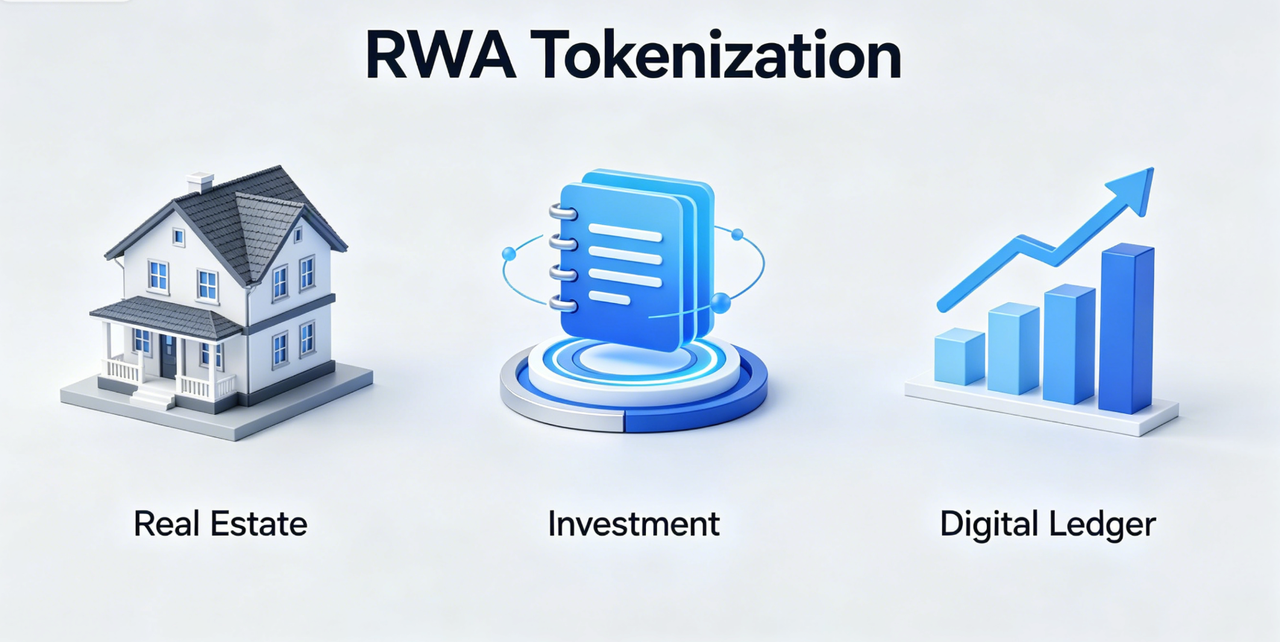
Why U.S. Treasuries May Continue to Dominate the RWA Market
In today’s RWA market, U.S. Treasuries have become one of the largest and fastest-growing asset categories. The main reason is that Treasuries are relatively low risk, highly liquid and offer stable returns, making them well suited as on-chain yield assets.
In the past, DeFi yields often depended on market volatility and token incentives. U.S. Treasuries, however, can provide real off-chain cash flow to on-chain markets. As a result, more protocols are mapping short-term U.S. Treasuries onto blockchain networks and distributing interest income to on-chain users.
U.S. Treasuries are also highly standardized, which makes them easier to custody, value and manage legally. This makes large-scale tokenization easier than for assets such as real estate. For institutions, on-chain Treasuries can not only improve capital efficiency, but also help stablecoins and on-chain financial products obtain a more stable source of underlying yield.
In the future, on-chain U.S. Treasuries are likely to become an important collateral asset in DeFi and help bring the “risk-free rate” from traditional finance into on-chain financial systems.
Why the Integration of Stablecoins and RWA Will Deepen Further
Stablecoins are often seen as one of the most successful RWA use cases today, because most stablecoins are essentially on-chain mappings of real-world fiat reserves.
As the RWA market develops, the relationship between stablecoins and real-world assets may become even stronger. For example, some stablecoins have already begun to incorporate short-term Treasury yields, and in the future, more commodity-backed stablecoins, bank deposit tokenization products and on-chain money market funds may emerge.
This integration trend means that stablecoins may not only serve as payment tools in the future. They may also gradually become yield assets and a settlement layer within the on-chain financial system. For the blockchain industry, the combination of stablecoins and RWA may also push on-chain finance toward a more mature and institutionalized stage.
Why On-Chain Securities Will Become an Important Future Direction
In addition to U.S. Treasuries and stablecoins, on-chain securities, or tokenized securities, including stocks, ETFs and fund shares, are also seen as an important growth direction for RWA.
Traditional securities markets face issues such as limited trading hours, high barriers to cross-border access and long settlement cycles. Blockchain can improve asset circulation efficiency through real-time settlement and round-the-clock trading.
For example, tokenized stocks can lower trading barriers and enable global circulation. On-chain fund shares can use smart contracts to distribute income, while bond assets can support more efficient on-chain clearing.
However, because securities assets are strictly regulated, their development may be slower than stablecoins and on-chain U.S. Treasuries. In the future, the large-scale development of tokenized securities will still depend heavily on the maturity of regulatory frameworks in different countries.
How RWA Will Change DeFi’s Yield Structure
The continued growth of RWA is also gradually changing the underlying logic of DeFi yields.
Early DeFi yields mainly came from liquidity mining and token incentives. These models often depended on market sentiment and lacked support from stable cash flows. RWA can bring real-world returns on-chain, such as Treasury interest, real estate rent and loan income.
This shift means that future DeFi yield sources may gradually move from “crypto-native yield” to “real-asset yield.” As more low-risk assets enter on-chain markets, DeFi may also evolve away from a high-volatility, high-leverage model and move toward a more stable and institutionalized direction.
For institutional capital, this change is especially important, because stable returns and real cash flow are more aligned with the risk preferences of traditional financial markets.
Why Regulation Will Be a Key Variable in the Future of RWA
Although RWA is widely seen as having enormous potential, regulation remains one of the most important uncertainties for its future.
Because RWA involves real-world assets, securities law and cross-border finance, different countries may adopt different regulatory frameworks. In the future, more RWA projects may need to introduce KYC, AML and permissioned access mechanisms to meet institutional and regulatory requirements.
At the same time, large banks, brokerages and asset managers may gradually enter the RWA market. This means the future development path of RWA is likely not to be fully open crypto finance, but rather a more compliant and institutionalized on-chain financial system.
Conclusion
The future trend of RWA is moving from simple asset tokenization toward a form of global on-chain financial infrastructure. Real-world assets such as U.S. Treasuries, stablecoins, on-chain securities and private credit are pushing blockchain from a “crypto asset network” toward a “financial internet.”
In the future, the core value of RWA may not only be improving asset liquidity. It may also lie in using blockchain to rebuild the mechanisms for issuance, trading, settlement and income distribution in financial markets.
FAQs
What Is the Future Trend of RWA?
RWA is evolving from single-asset tokenization into important infrastructure that connects traditional finance and blockchain, including on-chain U.S. Treasuries, stablecoins, securities tokenization and on-chain yield markets.
Why Is RWA Called the “Financial Internet”?
Because RWA does more than bring assets on-chain. It may also use blockchain to restructure trading, settlement, clearing and income distribution processes in global finance.
Which Type of RWA Will Grow the Fastest?
The fastest-growing category today is U.S. Treasury RWA, followed by stablecoin reserves, private credit and tokenized securities.
What Is the Biggest Challenge Facing RWA?
The main challenges include regulatory uncertainty, complex legal enforcement, insufficient liquidity, off-chain data transparency issues and the lack of unified global standards.
Related Articles

How Does PAXG Work? In-Depth Overview of the Physical Gold Tokenization Mechanism

How is the price of PAXG determined? Pegging mechanism, trading depth, and influencing factors
What Are the Risks of TSLA? Understanding Tesla’s Competitive Landscape and Investment Challenges

GoldFinger Use Cases in DeFi: How Gold Assets Enter the On-chain Financial System

How Does GoldFinger Work? Gold Asset Tokenization, Proof of Reserve, and on-chain Circulation Explained