Practical Case Study—A Complete Walkthrough Using Gate CFD
This lesson uses Gate CFD as a reference, connecting the key points of account opening, fund transfer, order placement, stop-loss, and review through three product types: gold, EUR/USD, and stock indices.
Gate CFD’s core features are:
- No need to hold underlying assets
- Use USDT as margin to participate in global market price movements
- Support for both long and short positions
- Coverage of nearly 300 global products (including stock CFDs, forex, gold, indices, etc.)
- Fees as low as approximately $0.018 per lot
- Up to around 500x leverage
- USDT settlement unified with spot/trading accounts
- Risk management features such as stop-loss, margin reminders, and negative balance protection
All numbers and steps below are simplified for educational purposes only and do not constitute any trading advice; for live trading, refer to real-time quotes, contract specifications, and fee schedules.
1. General Process to Enable CFD on Gate
- Register a Gate account
- One-click open a CFD account (on the TradFi page or within the CFD trading section)
- Transfer USDT: move funds from your trading or spot account into the CFD account
- Place trades: select assets and manage positions in gold, forex, index, stock CFDs, etc.
Traditional CFDs and crypto assets can transfer funds within the same account system, but once funds enter a CFD sub-account, margin, forced liquidation, and fee rules are governed by CFD product terms and cannot be simply mixed with spot rules.
2. Case A: Gold CFD (XAUUSD)—Spread, Session Timing & Macro Sensitivity
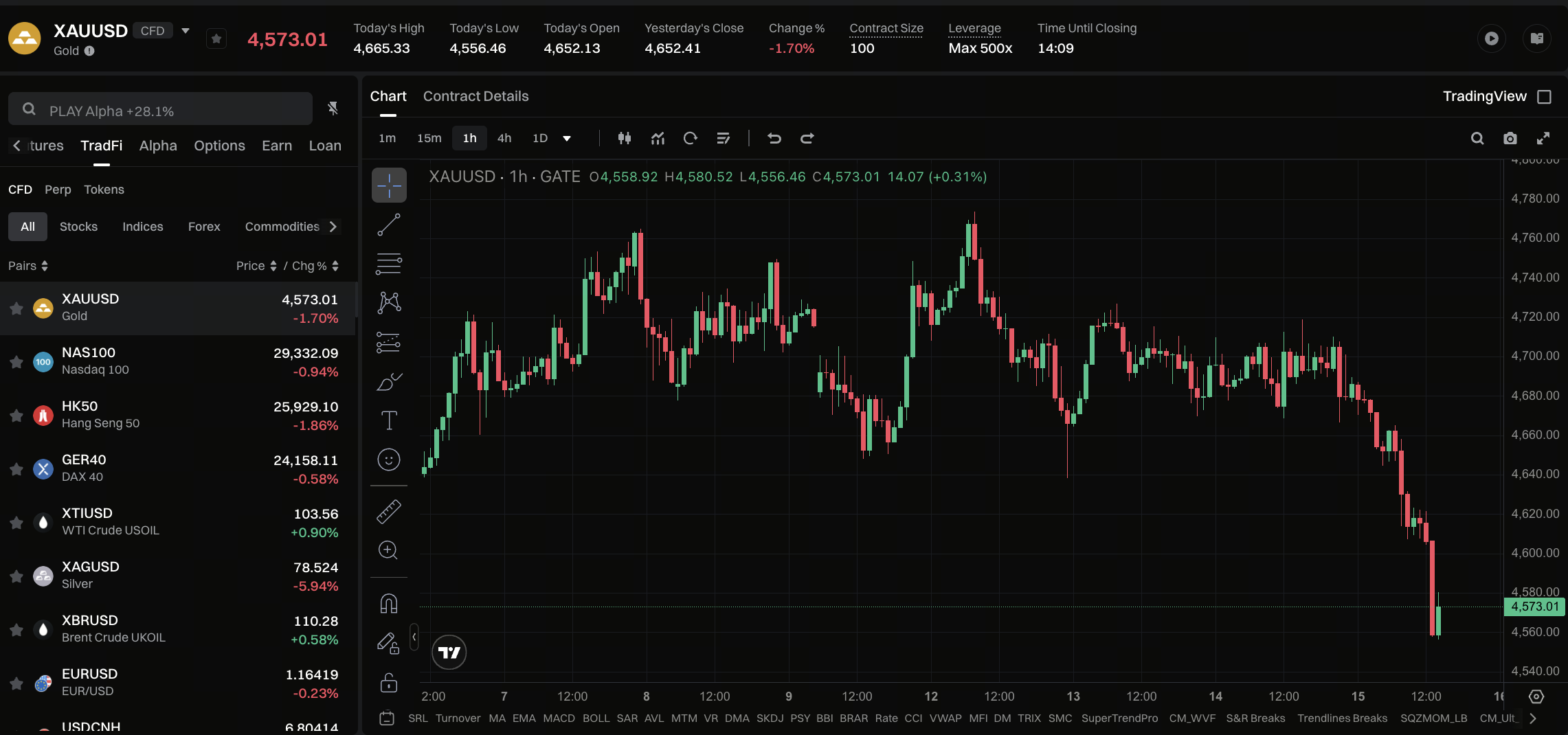
The representative gold CFD is XAUUSD (gold priced in USD).
Analysis Framework (Teaching Example)
Gold prices are typically influenced by:
- USD strength and real interest rate expectations
- Geopolitical risks and shifts in risk aversion
- Fed policy outlook and macro data surprises
Market liquidity is usually higher during overlapping EU/US sessions; however, spreads may widen significantly and short-term volatility may intensify before and after major data releases like NFP, CPI, or rate decisions (refer to real-time market conditions).
If the price falls below a key support area planned in advance, the original long thesis fails and trade direction must be reassessed.
Execution Highlights on Gate CFD
- Check Bid/Ask quotes and current spread before opening a position. Since buy orders typically execute at the ask price, a small unrealized loss immediately after opening is just the spread cost—not an immediate directional error.
- Position size should be linked to stop-loss distance. If stop-loss is set wider, reduce lot size accordingly to avoid excessive nominal exposure per trade.
- If holding positions across settlement time, include swap (overnight fee) in P&L calculation—refer to product rules for specific rates.
Review Suggestions
Focus on recording:
- Difference between gross and net P&L
- Proportion of spread, fees, and overnight costs
- Any slippage during high-volatility periods
- Whether stop-loss was pre-planned in trading plan and log
3. Case B: Forex CFD (EUR/USD)—Pip Value, Session Timing & Event Windows
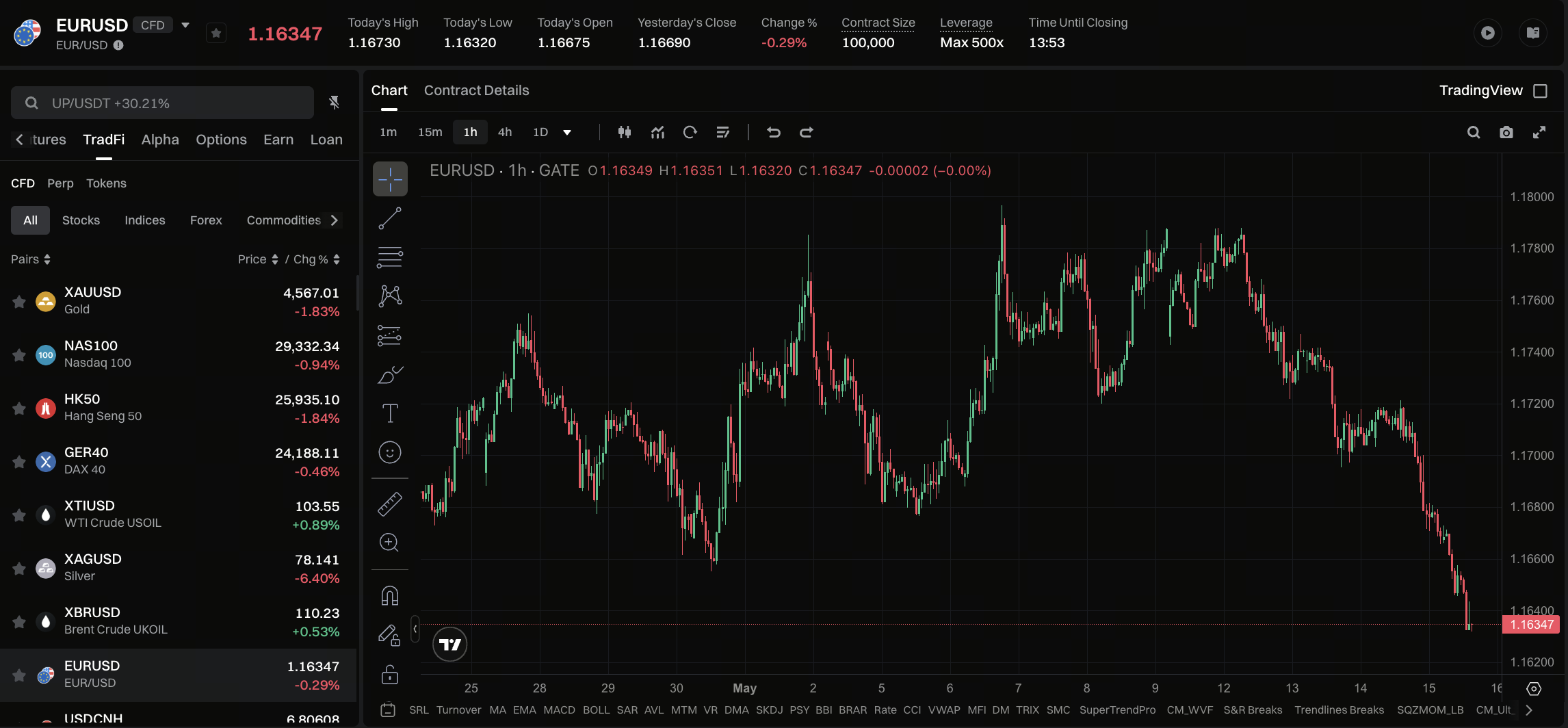
EUR/USD is used as a mainstream forex CFD example.
Analysis Framework (Teaching Example)
Main drivers for EUR/USD include:
- Divergence in EU/US economic growth and rate expectations
- Policy changes from ECB and Fed
- Overall USD strength cycles
During high-liquidity sessions, major pairs usually have tighter spreads; but near event windows like NFP, CPI, or central bank decisions, spreads widen and slippage risks rise noticeably.
If price decisively breaks a key structural area in your plan, the initial trade thesis should be invalidated.
Execution Highlights on Gate CFD
- Clearly identify pip value for each lot size and its actual P&L impact. The same pip movement has larger effects at higher position sizes.
- Around major data releases, manage risk by “reducing leverage, downsizing positions or staying on the sidelines” to avoid frequent trading during abnormal spreads.
- The “fees as low as approximately $0.018 per lot” shown on the page is for reference; actual cost depends on order execution and account statements.
Review Suggestions
Check:
- Any price deviation from expectations due to event-driven moves
- Whether net profit covers spread and fees
- Any breach of preset single-trade risk limits
4. Case C: Index CFD (NASDAQ / S&P 500)—Gap Risk & Opening Volatility
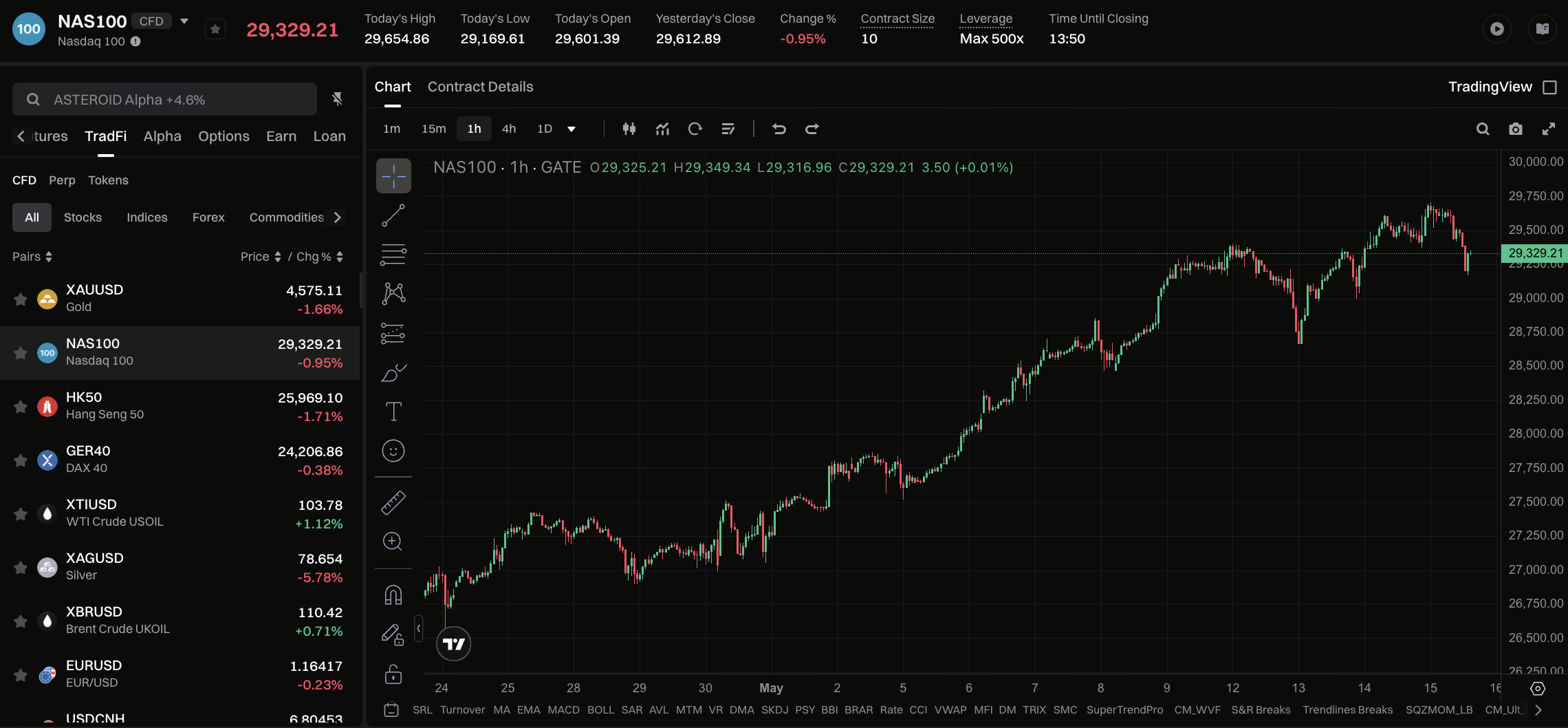
Using the NASDAQ index as an example
Analysis Framework
Index performance is generally influenced by:
- Rate path and liquidity environment
- Earnings outlook for major tech companies
- Changes in overall market risk appetite
US stock market opening and closing are typically the most volatile periods. Earnings reports, macro data or unexpected events may cause price gaps that result in stop-losses executing at worse prices than planned.
Exit promptly when trend structure breaks down or when preset time-based exit criteria are met.
Execution Highlights on Gate CFD
- Leverage can reach up to around 500x. However: higher leverage means greater swings in account equity for the same price movement, bringing you closer to margin maintenance thresholds. Even normal intraday index moves can create significant P&L swings under high leverage.
- Set stop-loss with consideration for index volatility; allow buffer space and accept potential execution slippage in gap environments.
- Stop-loss orders, margin reminders, and negative balance protection featured on the platform are risk management tools—they do not guarantee against losses or forced liquidation. Actual risk still depends on position management and real-time margin levels.
Review Suggestions
Focus on:
- Occurrence of slippage or price gaps
- Excessive use of leverage
- Overconcentration on single event risk during earnings weeks
5. Gate CFD’s Supporting Capabilities
In addition to the full trading workflow, the platform also provides optional modules:
- Charts & technical indicators: assist with structural analysis and entry timing
- API & VIP system: suitable for algorithmic traders or those sensitive to fee structures seeking further research
- Risk control & account features: such as stop-loss orders and margin alerts for assisting with position and volatility risk management
These tools serve mainly as execution enhancements—they do not change this lesson’s core logic: control risk and cost first, then optimize tool efficiency.
Summary
By transferring USDT to your CFD sub-account and completing the full workflow of “analysis—opening—stop-loss—closing—cost calculation—review” with sample products like XAUUSD, EUR/USD, NASDAQ, S&P 500, you can more intuitively understand how spreads, leverage, trading hours and event windows impact execution results. Regardless of available tools, long-term outcomes are ultimately determined by risk control, position management, and net cost accounting.
All live trades should be based on Gate’s real-time market data, contract specifications, fee disclosures, and risk statements. This content is for educational demonstration only and does not constitute any investment advice.
Lesson 1:What Is a CFD—Definition, Nature, and Differences from Spot and Futures
Lesson 2:CFD Trading Mechanism—How Buying, Selling, and Profit & Loss Are Formed
Lesson 3:Asset Classes—Which Traditional Markets Can CFDs Cover
Lesson 4:Margin and Leverage—Why Returns Are Amplified and How Risks Can Quickly Spiral Out of Control
Lesson 5:Trading Costs—Spreads, Overnight Fees, and the Real Friction in Short-Term Trading
Lesson 6:Trading Hours and Market Interactions—When Is Liquidity Best, When Is Volatility Higher
Lesson 7:Risk Management—Single Trade Risk, Position Sizing, Stop Losses, and Event Window Discipline
Lesson 8:Practical Case Study—A Complete Walkthrough Using Gate CFD
Lesson 9:Course Summary—CFD Opportunities, Costs, Risks, and Suitable Participants
Related Courses

The Beginner's Guide to Blockchain-based Airdrops

Crypto Mining Equipment

Identity in Crypto: Main Projects

Introduction to Masternode Tokens

Crypto Mining