Ethereum
In the world of crypto, Ethereum is the source of innovation, where DeFi, NFTs, Layer 2, and numerous new technologies were created. One of its co-founders, Vitalik Buterin, is a key opinion leader in the crypto world. Ethereum launched a series of important upgrades to transition from proof-of-work (PoW) to proof-of-stake (PoS), which may help to break down the Blockchain Scalability Trilemma and makes Ethereum a “ultra-sound money”.
Articles (766)

Intermediate
Top Trends in Ethereum Token Development for Companies in 2024
The Ethereum token development landscape in 2024 promises to be dynamic and innovative, offering companies new opportunities to create tokens that are secure, interoperable, and aligned with the latest trends in decentralized finance and digital ownership.
2024-05-06 09:24:44
Advanced
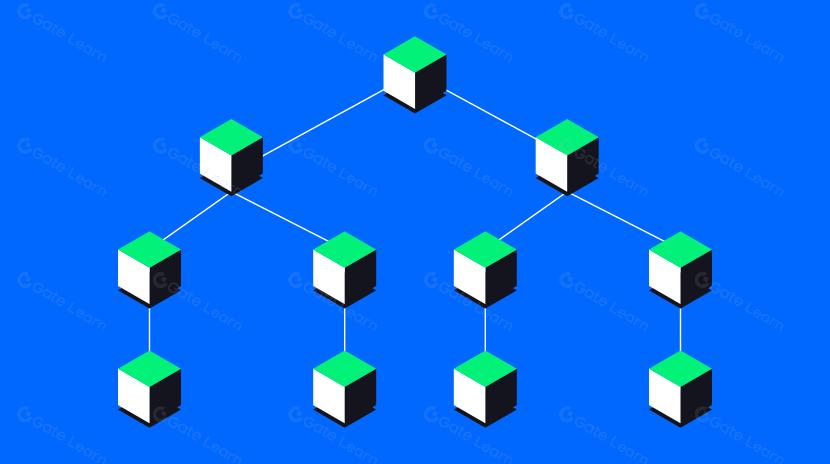
The Verge -Ethereum’s Efficient Verifiable Query Technique: Verkle Trees
What are Verkle Trees, why Ethereum needs it, and how do Verkle Trees solve problems? The goal of this article is to answer these questions for readers without delving too deeply into cryptography and mathematics, helping those with some understanding of Ethereum quickly grasp the concept of Verkle Trees.
2024-05-06 09:19:56

Intermediate
Why Has the Privacy Protocol Railgun Gained Favor with Vitalik?
Railgun is a privacy system built directly for blockchain, currently supporting Ethereum, BNB Chain, Polygon, and Arbitrum. It primarily utilizes zero-knowledge proofs to anonymize transactions in smart contracts and DeFi applications. Railgun provides only on-chain smart contract logic, thus eliminating the need for L2 validators and vulnerable cross-chain bridges to achieve privacy. The article discusses the Railgun privacy system’s mechanisms, tokens, governance, rewards, and the V3 upgrade, offering comprehensive information to readers.
2024-05-06 05:22:20
Advanced
ERC7683: The Cross-Chain Intents Standard
ERC7683 aims to optimize the user experience for solution users, lower the barriers to entry for a universal solution network, and the design goal of this standard is to enhance the solver user experience, making it easier for them to support multiple settlement networks, and to deterministically calculate their rewards.
2024-05-06 04:27:18
Intermediate
Ocean Protocol: A Decentralized Data Marketplace
Based on the Ethereum blockchain, Ocean Protocol has created its own marketplace, connecting data consumers and providers. The tokenization of datasets and services, it allows data providers to monetize their data simply and effectively while providing users with a one-stop ecosystem for accessing valuable data.
2024-05-03 02:27:46

Intermediate
Boba Network (BOBA): A Multi-Chain L2 Ecosystem Supporting Rapid Bridging and Hybrid Computing.
The Boba Network (BOBA), developed and maintained by Enya Labs, is a Layer 2 solution that supports multi-chain, rapid bridging, and hybrid computing.
2024-05-03 01:29:43
Advanced
Restaking and the price of trust
This article reexamines some core issues in the current ETH ecosystem, such as Restaking, AVS, and Liquid Restaking tracks, and predictively provides a comparative risk and return assessment framework.
2024-05-01 16:30:39

Intermediate
What is ConsenSys Quorum Blockchain?
Click the link to learn how ConsenSys Qurom bridges the gap between enterprises and the blockchain network.
2024-05-01 05:50:48

Intermediate
A Deep Dive into Liquity Protocol
Liquity is a decentralized lending protocol that allows users to borrow a stablecoin called LUSD (pegged to the US dollar) using Ethereum as collateral. It also introduces a fully redeemable stablecoin, LQTY. The protocol, designed by Robert Lauko, aims to offer a more capital-efficient and lower-risk alternative to existing systems like MakerDAO.
2024-05-01 05:39:44

Beginner
key-updates-in-ethereum-and-other-public-blockchains-to-watch
This article delves into the latest updates in public blockchain platforms like Ethereum, highlighting innovations in the execution, data availability, and settlement layers. Notable are projects like Monad, Sei, and MegaETH that introduce parallel EVM technologies to enhance the execution layer. Ethereum's cost-efficiency improvements via CallData updates and the progression of projects like Celestia and Avail in the DA layer are also discussed. Furthermore, new competitors in the settlement layer, such as Nebra, are emerging with promising, cost-effective solutions based on zero-knowledge proofs. The integration of Bitcoin and CKB into the DA layer and innovative DA strategies leveraging AI are also explored.
2024-04-29 02:09:07

Beginner
Omni Network: A Unified Solution to Rollup Fragmentation
Omni Network is an interoperability layer and L1 network on Ethereum, designed to connect various Roll-ups such as Optimism, Arbitrum, zkSync, and Starkware. It employs foundational technology innovations like re-staking via Eigenlayer, the Cosmos SDK, and the Tendermint consensus mechanism to offer a secure, modular, and high-performance Web3 infrastructure. Omni Network supports cross-Rollup interactions, aggregates liquidity, and simplifies user processes. It also introduces a dual-staking model, offers sub-second verification, and integrates with multiple Rollup architectures and applications. Omni Network has completed two rounds of funding, backed by prominent investors such as Pantera Capital, and has conducted a token sale on Binance's launchpool.
2024-04-29 01:42:53
Beginner
Staking or not, ETH is no security
Staking ETH is a technical service to ensure transactions on the Ethereum network are processed properly and securely, rather than as an investment subject to securities laws.
2024-04-28 12:49:17
Beginner
Quick Reading EIP-3074: What is it? What impact will it have on Ethereum?
EIP-3074 is an Ethereum Improvement Proposal (EIP) that introduces a novel approach to account management. It enables the delegation of control over regular user accounts (EOA) to smart contracts, facilitating more sophisticated transaction strategies. Proposed in 2020 by Ethereum core developers, EIP-3074 introduces two new opcodes, "AUTH" and "AUTHCALL," empowering EOAs to transform into smart contracts without the need to deploy new contracts. The implementation of EIP-3074 aims to enhance the overall user experience for wallet users by enabling gas sponsorship, batch transactions, and wallet asset recovery. While EIP-3074 presents promising advancements, it also raises some concerns such as increasing the risk of user asset theft, and possibly forming a parallel technology stack with the Account Abstraction (AA) proposal EIP-4337, which requires ensuring interoperability between the two.
2024-04-25 05:18:55

Intermediate
The Unified Architecture of Ethereum
The unified architecture of Ethereum refers to its integrated framework that combines the base layer (Layer 1) with various Layer 2 scaling solutions. This architecture aims to balance decentral
2024-04-25 05:16:03

Advanced
Make L2s Scale Again
Ethereum’s shift to a rollup-centric roadmap induced explosive growth in modular scaling designs, eliminating gas fees over $100 and unlocking new application designs. However, it also faces a new problem of state fragmentation. The article analyzes the two major directions of scaling and explores their mechanisms.
2024-04-24 15:36:21