What Is the XLE (Energy Select Sector SPDR ETF)? A Comprehensive Guide to the U.S. Energy ETF’s Mechanics, the Oil & Gas Value Chain, and Energy Market Dynamics.
XLE (Energy Select Sector SPDR ETF) is a sector-specific ETF tracking publicly traded companies in the U.S. energy industry, spanning oil extraction, natural gas production, energy transportation, refining, and energy services. It stands as one of the key investment vehicles for gauging U.S. energy market performance.The energy industry has long held a pivotal role in the global economy. From industrial manufacturing and transportation to chemical production and electricity supply, energy resources are essential to keep the world running. As a result, fluctuations in the energy market don't just affect energy companies themselves—they also reverberate through global economic activity and capital market performance.
In recent years, a confluence of factors—including global energy security, geopolitical tensions, the energy transition, and the buildout of artificial intelligence infrastructure—has continuously heightened market attention on energy assets. The interplay among oil, natural gas, nuclear power, the electricity grid, and renewable energy sources has made the energy sector a core theme in global capital markets.
What Is XLE (Energy Select Sector SPDR ETF)?
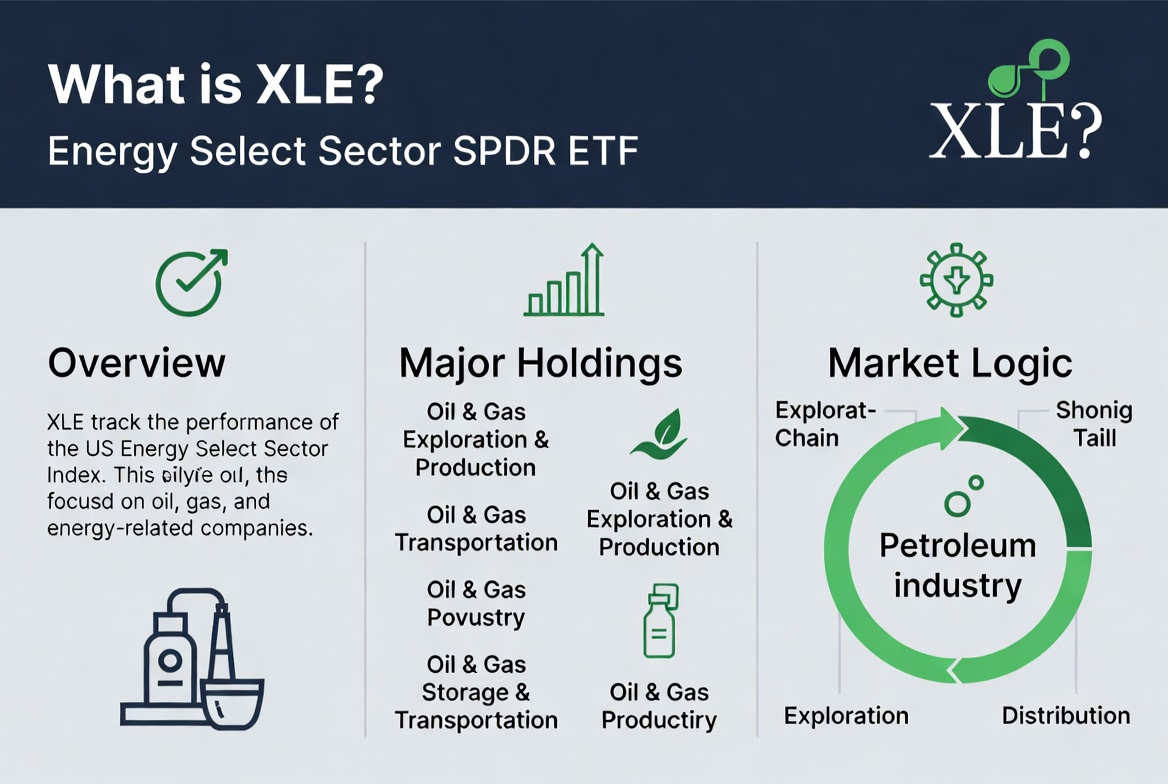
As one of the largest and most liquid energy sector ETFs in the U.S. market, XLE aims to track the overall market performance of major U.S. energy companies. Unlike broad-based index ETFs, XLE concentrates exclusively on the energy sector rather than covering all industries. Its holdings consist primarily of large oil and gas firms, so its market performance often serves as a reliable barometer for the U.S. energy industry as a whole.
XLE does not represent a single company; rather, it offers a diversified basket of energy companies. Through the ETF structure, market participants gain exposure to the entire U.S. energy sector in one product. In essence, XLE is a flagship asset representing the U.S. energy industry.
Why XLE Focuses on the U.S. Energy Sector
The United States has long been one of the world's largest energy producers and a major player in the international energy market. The energy sector spans multiple segments, including oil exploration, natural gas extraction, refining, pipeline transportation, and energy services. Given the massive scale of this industry chain, the U.S. capital market hosts a significant concentration of globally leading energy companies.
The profitability of energy firms is typically highly correlated with international energy prices, giving the sector a pronounced cyclical nature. When global economic activity picks up, energy demand tends to rise; conversely, when demand slips, energy companies' earnings can suffer. This inherent cyclicality makes the energy sector a key indicator for macro-market observers.
How XLE's Holdings Structure Is Formed
XLE's holdings are predominantly comprised of large U.S. energy companies, with a composition that generally follows the oil and gas value chain. From an industry perspective, the companies covered by XLE include:
| Industry Segment | Primary Business |
|---|---|
| Upstream companies | Oil and gas exploration & production |
| Midstream companies | Pipeline transportation & storage |
| Downstream companies | Refining & energy sales |
| Energy services | Technology & equipment support |
Because large integrated energy companies often operate across multiple segments, XLE's holdings tend to be weighted toward industry leaders. This structure ensures that XLE emphasizes the overall performance of the U.S. energy sector rather than merely tracking the price movement of any single commodity.
How the Oil and Gas Value Chain Impacts XLE
Oil and natural gas form the foundational industrial base for XLE. The energy value chain typically begins with resource extraction, then moves through transportation, storage, refining, and sales before reaching industrial, transportation, and consumer markets.
When international oil prices rise, upstream energy companies generally see stronger revenue growth, and a boost in energy demand can improve profit expectations across the entire chain.
The natural gas market also exerts a significant influence on energy companies. As electricity demand grows and the energy mix evolves, natural gas has become one of the world's most important energy sources. Since XLE's holdings span multiple segments of the energy value chain, shifts in oil and gas markets directly affect XLE's performance.
XLE's Role in the U.S. Energy Market
XLE has become a key market indicator for tracking the U.S. energy industry. Because the ETF concentrates holdings in large energy firms, XLE's trendline often reflects the aggregate market expectation for the sector.
In a bullish energy market cycle, XLE is frequently used by institutional capital as a primary vehicle for energy asset allocation. Conversely, during market downturns, XLE's movement can signal shifts in industry risk sentiment.
For anyone studying the energy market, XLE is more than just an ETF—it's a critical lens for understanding the structural dynamics of the U.S. energy industry.
Factors Influencing XLE Price Movements
XLE's price fluctuations are driven by a variety of factors. International crude oil prices are typically the most significant variable. Since energy company revenues and profits are directly tied to oil price changes, any move in oil tends to drive volatility in the energy sector.
In addition, natural gas prices, global energy demand, geopolitical events, and macroeconomic conditions all play a role in shaping XLE's performance. The following factors are closely monitored by the market:
- Changes in international crude oil prices
- Natural gas supply-demand dynamics
- Global economic growth expectations
- Geopolitical risks
- U.S. energy policy shifts
Together, these elements determine the earnings outlook and market valuation of the energy industry.
The Relationship Between XLE and Crude Oil Prices
XLE and crude oil prices are usually strongly correlated, but they are not the same thing.
Crude oil is a commodity, while XLE represents a portfolio of energy company stocks.
When crude prices rise, energy companies' profitability improves, which can lift stock prices and drive XLE higher.
However, stock prices are also influenced by factors like operational efficiency, capital expenditure, shareholder returns, and market sentiment.
Thus, crude oil is a major driver of XLE, but not the only one.
XLE more accurately captures the value of energy companies rather than simply reflecting the spot price of oil.
How XLE Differs From Other Energy ETFs
Not all energy ETFs are alike—different products have distinct investment focuses.
Some energy ETFs emphasize upstream oil and gas exploration firms, while others target energy services companies or renewable energy sectors.
In contrast, XLE focuses on large, integrated U.S. energy companies, resulting in a higher industry concentration.
| ETF Type | Main Characteristics |
|---|---|
| XLE | Large integrated energy companies |
| Upstream energy ETF | Oil & gas exploration companies |
| Energy services ETF | Equipment & services companies |
| New energy ETF | Renewable energy value chain |
These differences mean that different energy ETFs have different sensitivities to oil price cycles, industry conditions, and market risks.
Main Use Cases for XLE
XLE is primarily used for energy industry research and market allocation.
Some market participants use XLE to gauge the health of the U.S. energy industry, while institutions often employ it as a sector allocation tool.
As the global energy transition accelerates, the market is evolving into a landscape where oil, natural gas, nuclear, and renewable energy coexist.
Thus, XLE is frequently used to analyze the market position of traditional energy within the broader global energy system.
For those tracking the energy market, XLE provides an intuitive way to observe industry trends.
How to Buy XLE (Energy Select Sector SPDR ETF)
XLE, as a U.S.-listed sector ETF, can typically be bought and sold through brokerage platforms that support U.S. stock trading. In the traditional model, investors need to open an account that provides access to the U.S. securities market and execute trades through a securities trading system.
Beyond traditional brokerage accounts, some platforms now also offer CFD products linked to energy ETFs. CFDs allow trading based on price movements without holding the underlying ETF.
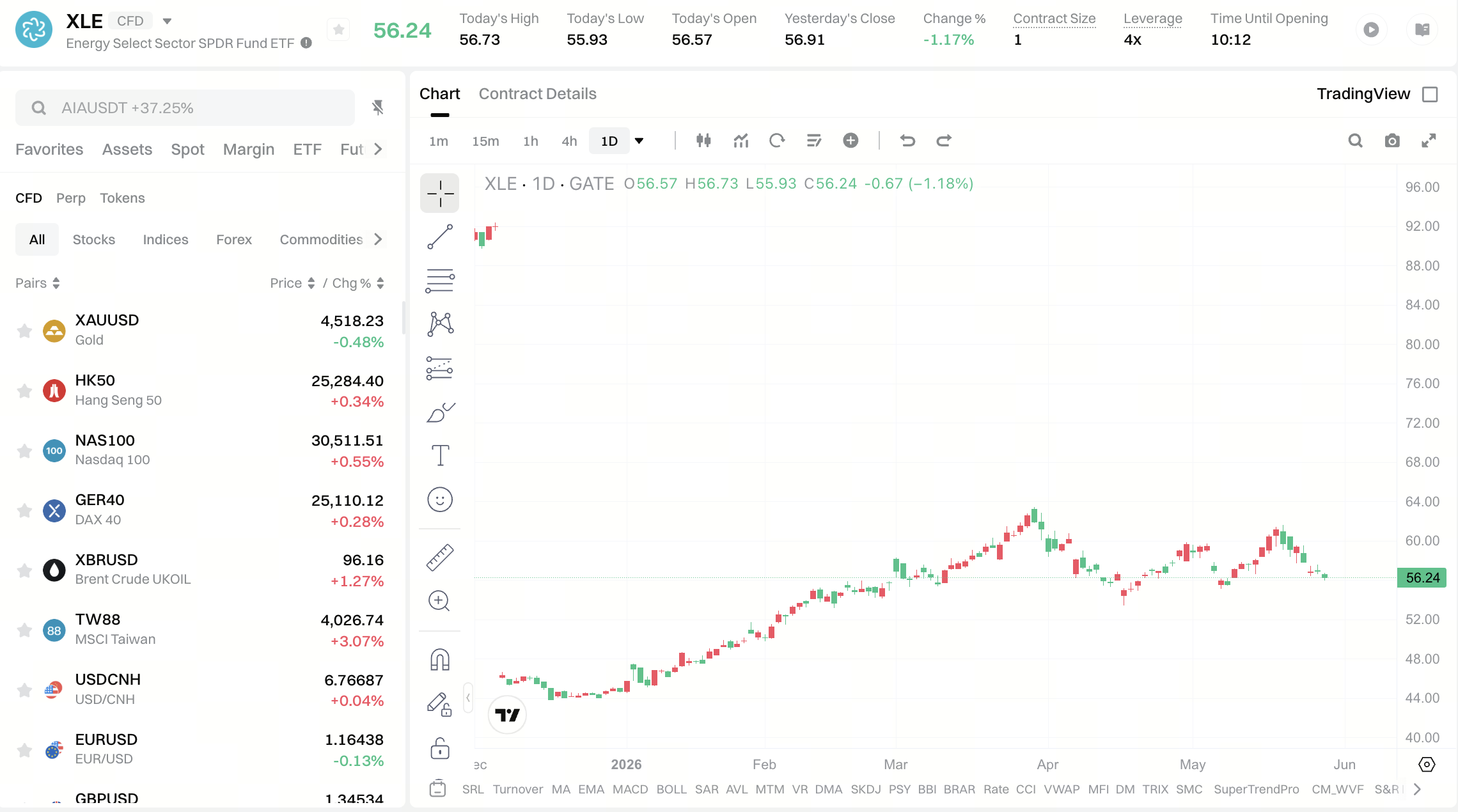
At the same time, certain digital asset platforms have expanded into TradFi market offerings. For instance, products like Gate TradFi CFD now cover a range of global market assets, including energy ETFs, stock indices, and commodities. When trading XLE or related energy products, market participants should consider product structure, liquidity, leverage mechanisms, and applicable local regulations.
Advantages and Limitations of XLE
XLE's key advantage is its ability to provide diversified exposure to major U.S. energy leaders through a single ETF, reducing company-specific risk. Compared to picking individual energy stocks, XLE offers a more comprehensive view of the sector's overall market performance.
Additionally, XLE boasts high liquidity and a mature market structure, making it a long-standing favorite among both institutional and retail investors. However, XLE is not without limitations.
Because its holdings are concentrated in the energy sector, its performance is heavily dependent on the industry's cyclical health. Falling oil prices or weakening energy demand can squeeze profitability across its holdings. Ultimately, XLE remains a thematic asset with pronounced cyclical characteristics.
Conclusion
XLE is one of the most representative ETFs in the U.S. energy sector, primarily covering large companies in oil, natural gas, refining, and energy services.
The evolution of the energy value chain, shifts in international oil prices, natural gas supply-demand fundamentals, and global economic activity collectively shape XLE's market performance. As a vital link between capital markets and the energy industry, XLE not only reflects the health of the U.S. energy sector but also offers valuable insights into the dynamics of the global energy market.
FAQ
What is XLE?
XLE is the ticker symbol for the Energy Select Sector SPDR Fund, a sector ETF that tracks the performance of large U.S. energy companies.
Which companies does XLE primarily invest in?
XLE primarily invests in major U.S. oil, natural gas, and integrated energy companies, reflecting the overall performance of the U.S. energy sector.
What is the relationship between XLE and crude oil?
Changes in crude oil prices affect the profitability of energy companies, which in turn influences XLE's performance—but XLE does not directly track oil prices.
Is XLE a renewable energy ETF?
No, XLE focuses on traditional energy, including oil and gas companies, and is not classified as a renewable energy ETF.
What factors most commonly drive XLE volatility?
International oil and natural gas prices, global economic growth, energy policy, and geopolitical risks are the key drivers of XLE's volatility.
How can I trade XLE?
XLE can be traded through brokerage accounts that support U.S. equities markets. Some platforms also offer CFD products that track XLE.
Related Articles

How Does PAXG Work? In-Depth Overview of the Physical Gold Tokenization Mechanism

How is the price of PAXG determined? Pegging mechanism, trading depth, and influencing factors

Gate Research: 2024 Cryptocurrency Market Review and 2025 Trend Forecast

Altseason 2025: Narrative Rotation and Capital Restructuring in an Atypical Bull Market

The Impact of Token Unlocking on Prices