What Is Phillips 66 (PSX)? Business Model, Refining Operations, and Energy Market Role
PSX (Phillips 66) is a multinational energy company headquartered in Houston, Texas. Its main businesses include crude oil refining, transportation and marketing of petroleum products, and chemicals. It is an important global provider of downstream energy. PSX (Phillips 66) became an independent company in 2012 after being spun off from ConocoPhillips, inheriting the long history of the Phillips brand. It is currently listed on the New York Stock Exchange under the ticker symbol PSX. The company focuses on downstream energy, giving it a differentiated position from traditional integrated oil majors.Phillips 66 became an independent company in 2012 after being spun off from ConocoPhillips. It is currently listed on the New York Stock Exchange under the ticker symbol PSX. Through a highly integrated value chain, the company maintains competitive advantages in refining capacity, pipeline networks, and refined product sales.
Phillips 66 owns roughly 11 to 13 refineries, with total crude processing capacity of more than 2 million barrels per day, while also operating extensive midstream infrastructure and chemicals joint venture businesses. Its operations cover the United States and European markets, with products including gasoline, diesel, jet fuel, lubricants, and renewable fuels.
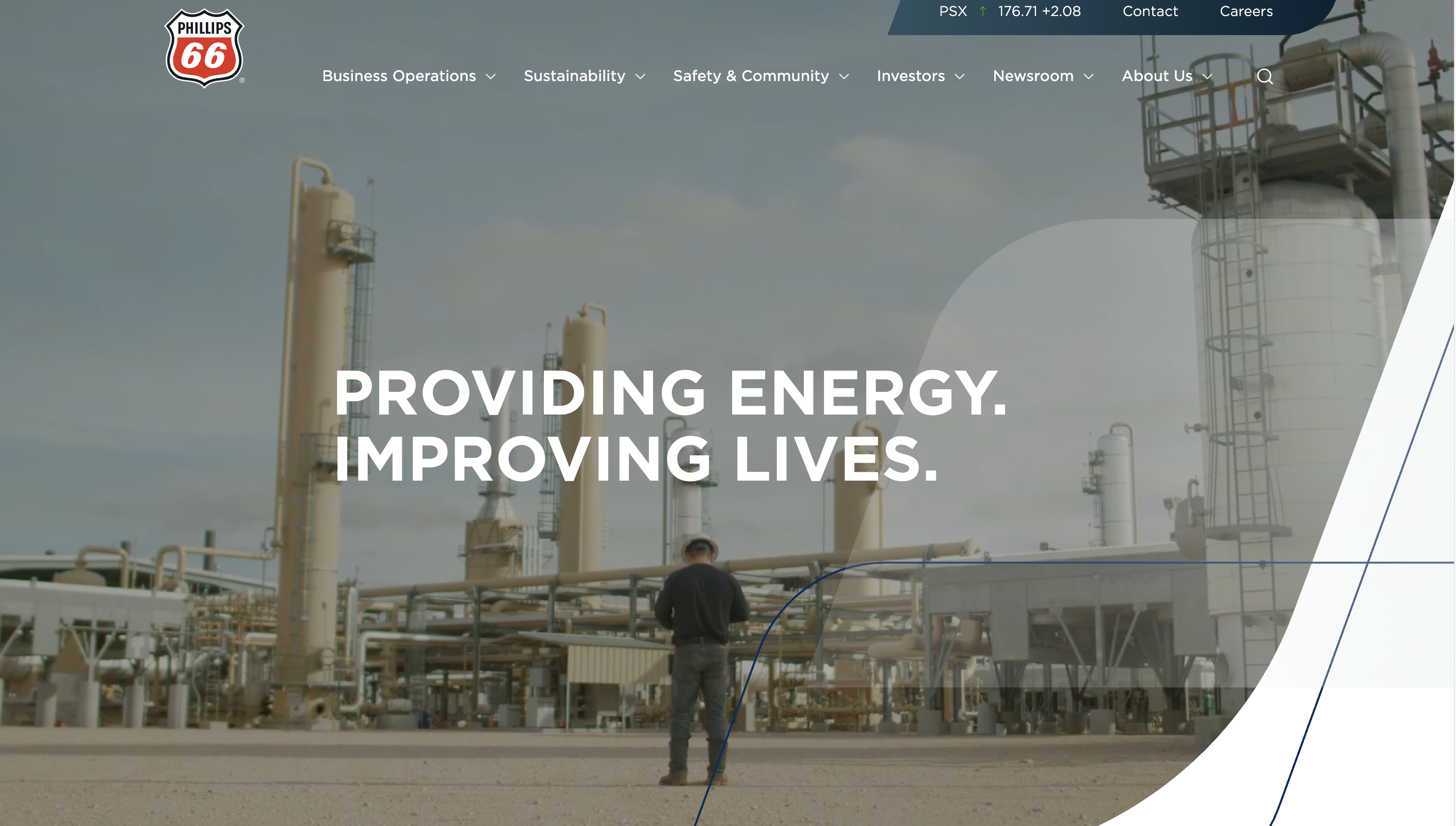
Source: phillips66.com
What Is PSX (Phillips 66)
Phillips 66’s core business is centered on downstream energy, which sets it apart from companies focused on upstream exploration and production. The company primarily processes crude oil into various refined products, transports and distributes those products through its midstream network, and also participates in chemicals and renewable energy businesses. This downstream focused model gives Phillips 66 relative stability amid crude oil price fluctuations, since its earnings depend more on refining margins than on crude oil production alone.
As an independent downstream energy provider, Phillips 66 carries forward the long heritage of the Phillips brand and holds an important position in global refined product supply and logistics. The company emphasizes operating efficiency and shareholder returns, using integrated operations to lower costs and optimize product flows.
Phillips 66’s position in the energy market centers on safe and reliable energy supply, while it also actively explores low carbon solutions to adapt to the global energy transition. The company has more than 12,000 employees and aims to achieve balanced development between traditional energy and emerging energy.
Phillips 66’s Business Structure and Main Segments
Phillips 66’s business is mainly divided into five core segments: Refining, Midstream, Chemicals, Marketing and Specialties, and Renewable Fuels. The Refining segment is the company’s largest source of revenue. It operates multiple refineries and produces gasoline, distillates, and jet fuel. The Midstream segment is responsible for the transportation, storage, and fractionation of crude oil, refined products, and natural gas liquids.
The Chemicals segment produces petrochemical products and plastics through CPChem, its joint venture with Chevron. The Marketing segment sells refined products through branded gas stations and wholesale networks. The Renewable Fuels segment focuses on the production of renewable diesel and sustainable aviation fuel. These segments work closely together, forming a complete value chain that improves overall operating efficiency.
The company’s business structure emphasizes the advantages of integration. By coordinating internally, Phillips 66 reduces transaction costs and strengthens its ability to withstand cyclical volatility. This structure supports stable cash flow generation across different market conditions.
PSX’s Role in the Global Refining Industry
Phillips 66 is one of the world’s leading independent refiners, with major capacity in the United States and Europe. Its refining business emphasizes highly complex refineries that can process heavy crude oil and produce high value clean products, giving the company a key role in global refined product supply. The company continues to optimize capacity utilization and is advancing renewable fuel co processing projects at some refineries.
In 2025, the company’s refineries maintained a high average utilization rate, with clean products accounting for a significant share of output. This allows Phillips 66 to provide stable supply amid fluctuations in global refined product demand, especially in jet fuel and transportation fuels.
Through technology upgrades and asset optimization, Phillips 66 continues to improve refining efficiency and explore new growth paths against the backdrop of the energy transition. Its role in the refining industry is not only that of a producer, but also that of a key supply chain node connecting upstream crude supply with downstream end use consumption.
How Phillips 66 Differs from ExxonMobil and Chevron
The main difference between Phillips 66 and ExxonMobil or Chevron lies in business focus. ExxonMobil and Chevron are highly integrated oil majors with large scale upstream exploration and production operations, while Phillips 66 is almost entirely focused on downstream refining, midstream, and marketing. This difference means Phillips 66’s earnings are more directly affected by refining margins.
In terms of capital returns, Phillips 66 emphasizes high dividends and share buybacks, with a strong focus on shareholder returns. Integrated majors, by contrast, must balance capital allocation between upstream and downstream businesses. Phillips 66 has a relatively smaller asset base, but it has greater operating flexibility and can respond more quickly to changes in downstream market demand.
Across the value chain, Phillips 66 invests more heavily in midstream and downstream infrastructure, while its competitors have advantages in controlling upstream resources. This positioning allows Phillips 66 to stand out more during cycles when refining margins expand.
What Factors Affect PSX’s Share Price and Performance
PSX’s share price is mainly affected by refining margins, global crude oil prices, refined product demand, geopolitical events, and macroeconomic cycles. When refining crack spreads widen, the company’s profits usually rise significantly. Seasonal demand, such as the summer driving season and winter heating oil demand, can also cause performance fluctuations.
Other key factors include operating efficiency, currency fluctuations, and regulatory changes. Investors also closely watch the company’s cash flow, dividend policy, and capital expenditure plans. Together, these factors shape the cyclical nature of PSX’s share price.
The macroeconomic environment has a particularly significant impact on refined product consumption. Slower economic growth may reduce demand, while energy transition policies may reshape the company’s long term earnings model. Phillips 66 uses cost control and asset optimization to ease external pressure.
PSX’s Main Revenue Sources and Business Model
Phillips 66’s revenue mainly comes from refined product sales, midstream transportation services, chemicals products, and marketing operations. The Refining segment contributes the largest share, followed by Marketing and Specialties. The company uses an integrated business model to lower costs and optimize product flows through internal coordination.
This model supports its ongoing strategy of high capital returns, including dividends and buybacks. In 2025, the company continued to use its Midstream and Chemicals segments to provide stable cash flow that complements the cyclical nature of the refining business.
The business model emphasizes economies of scale and operating efficiency. Through technology investment and asset integration, Phillips 66 improves overall profitability. This structure helps the company remain competitive under different oil price environments.
PSX’s Positioning Across the Midstream and Downstream Energy Value Chain
Phillips 66 has a well developed presence across the midstream and downstream value chain, with more than 15,000 miles of pipeline networks, numerous terminal facilities, and storage capacity. The Midstream business connects upstream crude supply with downstream refining and sales, forming an efficient logistics network. This structure strengthens the company’s ability to manage risk.
The company continues to invest in midstream assets, including natural gas liquids processing and transportation facilities, to support optimization across the value chain. This positioning also provides infrastructure support for the transition to renewable fuels.
Through midstream and downstream coordination, Phillips 66 can better manage supply chain risks and build advantages in regional markets. This layout is an important foundation of the company’s long term competitiveness.
How to Buy PSX Stock? Trading Methods and Platform Guide
Investors can buy PSX stock through major securities brokers. Common methods include trading NYSE:PSX directly on platforms that support U.S. stock trading. However, some regions have recently tightened regulation of cross border securities services, and traditional U.S. stock brokers such as Futu and Tiger Brokers have adjusted their services, making it difficult for many users to open accounts or trade U.S. stock assets normally.
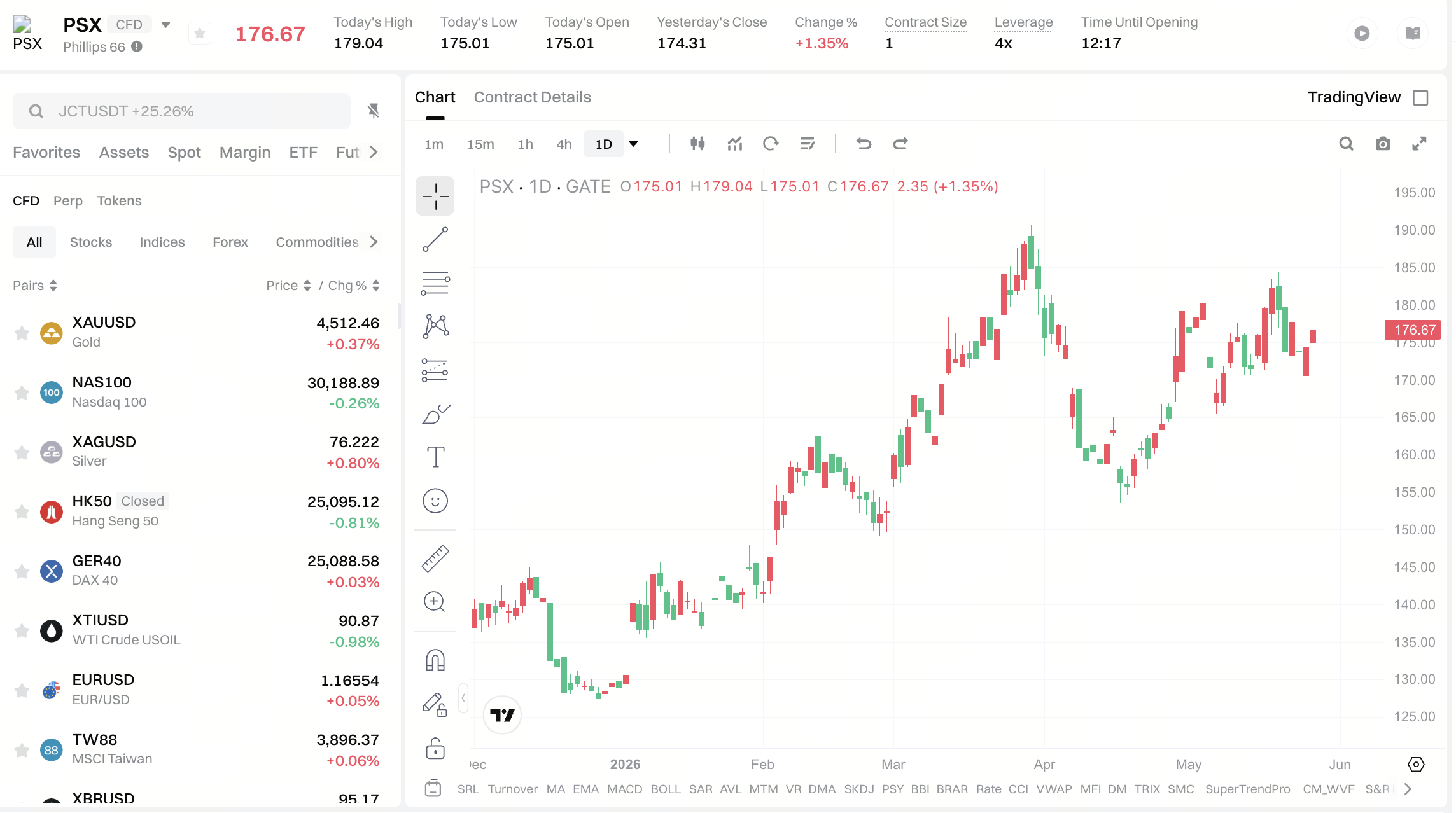
Against this backdrop, CFD, or contract for difference, trading has become an increasingly popular alternative for investors. CFDs do not require direct ownership of the underlying stock, yet they allow investors to track PSX price movements. They are flexible and support leverage, making them suitable for investors who want exposure to volatility in the U.S. energy sector.
As a one stop trading platform, Gate TradFi has launched Gate CFD products for U.S. energy stocks such as PSX, allowing users to manage both digital assets and traditional energy market positions within the same platform. Compared with traditional U.S. stock accounts, it supports participation from users in more regions around the world and offers a more flexible trading method.
By trading PSX through Gate CFD, investors can conveniently follow Phillips 66’s share price trends while using the platform’s unified fund management and risk control tools. Before participating, investors should pay close attention to the platform’s regulatory qualifications, leverage risks, spread fees, and the regulatory requirements in their own region, and choose a trading model that matches their risk tolerance.
The emergence of these diversified trading channels gives users who want exposure to international energy assets such as PSX more flexible choices, especially in the current environment of changing cross border securities access.
PSX’s Energy Transition and Sustainability Strategy
Phillips 66 is advancing renewable fuel projects as part of the energy transition, including converting or co-processing certain refinery assets to produce renewable diesel and sustainable aviation fuel. The company also invests in low carbon technologies and hydrogen related areas, while continuing to maintain a stable traditional energy supply.
Its sustainability strategy emphasizes safe operations, lower carbon intensity, and community responsibility. Through projects such as the Rodeo Renewable Energy Complex, the company is gradually increasing the share of renewable products.
Phillips 66 aims to support long term low carbon transition while meeting current energy demand. It seeks balanced development through technological innovation and capital allocation. This strategy helps the company adapt to future changes in the energy market.
PSX’s Strengths and Risks
Phillips 66’s strengths include cost efficiency from integrated operations, attractive high dividends, strong midstream infrastructure, and advantages from refinery complexity. The company has stable cash flow and a clear shareholder return policy, giving it strong competitiveness in the downstream market.
The main risks it faces include cyclical swings in refining margins, crude supply disruptions caused by geopolitical events, stranded asset risks brought by the energy transition, and pressure from strict environmental regulation. These risks may affect the company’s short term performance.
The company mitigates risk through diversified businesses and continuous optimization, while maintaining financial discipline to support long term growth. This balanced strategy is at the core of its competitiveness.
Summary
As a downstream focused energy company, PSX (Phillips 66) holds an important position in the global refining and refined product markets. Its business structure, value chain layout, and energy transition initiatives together form a distinct competitive advantage. By understanding its pricing mechanism, revenue model, and investment channels, investors can better assess the company’s position in the energy market.
FAQs
What does PSX (Phillips 66) mainly do?
Phillips 66 is mainly engaged in crude oil refining, petroleum product transportation, marketing, and petrochemicals, with a focus on downstream energy.
What is the biggest difference between Phillips 66 and ExxonMobil?
Phillips 66 is almost entirely focused on downstream operations, while ExxonMobil owns large scale upstream exploration and production assets.
How can I buy PSX stock?
You can open an account with a brokerage platform that supports U.S. stock trading, such as eToro or Webull, and directly buy NYSE:PSX shares.
What factors have the greatest impact on PSX’s share price?
Refining margins, global oil price fluctuations, refined product demand, and the company’s dividend policy are the main influencing factors.
What is Phillips 66 doing in the energy transition?
The company is advancing renewable diesel and sustainable aviation fuel projects, while investing in low carbon technologies to support the energy transition.
Related Articles

How Does PAXG Work? In-Depth Overview of the Physical Gold Tokenization Mechanism

How is the price of PAXG determined? Pegging mechanism, trading depth, and influencing factors

Gate Research: 2024 Cryptocurrency Market Review and 2025 Trend Forecast

What Are the Risks of TSLA? Understanding Tesla’s Competitive Landscape and Investment Challenges

GoldFinger Use Cases in DeFi: How Gold Assets Enter the On-chain Financial System