Credit Rating Agency Definition: Analyzing the Role of MCO (Moody's) in Global Financial Markets
Credit rating agencies are independent organizations that specialize in evaluating the credit risk of corporations, financial institutions, governments, and bond issuers. Their primary role is to assess the ability and willingness of borrowers to meet future debt obligations. The credit rating system is a vital element of modern capital markets. Bond investors, banks, insurance companies, and regulators rely on a uniform risk measurement standard, and the ratings issued by credit rating agencies enable market participants to quickly gauge potential default risks.In the global credit rating industry, Moody's, S&P Global Ratings, and Fitch Ratings have long held a commanding position. Among them, MCO (Moody's) stands out as one of the world's most influential credit rating agencies, backed by over a century of rating expertise, a massive database, and widespread market trust.
What Are Credit Rating Agencies?
A credit rating agency's core mission is to evaluate the credit quality of borrowers and express the level of default risk through a standardized rating framework.
When corporations issue bonds, banks issue debt instruments, or governments raise capital, investors often lack direct insight into the true risk profile of the issuer. Credit rating agencies bridge that gap by delivering independent credit opinions grounded in financial analysis, industry research, and risk assessment.
Importantly, credit ratings are not investment recommendations—they are risk measurement tools. A higher rating typically signals lower default risk, while a lower rating points to higher potential risk.
Credit ratings have become a foundational pillar of the global bond market, widely used in fixed-income investing.
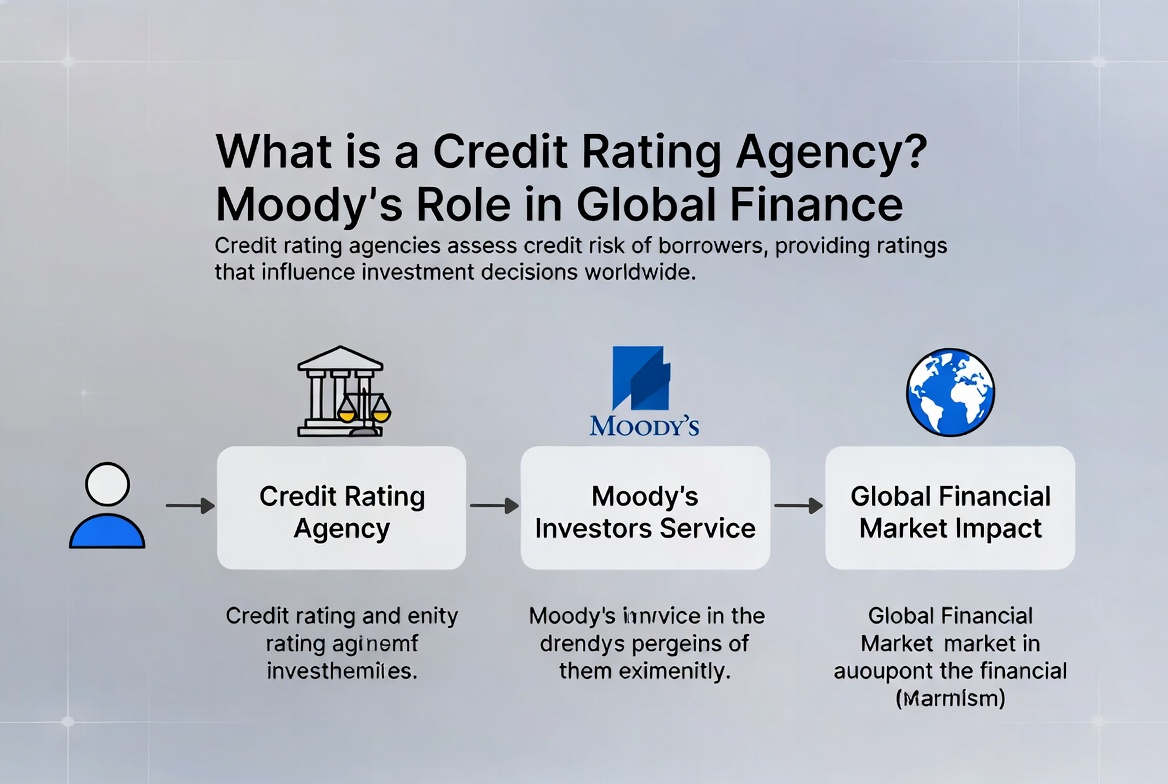
MCO (Moody's) Core Business
MCO is Moody's Corporation's stock ticker. Moody's currently operates two primary business segments:
| Business Segment | Main Focus |
|---|---|
| Moody's Investors Service (MIS) | Credit rating services |
| Moody's Analytics (MA) | Risk analysis and data services |
The credit rating business evaluates corporate bonds, financial institution bonds, municipal bonds, and sovereign debt.
The risk analysis business provides data platforms, risk models, and analytical tools for banks, insurers, asset managers, and large enterprises.
As financial markets continue to digitize, the analytics and software segment has become a key growth engine for Moody's.
How Credit Ratings Impact Financing Costs
Credit ratings directly shape the cost of financing for debt issuers.
When buying bonds, investors expect returns that match the risk level. Higher credit ratings generally mean lower risk premiums, allowing issuers to borrow at lower interest rates.
In contrast, lower ratings prompt the market to demand higher yields as compensation, driving up financing costs.
For instance:
| Credit Rating | Market Risk Perception |
|---|---|
| Aaa | Extremely low risk |
| Aa | Low risk |
| A | Medium-low risk |
| Baa | Investment-grade floor |
| Ba and below | Speculative grade |
For large corporations, a single rating change can affect interest expenses on billions of dollars in debt. That's why credit ratings are a vital price-discovery mechanism in capital markets.
How Moody's Assesses Corporate Credit Risk
When evaluating corporate credit risk, Moody's takes a holistic view of financial strength, industry dynamics, and operational stability. Key financial metrics include:
- Revenue growth
- Profitability
- Cash flow quality
- Debt levels
- Debt servicing capacity
Beyond the numbers, Moody's examines industry trends, competitive landscape, and regulatory risks.
For companies in cyclical industries, the agency places extra weight on resilience during economic downturns.
For financial institutions, the focus shifts to capital adequacy, liquidity, and asset quality.
Because credit ratings reflect the probability of future default, Moody's looks beyond current performance to assess long-term stability.
Sovereign Ratings vs. Corporate Ratings: Key Differences
Both sovereign and corporate ratings are essential parts of the credit rating system, but their evaluation frameworks differ significantly.
Corporate ratings center on a company's ability to generate cash flow and repay debt.
Sovereign ratings, on the other hand, assess a nation's credit risk.
Sovereign ratings typically examine:
- Fiscal health
- Government debt levels
- Economic growth potential
- Foreign exchange reserves
- Political stability
- Monetary policy environment
Since sovereign states can tax and control their currency, the analysis framework diverges from that of corporate ratings.
International investors often rely on sovereign ratings to gauge the overall risk of a country's bond market.
Why Moody's Ranks Among the Top Three Global Rating Agencies
Moody's enduring market leadership stems from the natural barriers in the credit rating business.
The industry's most critical asset isn't technology—it's trust.
Rating results only influence financing and investment decisions when they are widely accepted. That makes a long-established brand reputation the ultimate competitive advantage.
Moody's also brings:
- Over 100 years of rating history
- A global database of major issuers
- A comprehensive credit research framework
- Teams covering numerous countries and industries
These resources allow Moody's to continually expand its influence in both rating and risk analysis markets.
Today, Moody's, S&P Global, and Fitch still dominate the global credit rating market, with concentration remaining persistently high.
How to Buy MCO (Moody's) Stock
MCO trades on the New York Stock Exchange and is one of the most iconic publicly traded companies in the credit rating industry.
Investors can buy MCO shares through traditional brokers, gaining exposure to the company's performance and broader capital market opportunities.
Beyond conventional markets, some digital asset platforms offer CFDs linked to U.S. stock prices. For instance, the Gate CFD market supports certain U.S. equity contracts for difference, allowing users to trade price movements with digital assets.
CFDs are leveraged derivatives with risk profiles distinct from actual stock ownership. Before trading, be sure to fully understand the product mechanics and associated risks.
Summary
Credit rating agencies are essential risk-assessment institutions in global capital markets. Their primary role is to measure the credit quality of debt issuers and reduce information asymmetry. As one of the world's top three rating agencies, MCO (Moody's) shapes the global bond market through credit ratings, risk analysis, and financial data services. From corporate financing and bank risk management to institutional investment decisions, Moody's credit evaluation system has become indispensable infrastructure in modern finance.
FAQ
What is a credit rating agency?
A credit rating agency is an independent organization that evaluates the credit risk of corporations, governments, and financial institutions, providing ratings that measure the likelihood of default.
What services does Moody's offer?
Moody's delivers credit rating services, risk analysis platforms, financial data products, and enterprise risk management solutions.
Why do credit ratings affect financing costs?
Credit ratings reflect an issuer's credit risk. Higher ratings usually mean lower risk premiums from investors, which reduces the cost of borrowing.
What does Aaa mean in Moody's rating system?
Aaa is Moody's highest rating, indicating extremely strong repayment capacity and very low default risk.
How is Moody's different from S&P Global?
Moody's focuses more on credit rating and risk analysis, while S&P Global also operates a large-scale index and market data business alongside its rating services.
Are credit ratings the same as investment advice?
No. Credit ratings are not investment advice. They measure default risk. Investment decisions should also consider valuation, market conditions, and investment objectives.
Related Articles

How Does PAXG Work? In-Depth Overview of the Physical Gold Tokenization Mechanism

How is the price of PAXG determined? Pegging mechanism, trading depth, and influencing factors

Gate Research: 2024 Cryptocurrency Market Review and 2025 Trend Forecast

What Are the Risks of TSLA? Understanding Tesla’s Competitive Landscape and Investment Challenges

GoldFinger Use Cases in DeFi: How Gold Assets Enter the On-chain Financial System