Comprehensive TradFi Bond Analysis: How Bonds Function in Traditional Financial Markets
Bonds are the bedrock of traditional fixed income markets, serving as a core mechanism for government funding, corporate capital raising, and institutional portfolio construction. Unlike stocks, which confer ownership, bonds create a definitive legal debt relationship between issuer and investor, with cash flows and repayment terms clearly specified at issuance.
As a result, TradFi bonds are widely used to secure stable, predictable returns and play a vital role in risk management for diversified portfolios. The global outstanding bond market now exceeds $100 trillion, making it one of the largest and most impactful asset classes in conventional finance.
This article systematically examines how bonds function within traditional financial markets—including bond categories, issuance and trading mechanisms, essential metrics like yield and duration, major risks—and explores how the fixed income sector is evolving through tokenization, RWA, and crypto platforms.
What Are Bonds? Core Value and Purpose in Bond Investing
What Are Bonds?
Bonds are fundamentally debt securities—legal instruments that evidence borrowing by the issuer from the investor. Purchasing a bond is essentially lending money to the issuer (such as a government or corporation) in exchange for regular interest payments and repayment of principal at maturity. Bonds arise from the financing needs of the real economy: issuers use bonds to fund infrastructure, business expansion, or government expenditures, while investors benefit from relatively stable fixed returns to balance portfolio risk.
Globally, the bond market is massive, with more than $100 trillion in outstanding bonds—a cornerstone of the capital markets. Compared to equities, bonds are typically perceived as lower-risk investments because returns are contractually set and bondholders have payment priority over shareholders. For instance, a company may issue a bond with a 5% annual coupon, and investors receive 5% interest each year until the bond matures.
This predictability makes bonds indispensable for conservative investors and institutions seeking asset allocation. Understanding the basic mechanics of bonds enables investors to better recognize their market role and lays the groundwork for exploring innovative fixed income products on the Gate platform.
Bond Ecosystem: Government, Corporate, and Municipal Bonds
Bond Ecosystem: Government, Corporate, and Municipal Bonds
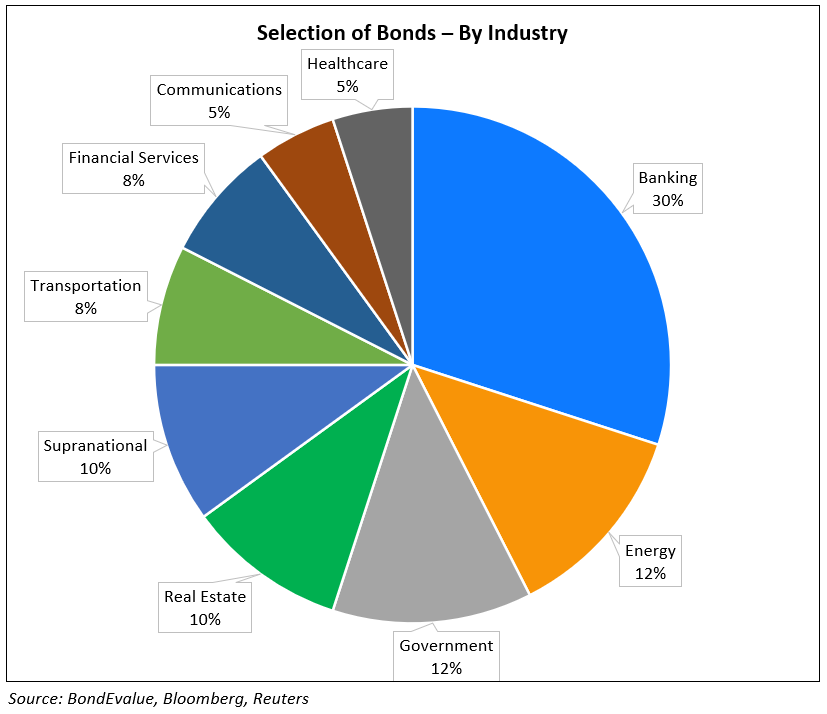
The bond ecosystem is diverse, with main issuers including governments, corporations, and municipalities, each offering distinctive features and risk profiles.
-
Government bonds, like U.S. Treasuries or German Bunds, are issued by national governments and are generally regarded as the safest bond category due to sovereign credit backing and extremely low default risk. These bonds fund public projects and economic policy, set global benchmark rates, and are the backbone of fixed income portfolios.
-
Corporate bonds are issued by companies to finance operations or expansion and generally carry higher risk and return potential than government bonds. Highly rated firms (Apple, Microsoft, etc.) issue lower-risk bonds, while startups or highly leveraged companies may offer high-yield (“junk”) bonds, enticing investors with elevated interest rates. Investors should consider credit ratings, maturities, and risk tolerance; for example, corporate bonds may offer a 6% coupon versus 2% for Treasuries, reflecting higher default risk.
-
Municipal bonds (such as city or state bonds) are issued by local governments to fund schools, transit, and other projects. In many markets, interest on these bonds may be tax-advantaged, boosting their appeal. The bond ecosystem also includes agency bonds (e.g., Fannie Mae) and international bonds (foreign issuers), each with unique liquidity, risk, and return profiles.
Essential Bond Metrics Every Investor Should Know
Wise bond investing depends on knowledge of essential bond metrics. Yield to Maturity (YTM) is fundamental for calculating total return if a bond is held to maturity, including interest and capital gains. For instance, a $1,000 face value bond with a 5% coupon purchased at $950 may have a YTM exceeding 5%, helping investors assess real returns.
The coupon rate is the fixed annual rate set at issuance (e.g., 4%), determining periodic interest payments. Credit ratings assigned by agencies like S&P or Moody’s range from AAA (top credit) to C (high risk); lower ratings mean higher default risk but greater potential yield.
Duration measures how sensitive a bond’s price is to interest rate changes—the longer the duration, the greater the price volatility. For example, a 5-year duration bond may drop about 5% in price if rates rise 1%. Liquidity risk reflects how easily a bond can be traded without price impact; Treasuries are highly liquid, while niche corporate bonds may be less so. Investors must also consider inflation risk, as fixed-rate bond returns can be diminished by inflation.
Bond Trading: Primary vs. Secondary Markets
How Are Bonds Bought and Sold?
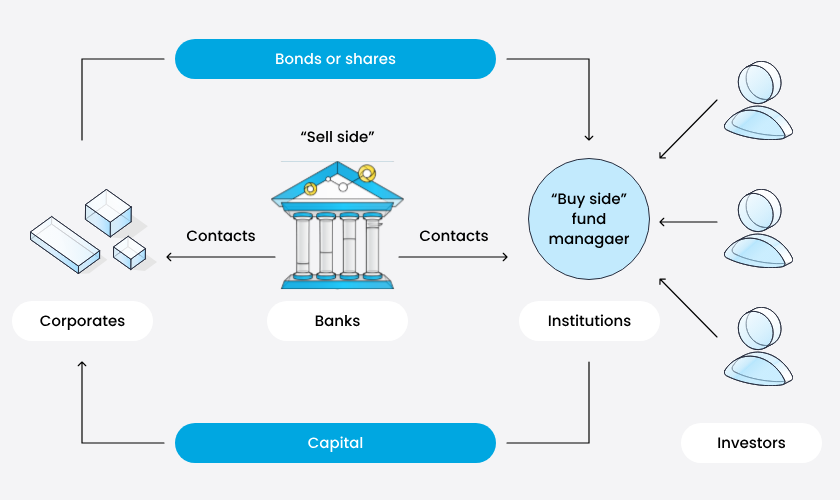
Bonds trade primarily on the primary and secondary markets, together forming a dynamic bond trading ecosystem.
The primary market is where new bonds are issued, with issuers (governments or corporations) selling directly to investors to raise capital. Underwriters help with pricing and distribution, and investors may participate via auctions or subscriptions. For example, U.S. Treasuries are regularly auctioned to both retail and institutional buyers. Primary market trades are initial, based on terms like face value and coupon, and are the main entry point for fixed income bonds.
The secondary market is where existing bonds are traded, enabling investors to buy and sell bonds before maturity, similar to equities. This enhances liquidity and allows for portfolio adjustments. Prices are set by supply and demand and influenced by rates, credit events, and market sentiment. For example, a $1,000 face value corporate bond may trade at $1,050 (premium) or $950 (discount) based on market conditions. Trading venues include exchanges, OTC markets, and electronic platforms, with most retail investors accessing via brokers or financial platforms.
Bonds’ Core Role in Balanced Portfolios
Within balanced portfolios, bonds act as stabilizers and key tools for risk diversification. Asset allocation theory recommends distributing funds across stocks, bonds, and cash to optimize risk-adjusted returns. Bonds typically deliver fixed income, offsetting the volatility of equities—when stocks decline, bond prices may rise or hold steady, buffering losses. A classic “60/40” portfolio (60% stocks, 40% bonds) balances growth and safety, historically yielding lower volatility.
Bonds’ return profile also supports long-term goals such as retirement or education savings. Investors can tailor choices by maturity and credit quality: short-term Treasuries provide liquidity, long-term corporate bonds offer higher yields. Even in low-rate environments, bonds can yield capital gains if rates are expected to fall.
With market digitization, tokenized RWA (Real World Asset) bonds are expanding access. The Gate platform enables investors to tap into varied fixed income products, seamlessly integrating traditional bonds into crypto portfolios and achieving convergence between traditional finance and digital assets for greater diversification and risk management.
Risks in Bond Investing
Though bonds are generally seen as safer assets, they carry risks that investors must manage.
-
Credit risk—the risk that issuers may default on interest or principal payments. Lower-rated corporate bonds are more prone to default, with some high-yield bonds historically showing default rates above 5%.
-
Interest rate risk—when market rates rise, existing bond prices fall as new bonds offer better yields, especially affecting long-duration bonds; falling rates can lead to capital gains.
-
Inflation risk—fixed income can lose real value if inflation outpaces bond yields, eroding purchasing power. For example, a 3% bond yield and 4% inflation means negative real returns.
-
Liquidity risk—difficulty in selling bonds quickly without loss, especially in niche or low-rated bonds. Currency risk (for foreign bonds) and reinvestment risk (earning lower rates on reinvested interest) also apply.
Bonds & Blockchain: The Emergence of DeFi and Tokenized RWA
Blockchain is transforming the bond market, driving rapid growth in DeFi (Decentralized Finance) and tokenized RWA (Real World Assets). Tokenized RWA converts traditional bonds and assets into digital bond tokens on-chain, enabling efficient and transparent trading and settlement. For example, a company may issue tokenized bonds, each token representing $1,000 in face value, with investors purchasing via crypto wallets for instant cross-border transfers and 24/7 market access, reducing intermediary costs and lowering barriers for retail investors.
DeFi platforms offer bond-like products, such as yield farms or lending protocols, where users earn fixed or variable returns by staking tokens. These rely on smart contracts for automated execution, boosting trust and efficiency. However, investors should be mindful of risks like smart contract vulnerabilities and regulatory uncertainty.
Industry data shows the tokenized RWA market has grown to several billion dollars, serving as a key bridge between traditional finance and the crypto ecosystem.
Fixed Income Opportunities on Gate
The Gate platform, a leading global crypto exchange, is dedicated to providing a broad range of fixed income investment opportunities, bridging the gap between traditional bond markets and crypto innovation. Through Gate, investors can access diversified tokenized bonds and RWA (Real World Asset) products, presenting government and corporate bonds as digital tokens and streamlining trading. For example, users can invest in tokenized corporate bonds with annual yields around 6%, denominated in USD stablecoins, making crypto asset investment seamless.
Gate stands out for its secure, intuitive interface and extensive market reach. The platform provides comprehensive product information, including yield, credit rating, and maturity, helping users make informed decisions. Gate also integrates DeFi protocols, allowing users to earn returns via staking and liquidity mining, similar to bond interest.
To attract newcomers, Gate offers robust educational resources and low minimum investment, starting at just $100. Whether you’re a conservative investor seeking stable returns or a trader aiming for portfolio diversification with crypto assets, Gate delivers a reliable gateway to fixed income investing and the efficiencies of blockchain technology.
Conclusion
Bonds remain a fundamental component of balanced portfolios, providing stable returns and risk diversification for investors. Whether through traditional government, corporate, and municipal bonds or tokenized RWA and DeFi products on Gate, bonds enable diversified strategies and optimize risk-adjusted performance.
Mastery of key bond metrics—yield to maturity, coupon rate, credit rating, duration, liquidity—and awareness of investment risks—credit, rate, inflation, liquidity—are crucial for success. As blockchain and tokenized RWA reshape the landscape, bond investing is becoming more efficient and transparent, with lower entry barriers for retail investors seeking fixed income.
With Gate, investors gain access to both traditional bond markets and innovative fixed income products in crypto, achieving integration between traditional finance and digital assets. Whether pursuing stable returns or portfolio diversification, the convergence of bonds and tokenized assets provides a dependable path for steady growth in any market environment.
Further Reading
Related Articles

AI-Native Settlement Layers: How United Stables Is Building the Next Financial Rail

The ve(3,3) Flywheel Explained: How AERO Tokenomics Powers Aerodrome’s DeFi Economy

How Does PAXG Work? In-Depth Overview of the Physical Gold Tokenization Mechanism

Aerodrome Tokenomics: How ve(3,3) Powers Base's Most Profitable DEX

How is the price of PAXG determined? Pegging mechanism, trading depth, and influencing factors
