Tom Lee’s Latest 2026 Insights: Do Rising Gold and Silver Prices Signal an Imminent Bitcoin Cycle?
Market Background: Why Are Gold and Silver Continuing to Rise?
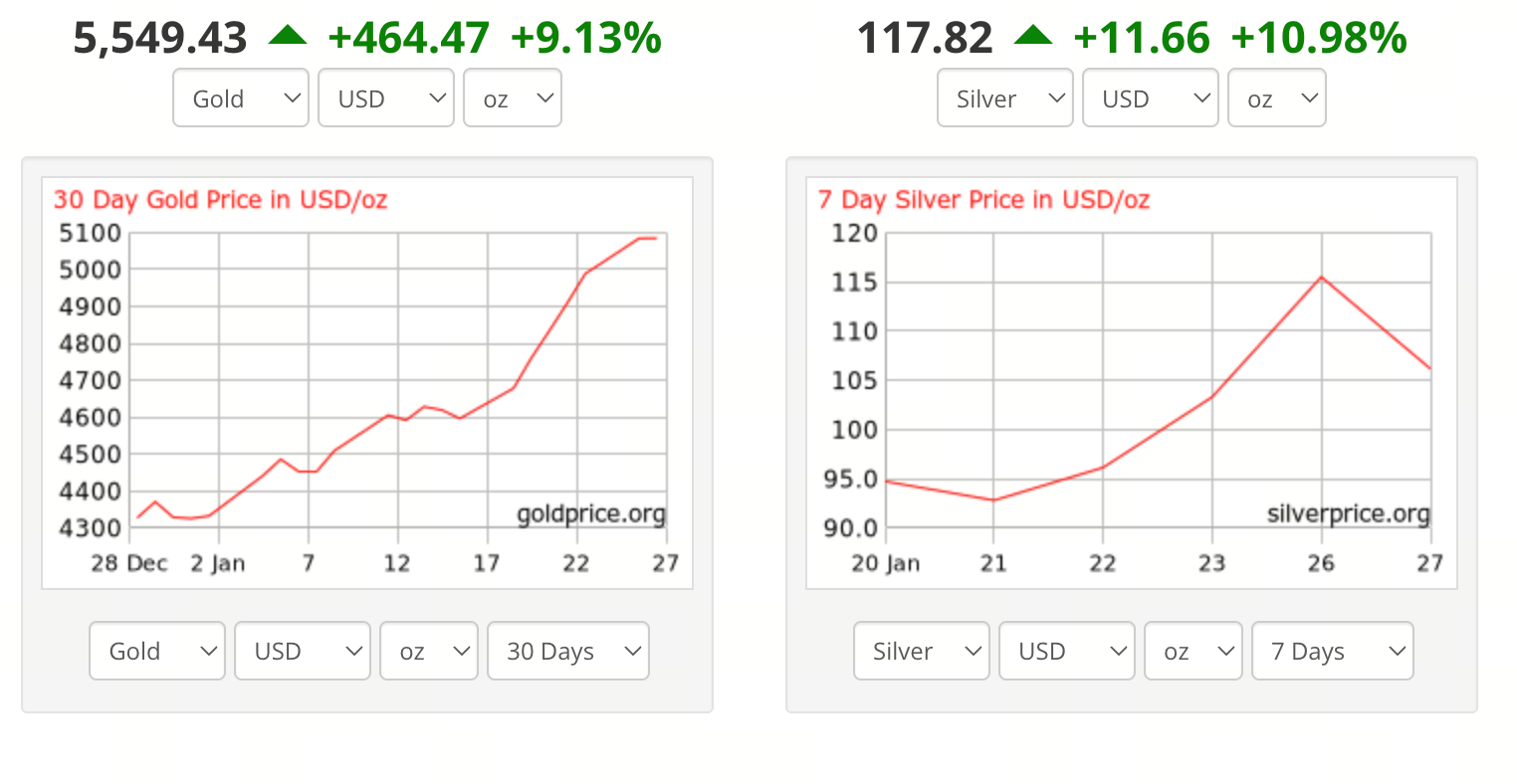
Source: https://goldprice.org/
Global risk aversion has been on the rise recently, driving traditional safe-haven assets like gold and silver to new highs. Market data shows that gold prices have reached multi-year records, while silver has also surpassed previous peaks. As long-established stores of value, precious metals tend to attract substantial capital inflows during periods of macroeconomic uncertainty—especially when the dollar weakens or the Federal Reserve signals a more accommodative policy stance.
This upward trend has drawn the attention of traditional investors and become a focal point in asset allocation discussions. In contrast, crypto assets have remained relatively steady, with digital assets such as Bitcoin yet to show a decisive breakout.
Tom Lee’s Perspective on the Cyclical Relationship Between Precious Metals and Crypto Assets
According to recent reports, BitMine Chairman Tom Lee sees the current rally in precious metals as more than just a short-term flight to safety—it may represent a distinct stage within the broader market cycle. Lee notes that gold and silver often strengthen following a period of deleveraging in risk assets, as capital seeks safer havens.
Lee stresses that this stage does not signal any deterioration in the fundamentals of Bitcoin or Ethereum. He believes the rise in precious metals may actually “mask” improvements in crypto asset fundamentals, such as growing institutional interest in Ethereum and other smart contract platforms, alongside the increasing maturity of the market.
How Gold and Silver Rallies Affect Bitcoin Price Dynamics
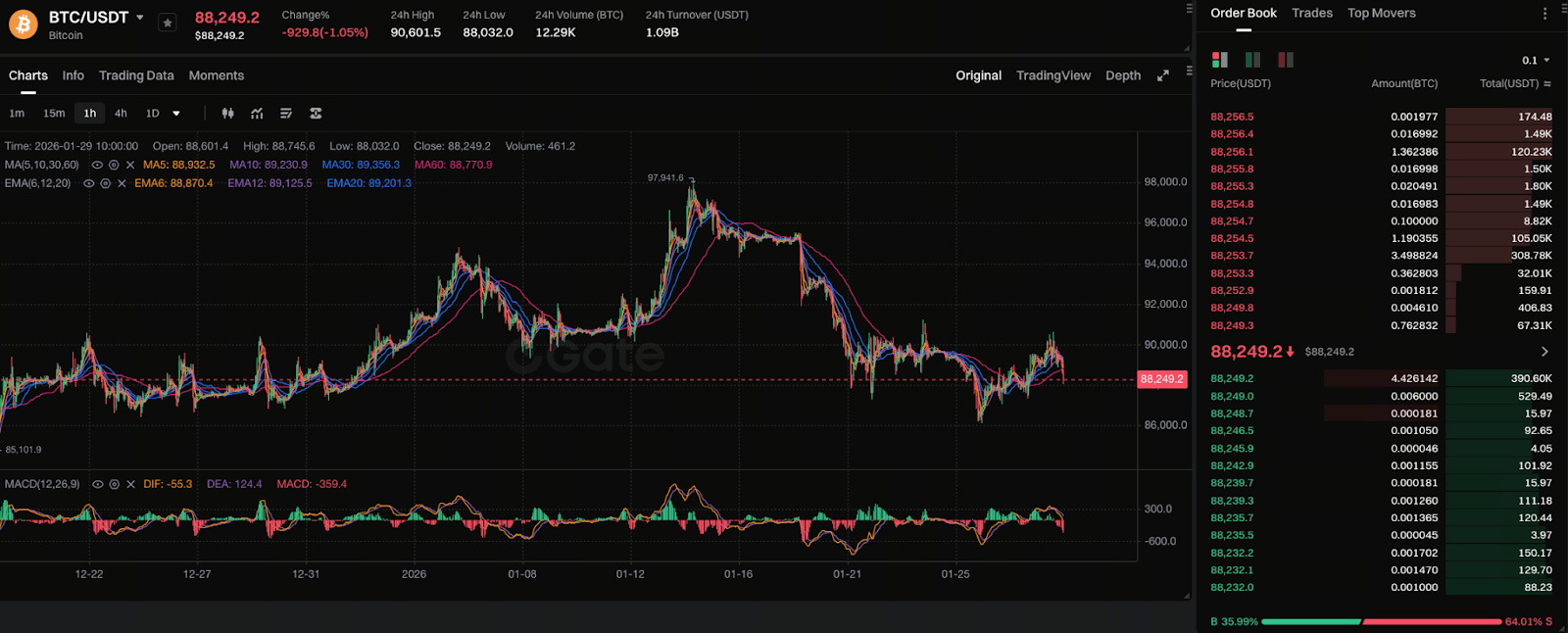
Source: https://www.gate.com/trade/BTC_USDT
Historically, when market risk appetite declines, capital tends to flow first into traditional safe-haven assets like gold and silver. This latest rally in precious metals has attracted significant capital, creating short-term pressure on risk assets such as Bitcoin. However, Lee argues that this phase of rotation does not disrupt the overall Bitcoin trend; rather, it reflects a cyclical redistribution of capital.
Importantly, Lee offers a cyclical perspective: when precious metals peak or begin to correct, capital may flow back into crypto assets, potentially triggering a new upward cycle. This pattern has played out to varying degrees in several previous market cycles.
Is the Bitcoin Cycle Changing? Tom Lee’s Key Conditions
In recent market analyses, Tom Lee has stated that Bitcoin’s traditional four-year cycle may be evolving, driven by new factors such as increased institutional demand and the participation of ETFs and stablecoins.
Lee believes that, compared to previous cycles driven primarily by the halving dynamic, today’s market is shaped more by macro capital allocation shifts and fundamental improvements. Thus, the relationship between precious metals and Bitcoin is not simply one of substitution, but of rotation: precious metals lead, followed by crypto assets.
In Lee’s view, when the dollar weakens, the Federal Reserve turns dovish, and the rally in precious metals begins to slow, Bitcoin could gain renewed upward momentum.
How Should Investors Interpret Current Precious Metals and Crypto Market Dynamics?
For medium- and long-term investors, understanding this cyclical rotation is essential:
- Avoid interpreting strength in precious metals as the end of crypto. Lee believes that precious metals’ rally is primarily a reflection of cyclical risk-averse capital flows, not a rejection of Bitcoin’s fundamentals.
- Monitor signals of fundamental improvement. For example, institutional interest in blockchain technology and the Ethereum platform is rising, highlighting long-term growth potential.
- View cycles as phases of rotation, not permanent substitution. Capital flows from risk to safe-haven assets do not mean risk assets have lost their value.
Summary and Future Outlook
In summary, Tom Lee’s cyclical analysis offers market participants a broader and more dynamic perspective on the price relationship among gold, silver, and Bitcoin. He views the strength in precious metals as a cyclical phenomenon, with Bitcoin’s next rally likely to emerge as the precious metals’ uptrend slows. For long-term investors, understanding and adapting to this dynamic rotation can lead to more informed asset allocation decisions across different market phases.
Related Articles

AI-Native Settlement Layers: How United Stables Is Building the Next Financial Rail

The ve(3,3) Flywheel Explained: How AERO Tokenomics Powers Aerodrome’s DeFi Economy

How Does PAXG Work? In-Depth Overview of the Physical Gold Tokenization Mechanism

Aerodrome Tokenomics: How ve(3,3) Powers Base's Most Profitable DEX

How is the price of PAXG determined? Pegging mechanism, trading depth, and influencing factors
