Tether Launches Mining OS to Redefine Open Bitcoin Mining Infrastructure
Tether Enters the Mining Infrastructure Layer
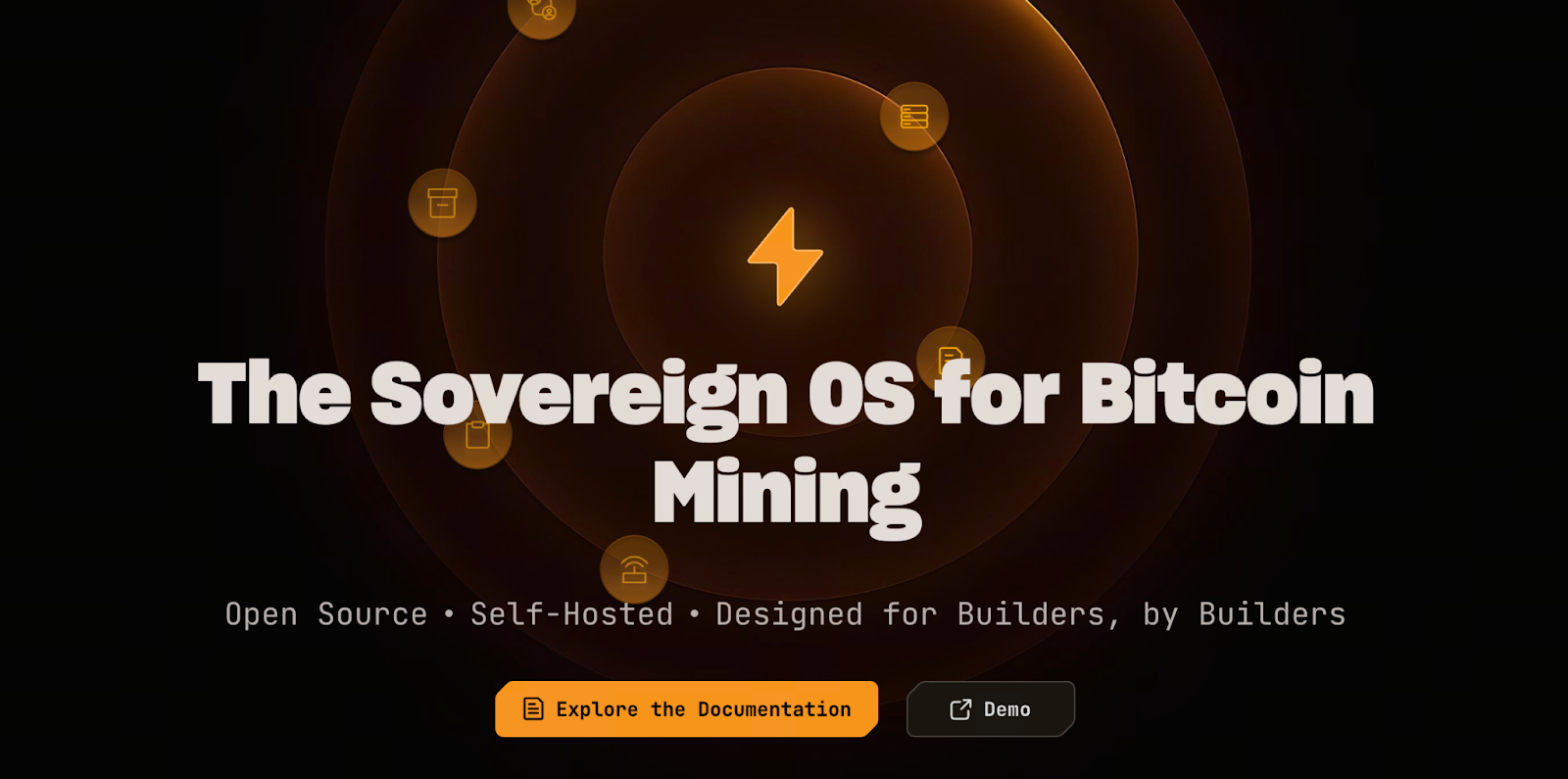
(Source: mos.tether)
Tether has officially unveiled a new Bitcoin mining operating system—Mining OS (Mining OS by Tether, or MOS). This open-source, infrastructure-grade operating system is designed not only to manage mining hardware, but also to integrate energy, hardware, and data layers, redefining operational control in mining.
Unlike traditional mining management software, Mining OS is a scalable foundational platform. It enables miners to manage hash power, monitor device status, optimize energy usage, and reduce dependence on closed third-party tools—all within a unified architecture. Tether has released comprehensive technical documentation and opened its developer community, inviting engineers and miners worldwide to help build out the system.
A Universal Architecture for Individual Miners and Large-Scale Mining Farms
Mining OS isn’t just for massive mining farms. Its architecture is highly flexible, supporting mining operations of any scale—from solo miners running single machines to industrial-scale facilities with tens of thousands of devices across multiple locations—all operating under the same system framework.
The system’s modular design allows users to select features and expansion modules based on their actual needs. Mining farms can upgrade system capabilities as they grow, eliminating the need to repeatedly change solutions and reducing long-term operating costs and migration risks.
Challenging the Closed Software Status Quo in Mining
For years, the Bitcoin mining industry has been heavily dependent on closed software and proprietary management tools. Miners have lacked transparency into underlying operations, had limited control over performance tuning, data processing, and security risks, and often found themselves locked into single service providers.
Mining OS is designed to break this structural barrier. Tether aims to restore transparency, verifiability, and auditability to mining infrastructure through open protocols and community collaboration—empowering miners with true operational control instead of forcing them to rely on opaque, black-box tools.
Fully Open Source with No Licensing Barriers
Mining OS is released under the Apache 2.0 License, allowing anyone to freely use, modify, and further develop the system without licensing fees or commercial restrictions.
The system is built on Holepunch’s peer-to-peer (P2P) protocol, does not rely on centralized cloud services, and contains no hidden backdoors or third-party control modules. This design philosophy aligns the architecture with the core spirit of Bitcoin and decentralized infrastructure.
Mining Sovereignty as a Core Design Principle
Mining OS places mining sovereignty at the center of its design philosophy. The system supports fully localized deployment, requiring no connection to external cloud platforms and avoiding control by any single service provider. Even if external networks go down or centralized platforms fail, Mining OS can continue operating on local networks. Thanks to its P2P architecture, the system maintains basic mining and management functions even if some nodes fail—enhancing mining farm resilience and autonomy.
For Tether, Mining OS is more than a tool—it’s a foundational operating system purpose-built for Bitcoin mining, aiming to restore autonomy, transparency, and control to mining operations.
If you want to explore more Web3 content, click to register: https://www.gate.com/
Summary
Mining OS is more than a product launch by Tether in the Bitcoin mining sector—it redefines the future of mining infrastructure. With its open-source architecture, modular design, and decentralized network protocols, Mining OS empowers miners with true system sovereignty, shifting them from tool users to infrastructure participants and builders. As Bitcoin continues its path toward decentralization and autonomous operation, Mining OS represents not just improved efficiency, but a new, more open and transparent paradigm for mining.
Related Articles

AI-Native Settlement Layers: How United Stables Is Building the Next Financial Rail

The ve(3,3) Flywheel Explained: How AERO Tokenomics Powers Aerodrome’s DeFi Economy

How Does PAXG Work? In-Depth Overview of the Physical Gold Tokenization Mechanism

Aerodrome Tokenomics: How ve(3,3) Powers Base's Most Profitable DEX

How is the price of PAXG determined? Pegging mechanism, trading depth, and influencing factors
