Spot Bitcoin ETF Inflows of $1.42 Billion Drive BTC Price Momentum
Spot Bitcoin ETF Inflows Rebound Sharply
In the trading week of mid-January 2026, the US spot Bitcoin ETF market saw net inflows of approximately $1.42 billion—the largest weekly increase in nearly three months. This marks a clear reversal from the previous period of outflows and highlights that institutional investors are reassessing BTC’s risk–return profile.
At the market level, ETF inflows are typically strong indicators of underlying trends. They often reflect shifts in medium- and long-term allocation strategies, rather than short-term trading behavior.
ETF Fund Structure: IBIT Takes the Lead
In terms of product distribution, this wave of inflows was highly concentrated in BlackRock’s iShares Bitcoin Trust (IBIT):
- IBIT attracted about $1.03 billion in new capital
- Representing roughly 73% of all ETF net inflows for the week
This structural dynamic underscores the dominance of large asset managers in the crypto ETF space. Institutional capital tends to favor ETFs that offer greater scale, deeper liquidity, and higher compliance standards over smaller or less liquid products.
IBIT’s continued strong inflows show that traditional finance is entering the Bitcoin market using familiar instruments, rather than directly managing on-chain or custody complexities.
Bitcoin Price Performance and Capital Flow Dynamics
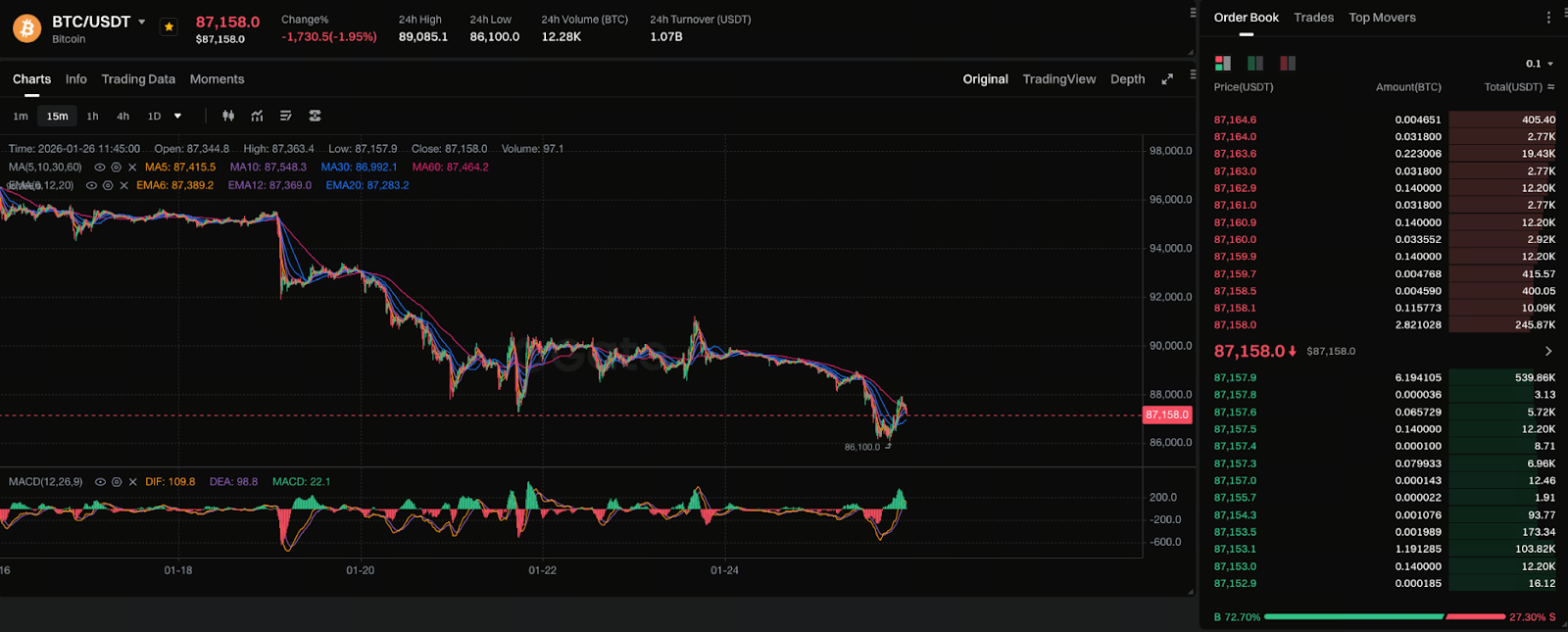
Chart: https://www.gate.com/trade/BTC_USDT
With support from ETF inflows, Bitcoin traded mostly around the $90,000 mark in early 2026. Intraweek data shows BTC briefly tested $95,000 but encountered resistance at that level.
This price range developed amid strong net inflows, indicating that ETF capital is providing meaningful support for market sentiment and price floors. However, it also reveals that, at higher price levels, there is still profit-taking and a wait-and-see attitude among market participants.
Structurally, the current market resembles a “capital-backed floor and price digestion” phase rather than a rapid, one-sided rally.
Strategy (Formerly MicroStrategy) Makes Another Major Bitcoin Purchase
Beyond ETF inflows, ongoing large-scale buying by corporations has also become a focal point. Strategy (formerly MicroStrategy) disclosed a new round of substantial accumulation in mid-January:
- Period: January 12–19
- New BTC acquired: approximately 22,305
- Capital deployed: about $2.13 billion
- Total BTC holdings: approximately 709,715
This move demonstrates that the company continued to add to its holdings even as prices remained elevated but sentiment stabilized, reinforcing its long-term strategy of positioning Bitcoin as a core asset.
While Strategy’s stock price faced short-term pressure, its holdings have established it as one of the world’s most influential institutional Bitcoin holders, and its actions send a clear signal to the market.
Risks and Uncertainties in the Institutional Capital Landscape
ETF inflows and corporate buying have fueled market enthusiasm, but also bring structural risks:
- Volatility remains high: Even with net inflows, BTC continues to see significant daily and weekly price swings.
- Institutional strategies have constraints: ETF capital is usually tied to longer allocation cycles, while corporate buying (such as by Strategy) is closely linked to financing costs and balance sheet health.
- Potential impact of high leverage: If funding conditions tighten, some institutions may face challenges in maintaining their accumulation strategies.
As a result, institutional buying should not be viewed as a “risk-free bottom.”
Key Takeaways for Investors
The significant return of US spot Bitcoin ETF capital and renewed accumulation by Strategy send a clear message: structural interest from traditional finance and corporate capital in Bitcoin persists.
However, the mismatch between short-term price action and capital allocation cycles means that investment strategies must focus more on:
- Position management
- Volatility tolerance
- Risk control across multiple timeframes
At this stage, Bitcoin is increasingly being repriced as an institutional-grade asset, rather than merely a vehicle for sentiment-driven trading.
Related Articles

AI-Native Settlement Layers: How United Stables Is Building the Next Financial Rail

The ve(3,3) Flywheel Explained: How AERO Tokenomics Powers Aerodrome’s DeFi Economy

How Does PAXG Work? In-Depth Overview of the Physical Gold Tokenization Mechanism

Aerodrome Tokenomics: How ve(3,3) Powers Base's Most Profitable DEX

How is the price of PAXG determined? Pegging mechanism, trading depth, and influencing factors
