Solana Price Prediction: Can SOL Return to 200 as PayFi Challenger RTX Gains Narrative Momentum

2026-01-21 03:39:21
As the market gradually digests the gains from earlier this year and risk appetite returns, capital is refocusing on assets with substantial on-chain activity and real application support. This article explores Solana’s (SOL) ecosystem momentum and technical architecture, analyzing the factors behind its sustained strength amid market volatility. It further examines the emergence of the PayFi narrative and how new payment-oriented projects—represented by Remittix (RTX)—are drawing long-term capital by delivering tangible products and clear project timelines. These developments illustrate the crypto market’s progression from foundational infrastructure to practical financial applications.

Preface

As the crypto market absorbs the rapid gains seen earlier this year, investors are reassessing which assets have the potential to maintain momentum. With Bitcoin’s price action stabilizing, market risk appetite is rebounding. Mainstream altcoins supported by active on-chain activity and real-world applications are once again attracting capital, and Solana (SOL) stands out as a leading example.

The market is also experiencing subtle shifts. In addition to traditional Layer 1 blockchains, PayFi projects—focused on integrating payments with real-world finance—are beginning to draw attention from long-term investors. Among these, Remittix (RTX) has recently emerged as a frequently discussed new player.

Solana’s Market Momentum

From a market structure perspective, Solana has consistently delivered high TPS performance this year and continues to attract new projects in DeFi, NFT, and Web3 infrastructure. This combination of active development and actual usage provides dual support, enabling SOL to maintain a relatively stable price range even amid volatility.

Technical Structure and Price Outlook

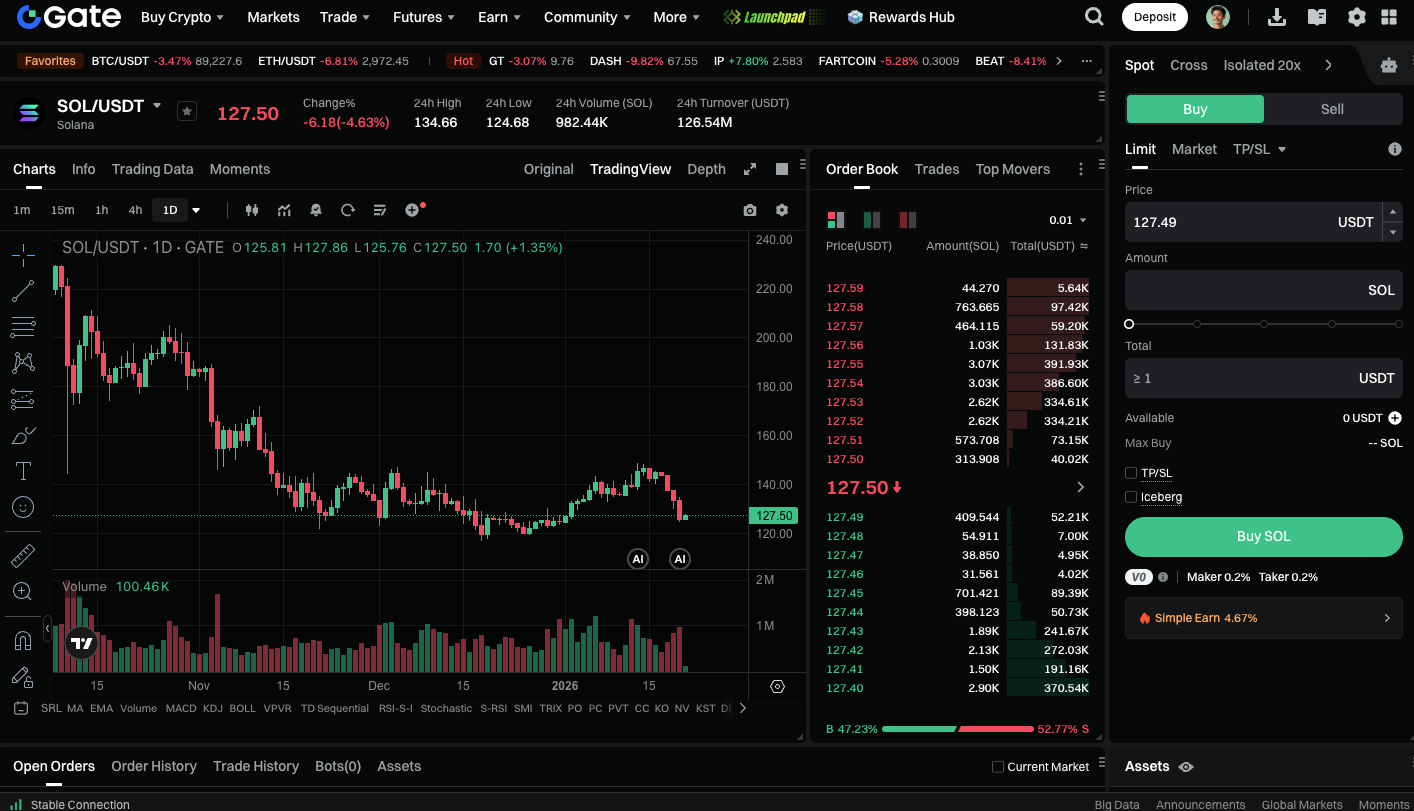
Technically, SOL has repeatedly held key support levels established earlier this year and has gradually set higher lows. This leaves room for a bullish price outlook. Some market models suggest that as long as the broader crypto market avoids systemic risks, Solana could retest the $200 threshold. Unlike previous cycles, capital is no longer concentrated on a single blockchain narrative. Investors are placing greater importance on projects that connect with real-world financial needs, which is also directing attention toward emerging payment-focused initiatives.

PayFi Narrative Gains Traction: Remittix (RTX) Accelerates Real-World Adoption

Amid this narrative shift, Remittix (RTX) is positioned as a PayFi-centric project, aiming to bridge the gap between crypto assets and traditional finance. While still in its early stages, its product development is steadily progressing.

According to official sources, the Remittix wallet has launched on the Apple App Store, with a Google Play version confirmed for future release. This will enable users to directly manage and transfer digital assets. More importantly, its PayFi mainnet platform for crypto-to-fiat conversion is scheduled to go live on February 9, 2026, targeting cross-border payments and real-world financial applications.

To date, Remittix has raised $28.8 million in private funding and sold over 701 million tokens, signaling sustained market interest in its payments narrative.

Start trading BTC spot now: https://www.gate.com/trade/SOL_USDT
Conclusion

Solana remains one of the few mainstream blockchains combining high on-chain activity with a mature ecosystem. As market sentiment continues to recover, SOL’s prospects for retesting $200 are increasingly supported. With capital turning its attention to “how crypto assets can achieve real-world financial utility,” PayFi projects are gaining visibility. Remittix (RTX) has captured market interest with its product rollout and clear timeline, reflecting the search for the next growth theme. In the coming period, SOL and RTX may not simply compete, but rather represent a dual-track evolution—from infrastructure to practical value—in the crypto market.

Author: Allen
Disclaimer
* The information is not intended to be and does not constitute financial advice or any other recommendation of any sort offered or endorsed by Gate.
* This article may not be reproduced, transmitted or copied without referencing Gate. Contravention is an infringement of Copyright Act and may be subject to legal action.

Related Articles

AI-Native Settlement Layers: How United Stables Is Building the Next Financial Rail

Beginner

AI-Native Settlement Layers: How United Stables Is Building the Next Financial Rail

Stablecoins were originally designed as dollar substitutes within exchanges, primarily used for asset pricing and trade settlement. As on-chain financial ecosystems have matured, their role has expanded beyond simple payments to include collateral assets, cross-chain liquidity mediums, and unified settlement units. In particular, as AI systems and automated agents begin to participate directly in economic activity, demand has risen sharply for programmable value units capable of instant settlement. This shift is pushing stablecoins toward the role of foundational financial infrastructure.
2026-02-24 06:51:41
The ve(3,3) Flywheel Explained: How AERO Tokenomics Powers Aerodrome’s DeFi Economy

Beginner

The ve(3,3) Flywheel Explained: How AERO Tokenomics Powers Aerodrome’s DeFi Economy

In the competition for DeFi liquidity, high-inflation mining alone is no longer enough to build lasting advantages. Aerodrome applies the ve(3,3) economic model to redesign token emissions, voting mechanisms, and revenue distribution, creating a liquidity flywheel centered on governance and cash flow. This article examines AERO tokenomics, the veAERO locking mechanism, and protocol revenue models to explain how Aerodrome builds a sustainable DeFi economic system.
2026-02-10 04:41:32
How Does PAXG Work? In-Depth Overview of the Physical Gold Tokenization Mechanism

Beginner

How Does PAXG Work? In-Depth Overview of the Physical Gold Tokenization Mechanism

PAXG (Pax Gold) is a tokenized asset backed by physical gold, issued by the fintech company Paxos and traded on the Ethereum blockchain as an ERC-20 token. The core concept is to tokenize physical gold on-chain, with each PAXG token representing ownership of a certain amount of gold. This structure enables investors to hold and trade gold in the form of a digital asset.
2026-03-09 09:30:10
Aerodrome Tokenomics: How ve(3,3) Powers Base's Most Profitable DEX

Beginner

Aerodrome Tokenomics: How ve(3,3) Powers Base's Most Profitable DEX

AERO is the native token of Aerodrome Finance, a core decentralized exchange and liquidity protocol in the Base ecosystem. It is primarily used for liquidity incentives and ecosystem operations. veAERO is a governance NFT that users receive by locking AERO, representing both voting power and the right to share protocol revenue. Through a dual track structure of AERO as a utility token and veAERO as a governance credential, Aerodrome separates liquidity usage value from long term governance power, allowing participants to act as liquidity providers, governance decision makers, and revenue sharers within the same system.
2026-02-10 04:44:29
How is the price of PAXG determined? Pegging mechanism, trading depth, and influencing factors

Beginner

How is the price of PAXG determined? Pegging mechanism, trading depth, and influencing factors

PAXG (Pax Gold) is a tokenized asset backed by physical gold reserves, launched by fintech firm Paxos and issued as an ERC-20 token on the Ethereum blockchain. The core concept is to digitally represent real-world gold assets, allowing investors to hold and trade gold via the blockchain network. Because each PAXG token corresponds to a specific quantity of physical gold, its price is theoretically expected to closely track the global gold market.
2026-03-09 09:26:51
Hybrid Collateral Stablecoins: Inside United Stables' Stability and Yield Architecture
Beginner

Hybrid Collateral Stablecoins: Inside United Stables' Stability and Yield Architecture

In the early stages of the crypto market, traditional stablecoins mainly relied on single-reserve or single-collateral models. Their primary focus was price stability and payment convenience, which allowed them to become foundational tools for on-chain trading and capital flows. As the market has entered a more mature financial phase, however, this structure has begun to reveal limitations, including high concentration risk and the difficulty of balancing liquidity with yield. These constraints have driven the evolution toward multi-layer collateral and portfolio-based designs, such as the dual-layer hybrid collateral architecture proposed by United Stables, which seeks to redefine the underlying logic of stable assets.
2026-02-24 06:49:50
