Secure Integration of TradFi and Crypto: New Opportunities and Challenges for Financial Security in 2026
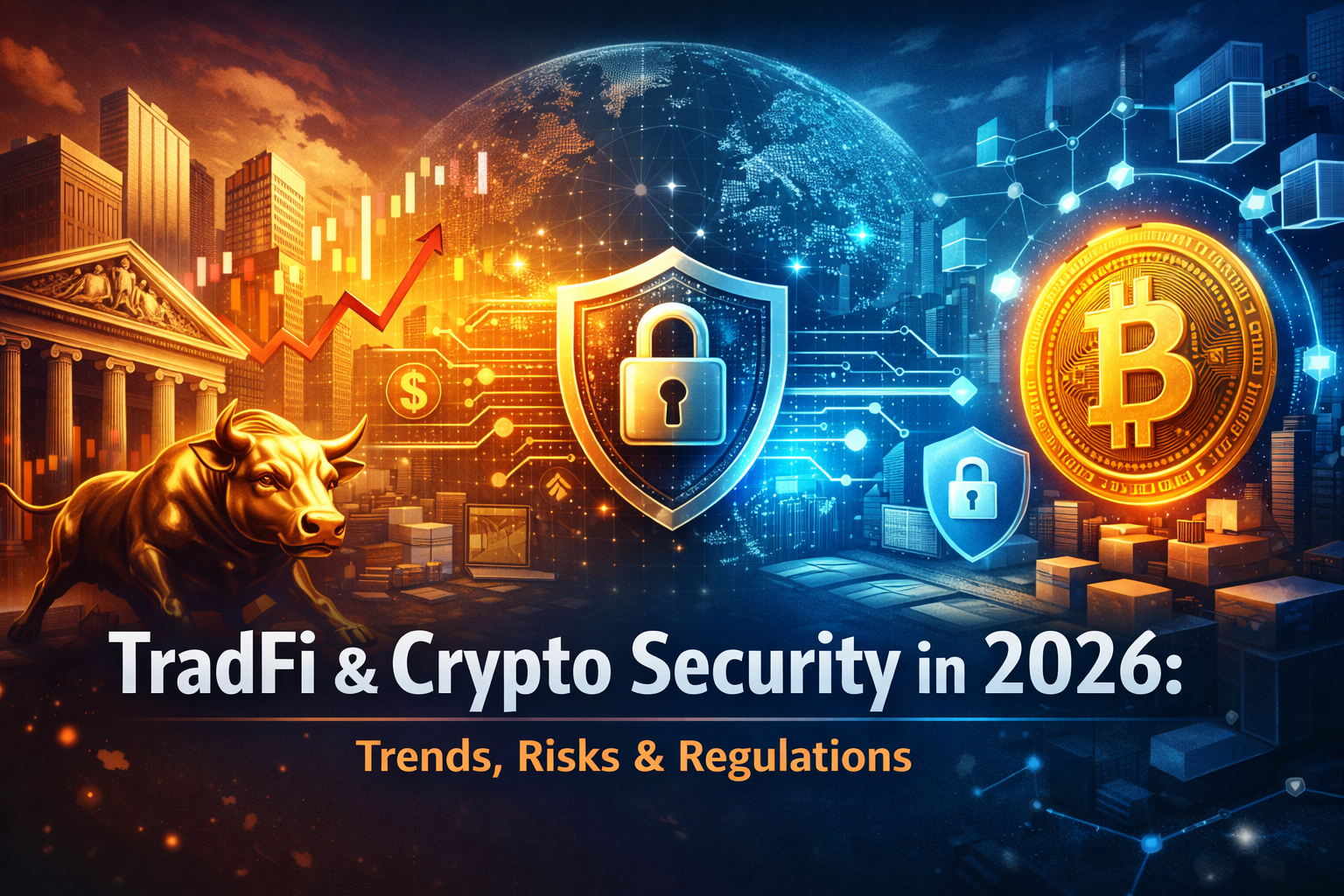
The Era of Secure Integration Between TradFi and Crypto
As the cryptocurrency market matures, more traditional financial institutions are adopting blockchain technology. For instance, major financial firms have launched tokenized deposit solutions, driving asset tokenization and expanding institutional investment opportunities. Simultaneously, leading crypto exchanges and financial institutions have introduced integrated products—such as TradFi offerings that blend traditional assets like precious metals with crypto derivatives—creating diverse entry points for investors.
These developments not only highlight the accelerating convergence of TradFi and Crypto, but also bring traditional financial encryption and security requirements to the forefront. When traditional financial assets and blockchain systems share core infrastructure, security risks become cross-domain, demanding the parallel evolution of new security solutions and regulatory frameworks.
The Impact of Recent Policies and Regulation on TradFi Crypto Security
In early 2026, regulators worldwide are advancing new policies to strengthen oversight of crypto transactions, fund flows, and security standards. India’s FIU has rolled out stricter KYC and anti-money laundering (AML) requirements, including live selfie and geo-tagged identity verification to curb illegal activity and enhance on-chain security.
In Europe, as MiCA regulations near implementation, French financial authorities have noted that some crypto companies lack proper licenses, raising compliance and security standards across the blockchain sector.
These regulatory upgrades are designed not only to standardize the market, but also to directly shape the security boundaries between TradFi and Crypto. Only by strictly meeting compliance requirements can institutions build reliable bridges for trading and settlement between traditional finance and crypto assets.
Market Trends: Where Traditional Financial Institutions Meet Crypto Technology
From a market perspective, banks and financial institutions are accelerating their adoption of blockchain technology. BNY Financial has launched tokenized deposit services, offering institutional clients flexible and secure asset management solutions. Exchanges like Binance now provide perpetual contracts for traditional assets, enabling investors to trade gold and silver around the clock.
These products essentially integrate crypto liquidity with established risk management structures, but they also introduce new security challenges. Institutions must ensure robust protection for on-chain asset private keys, trade matching, and clearing systems—especially when handling large-scale institutional funds.
Technical Perspective: Advancing TradFi Crypto Security
Technically, traditional perimeter-based security models can no longer meet the demands of the evolving financial ecosystem. Blockchain and FinTech security frameworks are shifting toward zero trust architectures, multi-factor authentication, and distributed key management—each playing a critical role in strengthening TradFi Crypto security.
For example, smart contracts can enforce access control policies, while on-chain auditing and cross-chain verification significantly boost system defenses against internal threats and external attacks.
Future Trends and Investor Security Strategies
Looking ahead to 2026 and beyond, the landscape of traditional financial encryption security will be shaped by several key factors:
- Greater regulatory clarity: As MiCA and similar global regulations advance, security compliance will become the gateway for institutional participation in crypto markets.
- Standardization of technology: Industry-wide collaboration is driving cross-chain security protocols and audit mechanisms to become standard practice.
- Growth of institutional-grade security solutions: Services such as cold wallet custody and smart contract audits are becoming integral to mainstream institutional offerings.
For individual investors, understanding the fundamentals of TradFi Crypto security and adopting the following strategies is essential:
- Choose compliant exchanges and custody services;
- Regularly back up private keys and implement layered asset management;
- Stay alert to security vulnerabilities and scams.
In summary, secure integration between TradFi and Crypto is not just a technical challenge—it’s the result of evolving regulation, market dynamics, and risk management practices. In a rapidly changing financial landscape, prioritizing security is key to embracing the future.
Related Articles

AI-Native Settlement Layers: How United Stables Is Building the Next Financial Rail

The ve(3,3) Flywheel Explained: How AERO Tokenomics Powers Aerodrome’s DeFi Economy

How Does PAXG Work? In-Depth Overview of the Physical Gold Tokenization Mechanism

Aerodrome Tokenomics: How ve(3,3) Powers Base's Most Profitable DEX

How is the price of PAXG determined? Pegging mechanism, trading depth, and influencing factors
