Phillips 66 vs. ExxonMobil: Business Models, Profitability, and Investment Value Compared
PSX (Phillips 66) is a multinational company focused on downstream energy, mainly engaged in refining, midstream transportation, chemicals, and refined product marketing, while ExxonMobil is one of the world’s leading fully integrated oil majors. Both Phillips 66 and ExxonMobil are major global energy companies, but their business priorities are notably different. Phillips 66 focuses on downstream energy, while ExxonMobil operates as a highly integrated oil giant.This fundamental difference in business model directly leads to clear differences in earnings stability, risk exposure, and long term growth paths. When analyzing the energy sector, investors often compare PSX (Phillips 66) with ExxonMobil as representative examples, making it easier to distinguish the investment logic behind specialized downstream operations and a fully integrated value chain model.
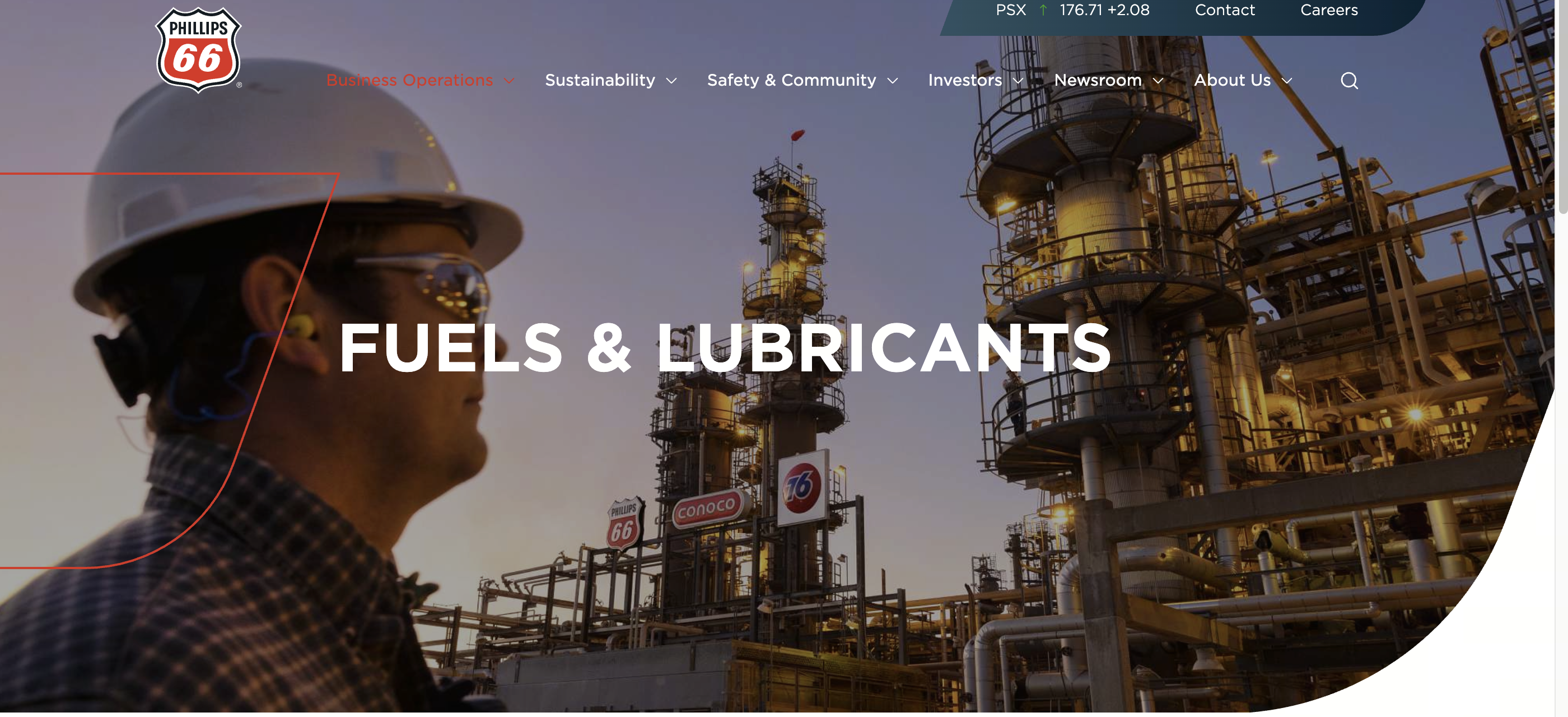
Source: phillips66.com
Definitions and Business Positioning of Phillips 66 and ExxonMobil
Phillips 66 (PSX) is a downstream energy focused company headquartered in Houston, Texas. Its main businesses include crude oil refining, midstream transportation, chemicals, and refined product marketing. The company was spun off from ConocoPhillips in 2012 and currently has a total refining capacity of around 2 million barrels per day.
ExxonMobil (XOM) is one of the world’s leading integrated energy giants, with large scale upstream exploration and production, midstream, and downstream operations. The company conducts oil and gas exploration, production, refining, and chemicals operations across multiple regions worldwide, and its asset scale is far larger than that of Phillips 66.
Phillips 66 is positioned more like a pure downstream refining and logistics operator, while ExxonMobil uses its full value chain structure to achieve resource self-sufficiency and risk diversification.
Differences in Business Structure Between Phillips 66 and ExxonMobil
Phillips 66’s business structure is highly concentrated in downstream operations, including refining, midstream, chemicals, and marketing. Refining is its core revenue source, while midstream logistics provides stable cash flow.
ExxonMobil’s business structure is more balanced, with upstream exploration and production accounting for a significant share of its operations. Its internal crude oil supply can support downstream refining. This integrated structure allows the company to benefit from upstream production profits when crude oil prices rise.
Because Phillips 66 lacks upstream assets, it depends more heavily on external crude oil procurement. However, it is more focused and flexible in specialized downstream operations.
Differences in Profit Models Between Phillips 66 and ExxonMobil
Phillips 66’s earnings mainly depend on refining margins, or crack spreads, midstream transportation fees, and chemicals product sales. Its profitability is strongly affected by refined product demand and refining margin fluctuations, giving it a more cyclical profile.
ExxonMobil has a more diversified profit model. In a high oil price environment, profits from upstream oil and gas production can effectively offset volatility in downstream refining margins. As a result, the company’s overall earnings stability is usually higher than that of a pure downstream company.
During low oil price cycles, Phillips 66 may face greater pressure, while ExxonMobil can maintain relatively resilient cash flow through its upstream business.
Differences in Capital Returns and Dividend Strategies Between Phillips 66 and ExxonMobil
Phillips 66 places strong emphasis on shareholder returns. Since its 2012 spin off, the company has continued to increase dividends and return capital through substantial share buybacks. It has committed to returning more than 50% of operating cash flow through dividends and buybacks, and its dividend growth rate has been relatively high.
ExxonMobil has a much longer dividend history, with steady dividend growth over many years, while also maintaining strong capital discipline. In addition to dividends, the company adjusts capital spending and buyback scale flexibly based on the oil price environment.
Phillips 66’s shareholder return strategy is more aggressive and focuses more on high near term returns, while ExxonMobil pursues long term sustainable dividend growth and financial resilience.
Differences in Value Chain Positioning Between Phillips 66 and ExxonMobil
Phillips 66 has a well developed midstream and downstream value chain, with extensive pipeline networks, storage facilities, and refining capacity. The company focuses on improving coordination between refining and logistics to raise operating efficiency.
ExxonMobil has deep coverage across the entire value chain, with abundant upstream oil and gas reserves and globally distributed midstream and downstream infrastructure. This structure allows it to allocate resources internally and optimize costs.
Phillips 66’s value chain is more focused on capturing downstream value, while ExxonMobil achieves stronger risk resilience and economies of scale through full chain control.
Differences in Market Risks and Growth Potential Between Phillips 66 and ExxonMobil
The main risks facing Phillips 66 include cyclical fluctuations in refining margins, crude oil supply disruptions, and pressure on refinery assets from the energy transition. However, its specialized downstream positioning gives it strong growth potential when crack spreads are high.
ExxonMobil faces higher geopolitical risk because of its upstream operations, but its diversified structure helps spread risk across different parts of the value chain. The company’s long term investments in low carbon technologies and global exploration projects also give it broader growth opportunities.
Overall, Phillips 66 is better suited to investors who prefer high dividends and downstream cycle opportunities, while ExxonMobil is better suited to those seeking long term stability and full value chain growth.
Summary
PSX (Phillips 66) and ExxonMobil offer a clear contrast in business models: the former focuses on specialized downstream operations, while the latter follows a fully integrated value chain strategy. This difference directly affects earnings stability, capital return characteristics, and risk exposure. Investors can choose the more suitable allocation based on their own risk preference and market outlook.
FAQs
What is the biggest business difference between Phillips 66 and ExxonMobil?
Phillips 66 mainly focuses on downstream refining, midstream, and marketing, while ExxonMobil has a complete integrated upstream and downstream business chain.
Which company has more stable dividends?
ExxonMobil has a longer and more stable dividend history, while Phillips 66 has faster dividend growth and a larger buyback effort.
How do refining margins affect the two companies differently?
Phillips 66’s earnings are more directly dependent on fluctuations in refining margins, while ExxonMobil can partially offset that exposure through its upstream business.
How does energy transition affect the risks of the two companies differently?
Phillips 66 faces greater pressure to transform refinery assets, while ExxonMobil has stronger transition buffering capacity because of its upstream resources and diversified structure.
How should investors choose between PSX and XOM?
Investors with lower risk tolerance who seek stability may be better suited to ExxonMobil, while those who prefer high dividends and downstream cycle opportunities may consider Phillips 66.
Related Articles

How Does PAXG Work? In-Depth Overview of the Physical Gold Tokenization Mechanism

How is the price of PAXG determined? Pegging mechanism, trading depth, and influencing factors

Gate Research: 2024 Cryptocurrency Market Review and 2025 Trend Forecast
What Are the Risks of TSLA? Understanding Tesla’s Competitive Landscape and Investment Challenges

GoldFinger Use Cases in DeFi: How Gold Assets Enter the On-chain Financial System