How Phillips 66 Refines Crude Oil: From Procurement to Refined Product Sales
PSX (Phillips 66) is a multinational energy company headquartered in Houston, Texas. Its main businesses include crude oil refining, petroleum product transportation, marketing, and chemicals, making it an important global provider of downstream energy. Phillips 66’s refining business sits at the core of the company’s downstream energy operations, generating profit by processing crude oil into higher value refined products. This business depends heavily on supply chain integration and operating efficiency, and it holds an important position in the global energy market.PSX (Phillips 66) currently operates multiple highly complex refineries, with total crude processing capacity of more than 2 million barrels per day. It also owns an extensive midstream pipeline network and chemical production facilities. Its operations cover the U.S. domestic market and Europe, with major products including gasoline, diesel, jet fuel, lubricants, and renewable fuels.
Through a highly integrated midstream and downstream value chain, PSX (Phillips 66) maintains stable competitiveness in global refined product supply, logistics transportation, and energy product marketing. It is one of the key downstream energy names watched by investors.
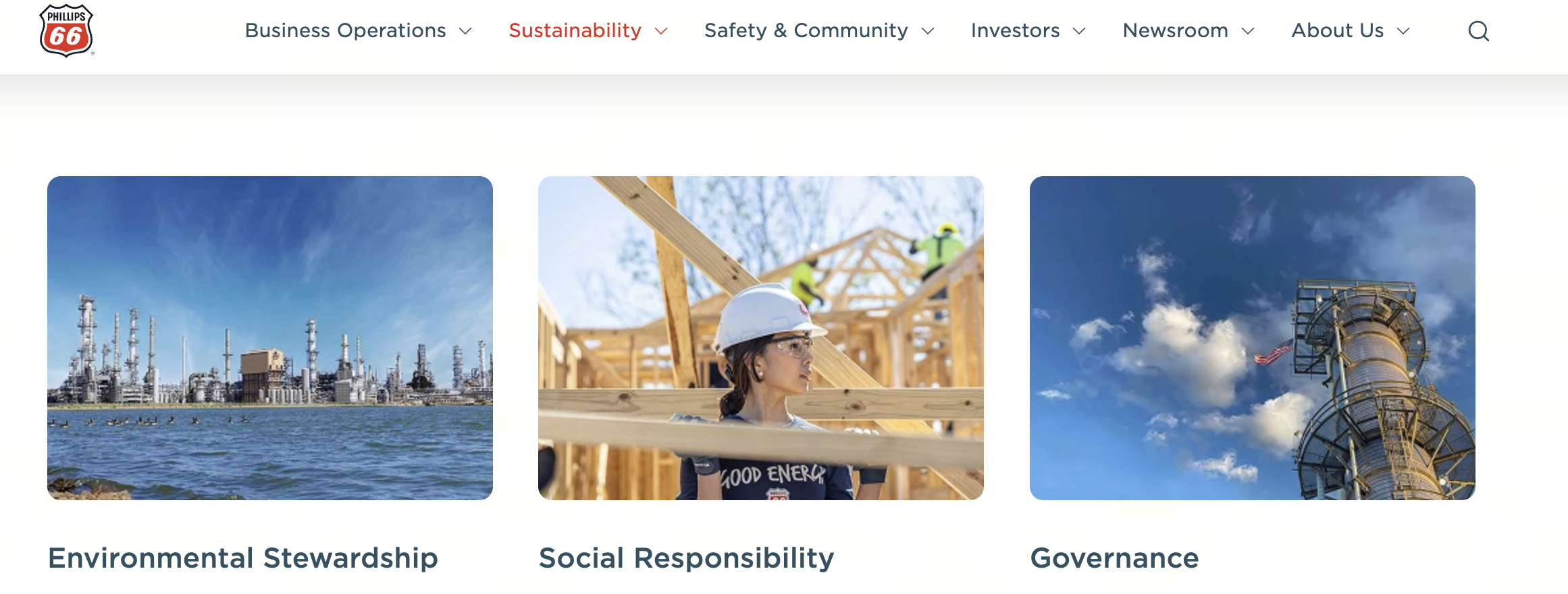
Source: phillips66.com
The Overall Process of Phillips 66’s Refining Business
Phillips 66’s refining business follows a typical modern refining process, mainly covering crude oil receiving, distillation and separation, secondary processing, product blending, and sales. The company uses advanced technology and strict safety management to keep the entire process running efficiently.
The overall process begins with crude oil. After multiple stages of physical and chemical treatment, it is ultimately converted into refined products that meet market standards. Phillips 66 focuses on increasing the yield of high value products, while gradually raising the share of renewable feedstock co processing to meet the needs of the energy transition.
Phillips 66’s refining system is closely connected with its midstream logistics network, forming a closed loop value chain from crude oil intake to product output. This integrated design significantly reduces intermediate costs and strengthens overall competitiveness.
Phillips 66’s Crude Oil Procurement and Supply Chain Management
Phillips 66 sources crude oil from both domestic and international markets, including U.S. crude and imported crude. The company combines long term contracts with spot purchases to ensure feedstock supply is both stable and cost effective.
Supply chain management is an important foundation of Phillips 66’s refining business. The company uses its midstream pipeline network to transport crude oil directly to refineries, reducing losses and costs in intermediate links. Its procurement team optimizes feedstock selection based on crude quality, price, and refinery configuration.
In day to day operations, Phillips 66 continuously monitors global crude oil market dynamics and adjusts its procurement strategy with flexibility. This adaptable supply chain management capability helps the company maintain refining margins under different oil price conditions.
Phillips 66’s Refining Processes and Capacity Distribution
Many Phillips 66 refineries are complex facilities with a high Nelson Complexity Index, allowing them to process heavy and sour crude oil. The company’s major refineries are mainly located in the U.S. Midwest, the West Coast, and Europe, with total capacity of more than 2 million barrels per day.
Core refining processes include atmospheric distillation, vacuum distillation, catalytic cracking, hydrotreating, and reforming. These processes separate crude oil and convert it into higher value products. The company continues to invest in technology upgrades to improve capacity utilization and product yield.
Phillips 66’s refining capacity distribution is designed to match regional markets. For example, refineries close to major consumption centers focus more on gasoline and diesel production, while some facilities specialize in jet fuel and chemical feedstocks. This layout improves logistics efficiency and market responsiveness.
Phillips 66’s Refined Product Production and Sales Channels
Phillips 66 emphasizes a high share of clean products in its refined product output, including gasoline, diesel, jet fuel, and lubricants. Through a strict quality control system, the company ensures its products meet environmental and performance standards in different countries.
Sales channels are divided into wholesale and retail. Wholesale mainly supplies large corporate customers and distributors, while retail sales are conducted through the company’s branded gas station network. Its marketing business works closely with refining operations, creating a refinery driven effect across the value chain.
Phillips 66 is also gradually expanding renewable fuel production, including sustainable aviation fuel and renewable diesel, further broadening its refined product portfolio. This diversified production strategy strengthens the company’s ability to adapt to market changes.
The Coordinating Role of Phillips 66’s Midstream Logistics
Phillips 66’s midstream business provides critical support for refining, including crude oil transportation, refined product pipeline delivery, and storage services. The company owns a large pipeline network and terminal facilities, ensuring timely feedstock input and efficient product output.
Coordination between midstream logistics and refining significantly reduces transportation costs and improves supply chain reliability. For example, pipelines directly connect refineries with major consumption markets, reducing reliance on road and rail transportation.
This coordination also supports emergency response and inventory management. When market demand changes, the midstream system can quickly adjust product flows and support flexible refinery operations.
Phillips 66’s Operating Efficiency and Cost Control Measures
Phillips 66 places strong emphasis on refining operating efficiency, using digital tools and maintenance optimization to achieve high capacity utilization. The company carries out regular equipment maintenance and adopts advanced processes to reduce energy consumption and emissions.
Cost control is an important competitive strength of Phillips 66’s refining business. The company reduces reliance on external procurement through integrated operations and continues to advance business transformation projects to achieve cost savings.
In practical management, Phillips 66 dynamically adjusts production plans according to market conditions, while strengthening safety and environmental management to reduce potential risks and compliance costs. This refined operating model supports the company’s long term and stable profitability.
Summary
Phillips 66’s refining business forms a complete and efficient value chain from crude oil procurement to refined product sales. Through advanced refining processes, midstream logistics coordination, and strict cost control, the company maintains strong competitiveness in downstream energy. Understanding this process helps clarify Phillips 66’s business model and market positioning.
FAQs
What products does Phillips 66’s refining business mainly produce?
Phillips 66 mainly produces refined products such as gasoline, diesel, jet fuel, lubricants, and renewable diesel, serving transportation and industrial demand.
How large is Phillips 66’s crude oil processing capacity?
Phillips 66 has total crude oil processing capacity of more than 2 million barrels per day across multiple refineries in the United States and Europe.
How does Phillips 66’s refining business coordinate with midstream operations?
Phillips 66 uses its own pipeline network to efficiently transport crude oil into refineries and move refined products out, significantly reducing logistics costs and improving supply chain stability.
What are the main factors affecting Phillips 66’s refining margins?
The main factors include the spread between crude oil and refined product prices, known as the crack spread, capacity utilization, operating costs, and changes in global energy demand.
How is Phillips 66 responding to the energy transition in its refining business?
The company is gradually increasing the share of renewable feedstock co-processing and developing low carbon products such as sustainable aviation fuel to adapt to future energy market demand.
Related Articles

How Does PAXG Work? In-Depth Overview of the Physical Gold Tokenization Mechanism

How is the price of PAXG determined? Pegging mechanism, trading depth, and influencing factors

Gate Research: 2024 Cryptocurrency Market Review and 2025 Trend Forecast

What Are the Risks of TSLA? Understanding Tesla’s Competitive Landscape and Investment Challenges

GoldFinger Use Cases in DeFi: How Gold Assets Enter the On-chain Financial System