Investment Opportunities Amid Global Stock Market Volatility: How to Trade Flexibly Through Gate’s Stock Token Zone
Global Stock Market Volatility: Context and Opportunities
As uncertainty rises across global markets, investors face a range of challenges. Political instability in the Middle East, dramatic swings in energy prices, and unpredictable factors in the global economic recovery have all contributed to heightened volatility. Recently, European, US, and Asian stock markets have generally declined, fueling risk aversion and increasing demand for safe-haven assets like gold and bonds.
In this climate, investors must adapt quickly to fluctuations in traditional stock markets while seeking new opportunities. The Gate Tokenized Stocks Section offers an innovative solution, allowing investors to trade tokens linked to traditional stock markets within the crypto ecosystem and capitalize on price movements.
What Are Tokenized Stocks and Their Advantages?
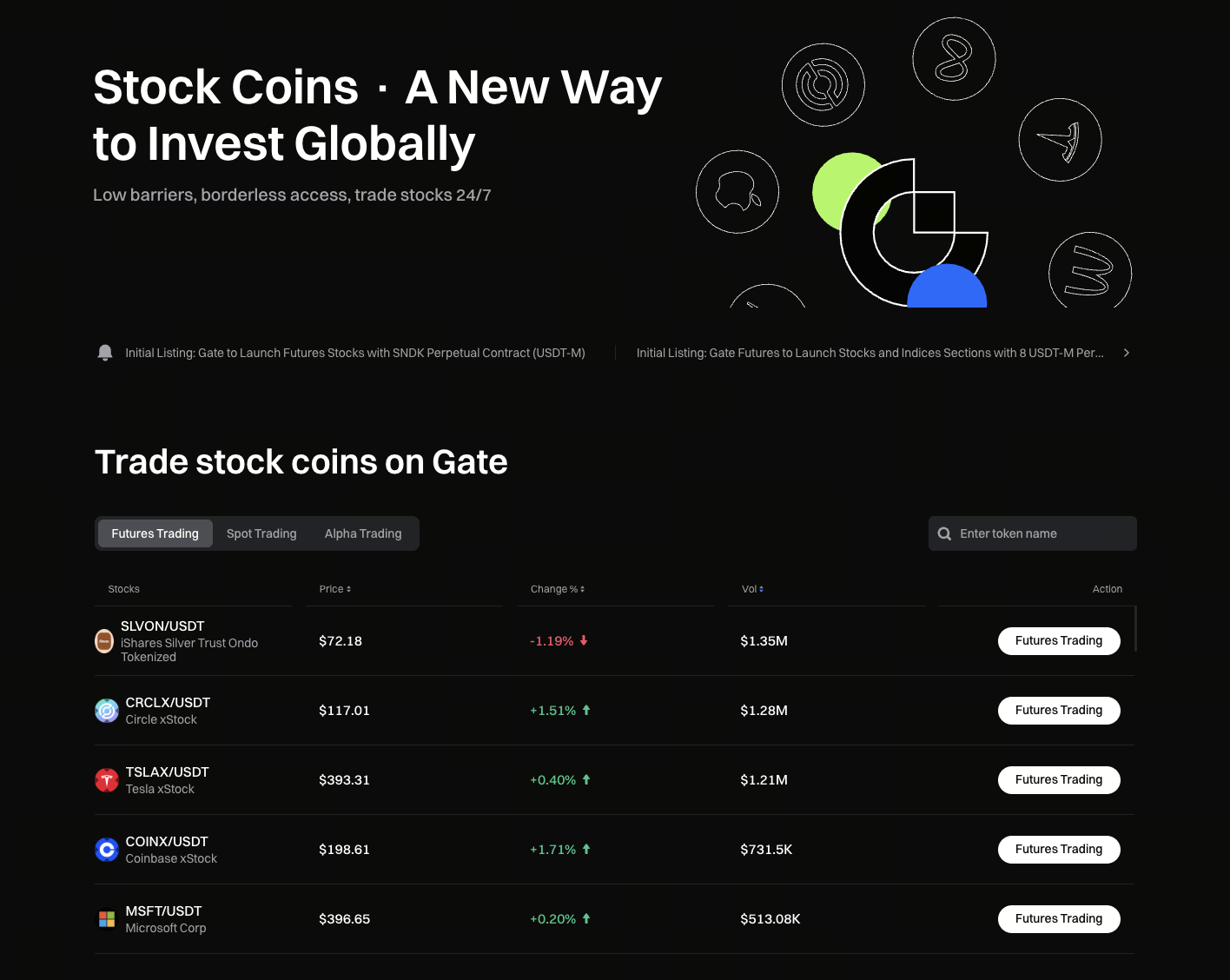 Image source: Gate Tokenized Stocks Section
Gate Tokenized Stocks use tokenization technology to bring traditional stock price movements into the crypto market as digital assets. Unlike conventional stocks, tokenized stocks do not grant shareholder rights, dividends, or voting power. Their prices closely track traditional stock markets, but they offer greater flexibility and efficiency in trading.
Key Advantages of Tokenized Stocks
-
Trade Anytime: Tokenized stocks are available 24/7, unconstrained by traditional stock market hours, so users can buy and sell whenever they choose.
-
Lower Entry Barriers: Investors can access the stock market without opening traditional securities accounts or paying high fees, and can participate with smaller amounts of capital.
-
Transparency: Trading typically takes place on decentralized platforms, ensuring transparent transactions without intermediaries.
-
High Liquidity: Tokenized stocks circulate across multiple crypto exchanges, providing robust liquidity for assets.
Trading Opportunities in Volatile Markets
1. Short-Term Gains from Market Swings
With global stock markets experiencing sharp volatility, investors can use tokenized stocks to pursue short-term trading opportunities. For instance, when oil prices surge, related energy tokenized stocks may jump, while political or economic news can trigger rapid drops in certain tokens. Investors who adjust positions quickly can capture these short-term price swings.
Trading tokenized stocks enables faster responses to market shifts, allowing investors to enter or exit positions promptly and seize short-term gains.
2. Cross-Market Arbitrage
One major advantage of tokenized stocks is their ability to move across global markets. Investors can profit from price discrepancies between regions. For example, news may drive down a tokenized stock’s price in one market but leave another market unaffected. Buying in the lower-priced market and selling in the higher-priced market creates arbitrage opportunities.
Volatile conditions amplify these opportunities, as regional markets often react differently to the same events, widening price gaps.
3. Safe-Haven Asset Trades
As global risks rise, many investors shift funds into safe-haven assets—especially tokenized stocks tied to energy and gold. Trading these tokens lets investors participate in price movements and diversify risk during turbulent times. For example, as gold and oil prices climb, tokens linked to these assets often become investor favorites.
The flexibility of tokenized stock trading allows investors to adjust positions quickly and capitalize on safe-haven demand.
How to Trade in Gate Tokenized Stocks Section
How can investors trade effectively in the Gate Tokenized Stocks Section during volatile markets? Consider these key strategies:
1. Choose the Right Tokenized Stocks
When uncertainty is high, it’s crucial to select tokens with growth potential or stability. Investors can align their choices with macroeconomic trends and market sentiment. For example, energy sector tokens tend to perform well as oil prices rise, while technology sector tokens may strengthen during economic recovery.
2. Set Stop-Loss and Take-Profit Points
To manage risk, investors should establish stop-loss and take-profit levels before each trade. In volatile markets, these points help avoid large losses and lock in gains.
3. Adjust Positions Flexibly
Dynamic position management is essential in turbulent markets. Investors can scale positions up or down as conditions change, controlling overall portfolio risk. Increasing exposure during strong markets and reducing it during downturns helps mitigate risk.
4. Monitor Macroeconomic Data and Market Sentiment
Tokenized stock prices are influenced by more than company or sector performance—they also respond to macroeconomic trends, policy shifts, and sentiment. Investors should track global economic data, central bank policies, and geopolitical events to adjust strategies promptly.
Risk Management: Navigating Market Volatility
While the Gate Tokenized Stocks Section offers flexible trading opportunities, volatile markets remain risky. Effective risk management is crucial:
1. Diversify Investments
Diversification is key to managing risk. In volatile markets, single asset swings can impact the whole portfolio. Spreading investments across multiple tokenized stocks reduces exposure to any one asset.
2. Use Stop-Loss and Take-Profit Strategies
Stop-loss and take-profit strategies are vital in turbulent conditions. Setting rational exit and profit targets ensures investors can respond quickly to unfavorable moves and secure gains when targets are reached.
3. Track Market Sentiment
Investors should keep a close eye on market sentiment, especially as volatility increases. Monitoring short-term swings and sentiment changes helps identify optimal trading moments and avoid risks.
Conclusion
As global stock market volatility intensifies, the Gate Tokenized Stocks Section offers investors an innovative platform to capture opportunities from stock price movements within the crypto market. Tokenized stocks provide flexible and efficient trading, cross-market arbitrage, and safe-haven asset opportunities.
However, investors must remain rational in turbulent markets and implement robust risk management—such as setting stop-loss and take-profit points and diversifying portfolios—to achieve better returns in uncertain conditions. By adapting to market swings, tokenized stocks can become a powerful tool for investors seeking profits amid global volatility.
Related Articles

AI-Native Settlement Layers: How United Stables Is Building the Next Financial Rail

The ve(3,3) Flywheel Explained: How AERO Tokenomics Powers Aerodrome’s DeFi Economy

How Does PAXG Work? In-Depth Overview of the Physical Gold Tokenization Mechanism

Aerodrome Tokenomics: How ve(3,3) Powers Base's Most Profitable DEX

How is the price of PAXG determined? Pegging mechanism, trading depth, and influencing factors
