The Evolution of TradFi: How the Fusion of RWA and Crypto Is Redefining the Future of Finance?
As blockchain technology advances and real-world asset (RWA) tokenization accelerates, traditional finance TradFi is undergoing a fundamental transformation. Tokenized securities are emerging as a key bridge between on-chain assets and legacy financial markets, involving critical mechanisms like asset mapping, settlement, compliance frameworks, and market liquidity.
With financial infrastructure evolving, the boundaries between the crypto ecosystem and TradFi are steadily narrowing, giving rise to new models of integration. Assessing the operational logic, market potential, and regulatory essentials of tokenized securities is vital for understanding their impact on the financial system—and for retail investors to navigate new financial structures on platforms like Gate.
Reshaping TradFi's Foundation: Efficiency and Structural Challenges in Legacy Financial Systems

Reshaping TradFi's Foundation
The traditional finance (TradFi, Traditional Finance) ecosystem relies on centralized institutions as trust intermediaries, governed by legal, regulatory, and credit frameworks, and has long performed essential functions such as capital custody, asset trading, settlement, and risk management.
TradFi has proven irreplaceable in stability and scale, serving the global economy for centuries. Yet as financial activities become highly digitalized, structural weaknesses have surfaced. Transactions often involve multiple intermediaries, resulting in high costs, convoluted procedures, and limited capital flow efficiency.
Operationally, TradFi markets generally open only on business days, during fixed hours. Cross-border transactions and settlements can take several days to complete, incurring sizable exchange and service fees. This model—rooted in manual processes and centralized clearing—is increasingly cumbersome in the context of digital economies and globalization, and is a driving force behind blockchain adoption, asset tokenization, and infrastructure upgrades.
What Drives TradFi-Blockchain Integration: Efficiency, Liquidity, and Asset Tokenization
TradFi’s embrace of blockchain is propelled by multiple structural forces, with transaction efficiency at the core. Blockchain streamlines complex clearing and settlement through disintermediation and automation, drastically reducing transaction times and operational costs.
This trend is already manifesting in mainstream markets. The New York Stock Exchange (NYSE), for example, has announced plans for a 24/7 blockchain-based tokenized securities exchange slated for launch in 2026. This model will allow stocks and ETFs to trade beyond traditional hours, redefining capital market efficiency.
Beyond efficiency, enhanced liquidity and broader market access are key motivators. Asset tokenization enables high-value assets—stocks, real estate, art—to be split into smaller tradable units, allowing retail investors to participate in markets once reserved for institutions and high-net-worth individuals.
For instance, investors can own fractional interests in prime London commercial real estate or micro-shares of a Picasso via blockchain. This tokenization mechanism is transforming the way traditional assets move, laying the groundwork for deeper integration of TradFi and crypto finance.
Asset Tokenization: Mapping Legacy Assets to Blockchain
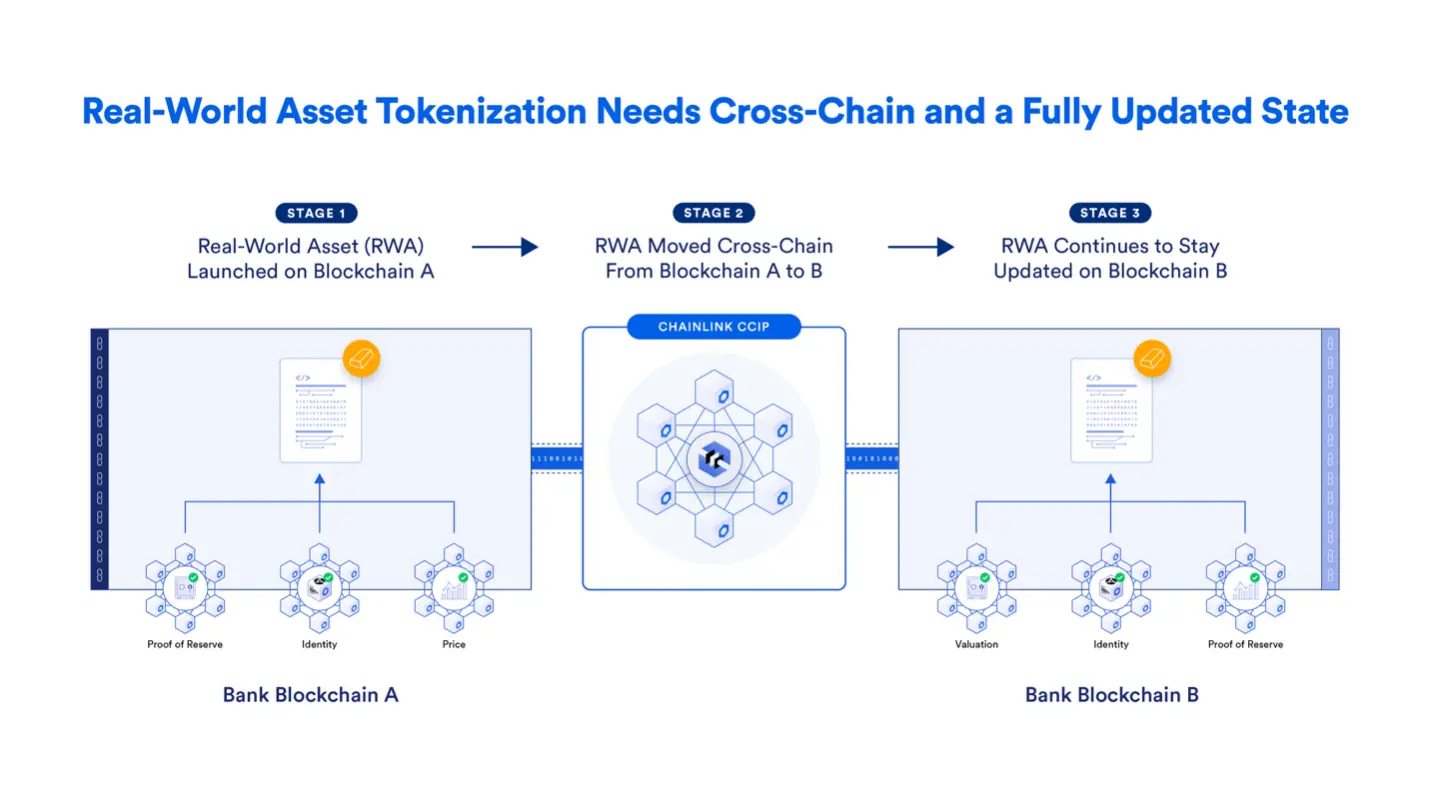
Core Tokenization Mechanisms
Asset tokenization creates a digital representation of physical or financial assets on blockchain, encoding ownership, revenue rights, and key attributes as tradable tokens. This is the technical foundation for on-chain TradFi and RWA development.
The process centers on mapping legal rights and economic value to blockchain tokens. First, asset types are identified for tokenization—common targets include real estate, stocks, bonds, commodities, art, and other valuable assets.
Next, a token standard is selected. Divisible, fungible assets typically use ERC-20 or similar standards, while unique assets (artwork, collectibles) are better represented by ERC-721 or ERC-1155 non-fungible token standards. Compliance requirements and use cases determine whether public, consortium, or private blockchains are used for issuance and trading.
This framework drives multifaceted change. Through fractional ownership, high-value assets can be divided and traded, lowering investment barriers. On-chain assets enable more frequent secondary market transactions, boosting liquidity. Traditionally illiquid assets—private equity, venture capital, real estate—can enter more open trading environments via tokenization.
RWA Market Potential: The Next Growth Engine for Real World Asset Tokenization
Tokenization of real world assets (RWA) is widely viewed as one of the most scalable avenues for blockchain-TradFi integration. Research projections suggest that as stocks, bonds, real estate, and commodities migrate on-chain, RWA tokenization’s long-term market could reach hundreds of trillions of dollars.
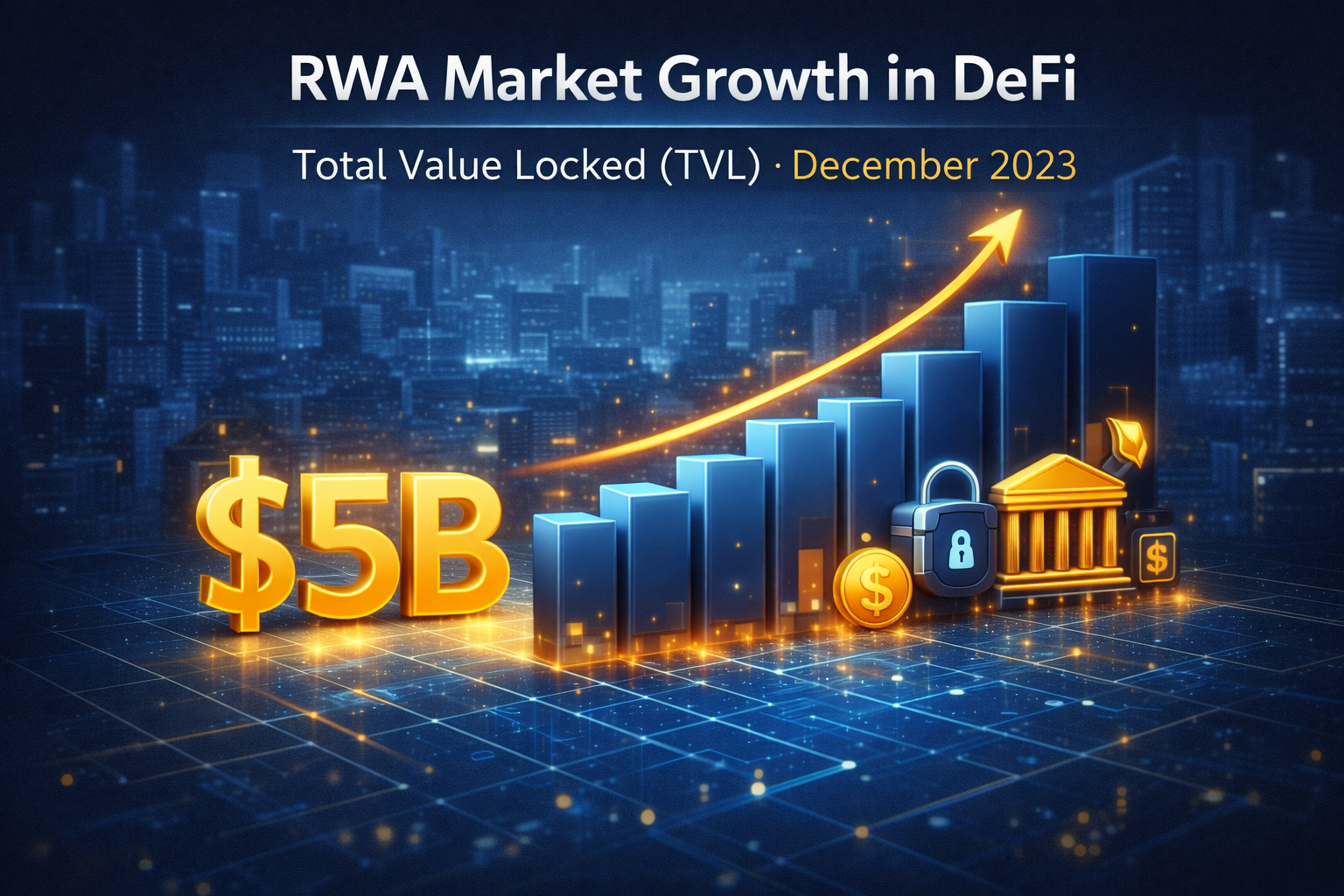
The RWA market is now in a phase of real growth. As of December 2023, RWA-related total value locked (TVL) in decentralized finance (DeFi) was roughly $5 billion and expanding. This marks a shift from proof-of-concept to practical adoption.
RWA tokenization encompasses a wide spectrum—cash, stablecoins, precious metals, commodities, stocks, bonds, credit assets, real estate, art, and even intellectual property. Tokenization enables these assets to be issued, traded, and settled as digital tokens on blockchain networks.
Crucially, RWA tokenization alters not only how assets are represented, but also their trading channels, liquidity, and management models. With blockchain infrastructure, previously illiquid, high-barrier assets can be traded more frequently and widely in secondary markets.
Long term, blockchain is becoming the new foundation for legacy assets. Hundreds of blockchains may run in parallel, hosting and settling trillions in RWA tokens, forming a highly interconnected on-chain financial network.
RWA tokenization’s core advantages are cross-chain compatibility and transparency. Universal cross-chain protocols allow RWA assets to flow freely across blockchain ecosystems, revitalizing low-liquidity assets. Public, auditable asset and transaction data lets investors and regulators accurately gauge systemic risk, leverage, and asset integrity.
How Crypto and TradFi Connect: From Cross-Chain Bridges to Native Integration
The convergence of crypto and traditional finance (TradFi) is advancing along a technical path aimed at secure on-chain circulation, settlement, and clearing of legacy assets. This is a gradual evolution—from interim solutions to deep system-level integration.
Initially, cross-chain bridges served as vital links between blockchains and external assets. They allowed asset transfers across networks, providing entry points for TradFi asset onboarding. However, security, scalability, and complexity issues—and multiple breaches—have exposed their limitations as core financial infrastructure.
As the industry matures, cross-chain interoperability protocols are replacing bridges as the new standard. Chainlink’s cross-chain interoperability protocol (CCIP), for example, offers a secure, unified framework for issuing and transferring RWA tokens across blockchains, enabling seamless asset flows and mitigating systemic risk.
At a deeper level, native integration marks the true convergence of TradFi and blockchain. Here, legacy institutions build core functions—settlement, clearing, asset management—directly on decentralized or hybrid architectures, fundamentally reimagining financial infrastructure.
Major global institutions—including Swift, DTCC, ANZ Bank—are now exploring this direction. Using blockchain middleware like Chainlink, they are connecting existing capital market systems to multi-chain networks, aiming for secure, compliant, scalable multi-chain asset transfers and a gradual move to blockchain-based capital markets.
In summary, the roadmap for crypto-TradFi integration is shifting from mere asset connectivity to system redesign. With technology and regulation advancing, blockchain is set to become the new infrastructure for legacy financial assets and processes.
What TradFi-Crypto Integration Means for Retail Investors
For retail investors, the fusion of TradFi and crypto assets is opening unprecedented opportunities—and new risks.
**The most pronounced change is the dramatic reduction in investment barriers.** Asset tokenization and fractional ownership now let small investors access asset classes once reserved for institutions and high-net-worth individuals—such as real estate, private assets, and high-value commodities.
Blockchain infrastructure enables efficient construction of global, diversified portfolios—including tokenized stocks, real estate, commodities, and other RWA—without the cumbersome intermediaries and geographic constraints of legacy finance.
Opportunity is paired with risk. **Regulatory uncertainty remains a critical concern.** In the U.S., the Securities and Exchange Commission (SEC) has clarified that tokenized securities are subject to federal securities laws, with no exemptions for being “on-chain.”
The SEC typically classifies tokenized securities as:
- Issuer-managed tokenized securities
- Platform-managed tokenized securities
Both models require the same disclosure, registration, and compliance as traditional securities.
Retail investors must also understand technical risks, including smart contract vulnerabilities, cross-chain bridge security, and oracle reliability—risks that may cause asset loss in extreme cases.
In sum, grasping the operational logic, regulatory limits, and technical risks of TradFi-crypto fusion—and establishing robust risk management—will be essential for retail participation in this new financial landscape.
Explore the New Financial Era of TradFi-Crypto Integration with Gate
As TradFi and crypto rapidly converge, Gate stands out as a leading global crypto asset exchange—actively bridging the two financial systems.
As RWA tokenization deepens, investors demand more from trading platforms: not just liquidity and asset diversity, but an understanding of both legacy financial logic and blockchain architecture. Gate is devoted to creating a secure, compliant, and efficient trading environment—enabling users to engage seamlessly in this transformative shift.
Gate offers diverse tokenized asset trading pairs and invests in user education, helping clients grasp RWA tokenization’s mechanics, opportunities, and risks. From tokenized real estate and art to corporate bonds and commodities, Gate is systematically bringing legacy asset classes into the crypto ecosystem, unlocking new opportunities for global investors.
On compliance, Gate closely tracks global regulatory developments to ensure alignment with evolving legal frameworks. As issues like the CLARITY Act advance, Gate will optimize products and services to deliver a compliant, stable, and forward-looking trading experience.
Conclusion
At dawn in the New York Stock Exchange, the familiar trading floor is changing. Some trades now settle in real time via blockchain, bypassing traditional clearing. Tokenized stocks, stablecoin payments, and smart contracts operate alongside legacy mechanisms—this is not a future vision, but current reality.
From Citibank and BNY Mellon integrating blockchain infrastructure to the institutionalization of stablecoins under regulatory frameworks like the GENIUS Act, the merger of TradFi and crypto is now substantive. Tokenized assets and RWA are reshaping issuance, trading, and settlement for stocks, bonds, real estate, and art—making global capital flows more efficient, transparent, and accessible.
This evolution reveals: finance’s future will not be a fully decentralized, intermediary-free world, nor will it remain a closed, inefficient legacy system. Instead, a deliberately engineered hybrid architecture will emerge—rebuilding trust and automation on blockchain, while retaining compliant intermediaries, risk controls, and regulatory coordination.
For investors, this means lower barriers to entry, broader asset options, and always-open global markets; for the financial system, it means greater efficiency, liquidity, and transparent risk pricing. As RWA markets expand and cross-chain interoperability matures, TradFi’s evolution is irreversible.
Ultimately, TradFi’s future is not about being replaced, but how it will be reimagined. As blockchain and traditional finance evolve together, a new system—more open, efficient, and suited to the digital age—is taking shape.
Further Reading
Related Articles

AI-Native Settlement Layers: How United Stables Is Building the Next Financial Rail

The ve(3,3) Flywheel Explained: How AERO Tokenomics Powers Aerodrome’s DeFi Economy

How Does PAXG Work? In-Depth Overview of the Physical Gold Tokenization Mechanism

Aerodrome Tokenomics: How ve(3,3) Powers Base's Most Profitable DEX

How is the price of PAXG determined? Pegging mechanism, trading depth, and influencing factors
