How to Trade U.S. Tech Stocks With Crypto: From Magnificent 7 to AI Chip Leaders
U.S. tech stocks are a stock asset system within global capital markets built around technology companies. They cover multiple sectors, including AI, semiconductors, cloud computing, data centers, consumer electronics, and internet platforms, while also forming an important part of global ETF, index, and TradFi derivatives markets.In recent years, rapid growth in demand for AI, semiconductors, and data centers has further increased the influence of U.S. tech stocks in global markets. The Magnificent 7, AI chip companies, and semiconductor supply chain firms have gradually become core assets closely watched by global capital.
At the same time, the connection between crypto markets and U.S. tech stocks has continued to strengthen. Bitcoin, AI themed assets, the Nasdaq index, and semiconductor stocks are increasingly being shaped by the same global liquidity conditions, interest rate cycles, and risk appetite.
With the development of ETFs, CFDs, and digital asset platforms, more users are paying attention to how they can access the U.S. tech stock market through crypto assets. This shift is also driving a gradual convergence between TradFi and digital asset markets.
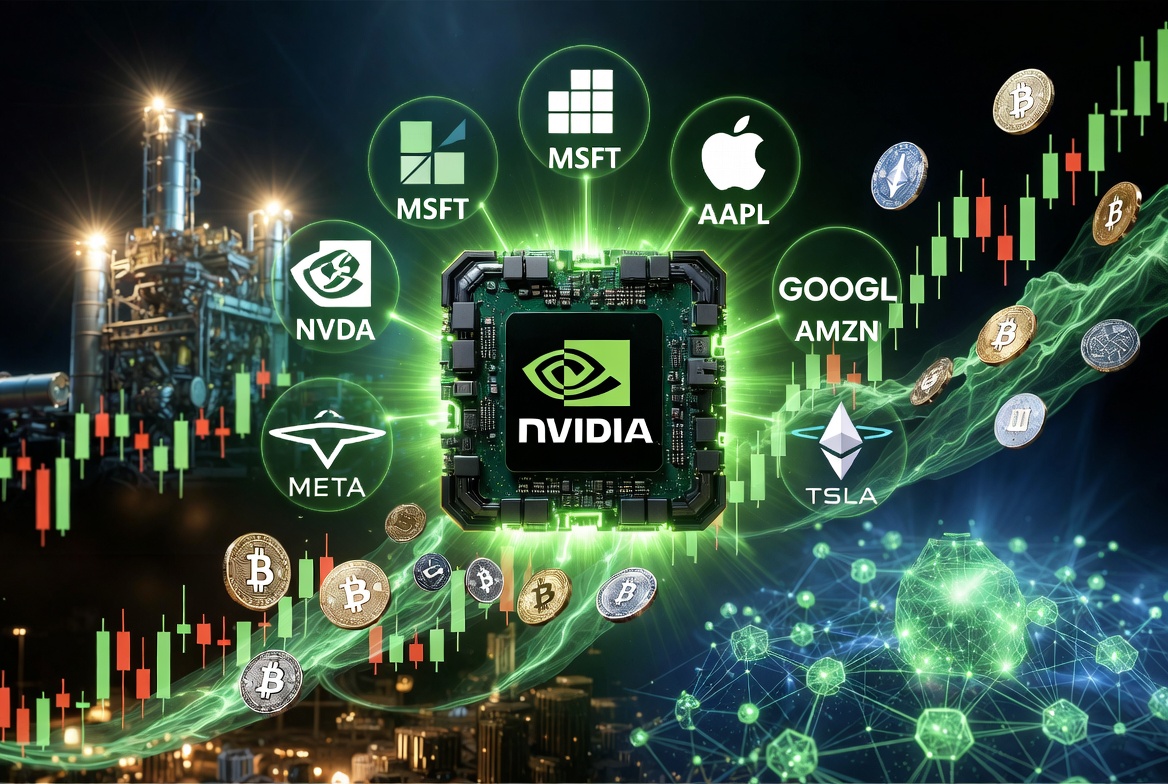
Why U.S. Tech Stocks Have Become Core Assets in Global Capital Markets
U.S. tech stocks have long represented global growth assets, and the emergence of the AI cycle has further increased the importance of the technology sector in global capital markets.
Large technology companies not only control global cloud computing, chips, software, and internet platforms, but also hold key positions in AI infrastructure, data centers, and high performance computing resources.
In recent years, the “Magnificent 7” have gradually become core assets in global markets. They usually include:
| Company | Core Area |
|---|---|
| Apple | Consumer electronics |
| Microsoft | Cloud computing and AI |
| NVIDIA | GPUs and AI computing power |
| Amazon | Cloud services |
| Meta | Social media and AI |
| Alphabet | Search and AI |
| Tesla | Electric vehicles and energy |
These companies have long held important weightings in NAS100 and U.S. stock indices, so movements in global technology markets are often influenced by the Magnificent 7.
As the AI market expands, U.S. tech stocks are no longer simply part of a single equity market. They increasingly resemble a major component of the global technology infrastructure ecosystem.
Why AI and the Semiconductor Supply Chain Have Become the Main Theme in Tech Markets
AI model training requires massive computing power, and the core infrastructure behind that computing power is the semiconductor supply chain.
GPUs, HBM memory, data centers, power management chips, and semiconductor equipment have all become important parts of the AI industry chain.
This shift has also pushed many semiconductor companies into the core area of global capital markets.
| Company or ETF | Main Focus |
|---|---|
| MU | HBM and memory chips |
| MPWR | Power management chips |
| KLAC | Semiconductor inspection equipment |
| SOXX | Semiconductor ETF |
| SMH | AI chip ETF |
The importance of MU, or Micron Technology, in the AI market mainly comes from the growth in demand for HBM, or high bandwidth memory. As AI models grow larger, GPU demand for high speed memory also increases.
Meanwhile, MPWR, or Monolithic Power Systems, mainly participates in the power supply systems of AI data centers, while KLAC, or KLA, is involved in inspection and metrology within advanced semiconductor manufacturing processes.
This complete industry chain structure has allowed the AI market to expand beyond software logic into a global hardware and infrastructure ecosystem.
Why ETFs Have Become Important Tools in Tech Markets
ETFs have become one of the most important asset structures in global technology markets.
Compared with individual stocks, ETFs place greater emphasis on industry themes and asset portfolios, allowing market participants to cover multiple technology companies and supply chain segments at the same time.
For example, SOXX and SMH typically cover semiconductors, GPUs, and the AI chip supply chain, while NAS100 places greater emphasis on the overall performance of large U.S. technology stocks.
At the same time, thematic industry ETFs are also gradually expanding into energy, electric vehicles, and resource markets.
For example:
| ETF | Coverage |
|---|---|
| LIT | Lithium battery supply chain |
| URA | Uranium mining and nuclear energy |
| GDX | Gold mining |
| HYG | High yield bonds |
| SQQQ | 3x short Nasdaq |
| SOXS | 3x short semiconductors |
This structure means ETFs are no longer just index tools. They are gradually becoming important gateways to global thematic assets. AI, the energy transition, and changes in global macro markets are also further increasing the influence of thematic ETFs in capital markets.
Why AI Power Demand Is Driving Energy and Nuclear Assets Higher
The expansion of AI data centers is increasing global electricity demand, and energy markets are therefore attracting growing attention from capital markets.
Large AI data centers require stable power supply, which has made nuclear energy, power grid upgrades, and energy infrastructure important themes in the AI era.
This shift has also brought some energy ETFs and utility companies into market focus.
For example, URA, or the Global X Uranium ETF, mainly covers the uranium mining and nuclear energy supply chain, while GEV, or GE Vernova, SO, or Southern Company, and DTE Energy are respectively involved in energy infrastructure, power systems, and energy transition markets.
At the same time, global macro assets such as XTI, or WTI crude oil, and XAG, or silver, are also influenced by energy demand, industrial production, and market risk appetite.
This connection means the AI market affects not only tech stocks, but also energy, raw materials, and the structure of global macro markets.
How Global Indices Reflect Changes in Tech Markets and Risk Assets
Global indices usually reflect the market structure and sector weightings of different regions. NAS100 places greater emphasis on large U.S. technology companies, so when AI and semiconductor markets rise, the Nasdaq is usually lifted as well.
By contrast, GER40 leans more toward German industrial companies and European manufacturing, while HK50 places more emphasis on Hong Kong financial assets and Chinese internet companies. These differences mean different indices usually correspond to different macro logics.
| Index | Main Market Characteristics |
|---|---|
| NAS100 | U.S. tech stocks |
| GER40 | European industry |
| HK50 | Hong Kong finance and internet |
At the same time, the connection between tech stocks, indices, and crypto markets is also becoming stronger.
When global markets enter a risk on phase, the Nasdaq and Bitcoin often rise at the same time. When liquidity tightens, high volatility growth assets may come under pressure together.
Why Global Business Model Themes Also Attract Capital Market Attention
Beyond technology and semiconductors, global consumer, financial, and enterprise services industries are also important parts of the TradFi market.
For example:
-
AON belongs to the global risk management and insurance brokerage market
-
GIS and COTY belong to consumer brands and defensive consumer industries
-
SYY mainly covers the U.S. foodservice supply chain market
-
CIB and BAP are involved in Latin American digital banking and fintech markets
-
ALK belongs to the U.S. regional airline and membership economy system
Although these companies are not part of the AI supply chain, their business models often reflect changes in global consumer, financial, and enterprise services markets.
This structure is also allowing global stock markets to form a more complete industry ecosystem covering technology, energy, consumer sectors, financials, and industry.
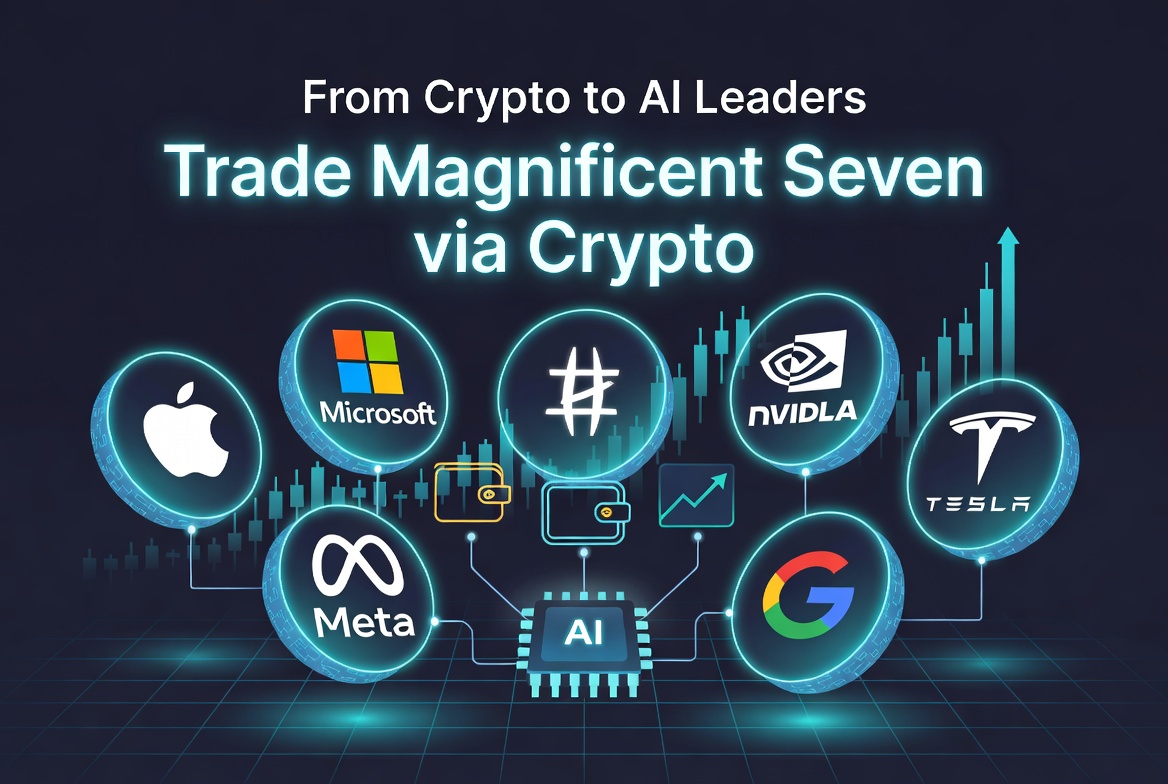
How to Access the U.S. Tech Stock Market Through CFDs
A CFD, or contract for difference, is a derivative model that allows users to participate in market trading through price movements. Its core logic is not to directly hold stocks, but to track asset price changes through contracts.
Compared with traditional securities accounts, CFDs place greater emphasis on:
-
Long and short trading
-
Leverage mechanisms
-
Global asset coverage
-
No need to hold the underlying asset
Some CFD products have already begun to cover:
| Asset Class | Common Markets |
|---|---|
| Tech stocks | NVDA, META, AAPL |
| ETFs | SOXX, SMH, LIT |
| Indices | NAS100, GER40, HK50 |
| Commodities | Gold, silver, crude oil |
As digital asset platforms gradually expand their TradFi market products, more users are starting to follow both crypto assets and global technology assets through the same platform.
For example, products such as Gate TradFi CFD have already begun to cover parts of the U.S. stock, ETF, index, and macro asset markets.
Because CFDs are leveraged derivatives, their risk structure differs significantly from long term stock holding models. Regulatory rules for these products may also vary across regions.
Why Crypto Markets and TradFi Markets Are Starting to Converge
The boundary between crypto markets and TradFi markets is gradually weakening.
The development of ETFs, RWAs, or real world assets, on chain stock tokens, and CFD products is gradually bringing traditional financial assets into the digital asset ecosystem.
At the same time, Bitcoin ETFs, AI themed ETFs, and global technology stock markets are also encouraging crypto users to pay closer attention to traditional financial assets.
For example, on chain stock token structures such as Circle xStock, or CRCLX, are attempting to map stock assets onto on chain markets.
This shift means future global markets may no longer draw strict boundaries between:
-
Crypto markets
-
Stock markets
-
ETF markets
-
Global macro asset markets
As digital asset platforms further expand their global TradFi products, crypto native users are also gradually developing cross market asset trading habits.
Conclusion
U.S. tech stocks have become one of the most important growth assets in global capital markets, while AI, semiconductors, and data centers are driving the continued expansion of the global technology supply chain.
At the same time, ETFs, indices, and energy themed assets are also becoming important parts of global markets. The connections among nuclear energy, power infrastructure, lithium batteries, and global macro assets are continuing to strengthen in the AI era.
With the development of CFDs, RWAs, and digital asset platforms, the boundary between crypto markets and TradFi markets is also gradually becoming less clear. This shift is pushing global asset markets toward a more unified cross market trading structure.
FAQs
What Are the Magnificent 7?
The Magnificent 7 usually refers to the seven largest and most influential technology companies in the U.S. market, including Apple, Microsoft, NVIDIA, Amazon, Google, Meta, and Tesla.
Why Does AI Drive Semiconductor Stocks Higher?
AI model training requires GPUs, HBM memory, and data centers, so the expansion of the AI market usually increases demand across the semiconductor supply chain.
What Is the Difference Between an ETF and a Stock?
A stock represents an asset tied to a single company, while an ETF usually covers multiple industry or thematic assets.
What Is the Difference Between CFDs and Traditional Stock Trading?
A CFD is a derivative that allows users to participate in market volatility through price contracts, while traditional stock trading usually involves holding the actual asset.
Why Do Energy Markets Affect the AI Supply Chain?
AI data centers require large amounts of stable electricity, so energy, power grids, and nuclear energy markets affect the development of AI infrastructure.
Can Users Access the U.S. Stock Market Through Digital Asset Platforms?
Some digital asset platforms have begun to support CFDs or TradFi products related to U.S. stocks, ETFs, and global indices.
Related Articles

How Does PAXG Work? In-Depth Overview of the Physical Gold Tokenization Mechanism

How is the price of PAXG determined? Pegging mechanism, trading depth, and influencing factors

Gate Research: 2024 Cryptocurrency Market Review and 2025 Trend Forecast
What Are the Risks of TSLA? Understanding Tesla’s Competitive Landscape and Investment Challenges

GoldFinger Use Cases in DeFi: How Gold Assets Enter the On-chain Financial System