How LIT Works: A Clear Guide to the Global X Lithium & Battery Tech ETF and the Battery Supply Chain
The core logic of LIT (Global X Lithium Battery ETF) is to use an ETF structure to cover companies across lithium mining, battery materials, and the new energy battery value chain, thereby reflecting changes in the global lithium battery market and the new energy industry. Compared with investing directly in a single lithium mining company, LIT places greater emphasis on the overall linkage across the value chain.The growth of new energy vehicles, energy storage systems, and clean energy markets is continuing to drive demand for lithium batteries. Because lithium is an important raw material for power batteries, lithium mining companies, battery manufacturers, and new energy value chain companies have gradually formed a highly connected market structure.
From an industry logic perspective, LIT tracks not only changes in lithium prices, but also the overall strength of the global new energy value chain. Lithium supply and demand, battery technology upgrades, and changes in new energy vehicle sales usually all affect LIT’s volatility.
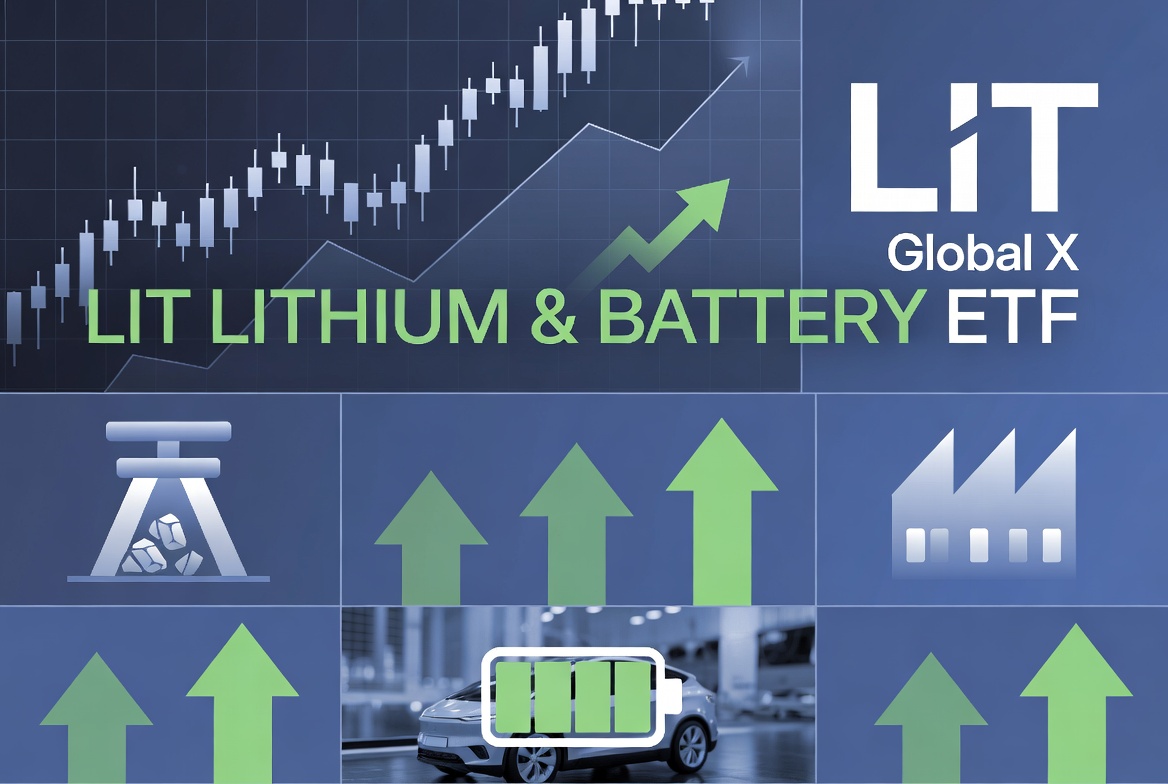
LIT’s Core Positioning
LIT’s core positioning is to track the market performance of companies related to the global lithium battery value chain. Compared with broad based ETFs, LIT focuses more closely on lithium resources and battery systems within the new energy industry.
Structurally, LIT is closer to a “new energy supply chain ETF.” This is because its holdings usually include not only lithium mining companies, but also battery materials companies, battery manufacturers, and new energy value chain companies.
This model means LIT does not depend solely on the performance of any one company. Instead, it aims to reflect broader changes across the entire lithium battery value chain.
LIT’s market logic essentially reflects the long term demand for energy storage systems and lithium resources in the global new energy market.
Why LIT Tracks the Lithium Battery Value Chain
LIT focuses on the lithium battery value chain mainly because lithium batteries have become essential infrastructure for the new energy market. New energy vehicles, energy storage systems, and mobile electronic devices all typically rely on lithium batteries for energy storage.
Traditional energy systems have long depended on oil and fossil fuels, while the new energy industry places greater emphasis on electricity storage capacity. As a result, lithium resources have gradually become an important industrial raw material in the new energy era.
From a value chain perspective, growth in new energy vehicle sales usually drives higher demand for power batteries. Lithium mining, battery material processing, and battery manufacturing markets then tend to expand at the same time.
This industry linkage has helped the lithium battery value chain develop into a complete market system, while LIT attempts to track these industry changes through an ETF structure.
How LIT’s Holdings Structure Is Formed
LIT’s holdings structure usually centers on lithium resources and the battery value chain. Compared with traditional index ETFs, which place greater emphasis on market capitalization weighting, LIT focuses more on industry theme coverage.
First, LIT allocates assets to lithium mining companies. These companies are mainly responsible for lithium extraction and raw material supply. LIT also covers battery materials companies and power battery manufacturers. Some companies in the new energy vehicle value chain may also be included in the ETF’s holdings.
The table below shows LIT’s common value chain structure:
| Value Chain Stage | Main Role |
|---|---|
| Lithium mining companies | Provide lithium resources |
| Materials companies | Process battery materials |
| Battery manufacturers | Produce power batteries |
| New energy companies | Apply battery systems |
This structure means LIT does not simply track lithium prices. It also reflects changes across the global lithium battery value chain.
How Lithium Mining Companies Affect LIT’s Volatility
Lithium mining companies are usually an important driver of LIT’s volatility because lithium is a key raw material for power batteries. After the new energy vehicle and energy storage markets expand, market demand for lithium resources usually grows as well.
The revenue model of lithium mining companies mainly depends on lithium extraction and sales. When lithium prices rise, the profitability of some lithium mining companies may improve significantly, so related stocks often affect LIT’s performance.
At the same time, changes in global lithium supply and demand also affect market expectations for the new energy value chain. If lithium supply becomes tight, the cost structure of power batteries may be affected.
This mechanism means lithium price volatility usually affects not only lithium mining companies, but also the performance of the entire lithium battery ETF market.
How Battery Manufacturers Generate Revenue
Battery manufacturers are another important part of LIT. Compared with lithium mining companies, which depend more on resource prices, battery manufacturers place greater emphasis on technology, production capacity, and downstream customer demand.
As the new energy vehicle market grows, automakers usually need large quantities of power batteries to support production. As a result, battery company revenue is often closely linked to new energy vehicle sales.
At the same time, the energy storage market also drives growth in battery demand. Large scale energy storage systems, home storage, and new energy grids all rely on lithium batteries for energy storage.
From a business logic perspective, the core goal of battery manufacturers is to improve market competitiveness through scaled production and technology upgrades. This structure also further affects LIT’s volatility.
How LIT Differs from New Energy ETFs
The main difference between LIT and traditional new energy ETFs lies in their industry focus. Traditional new energy ETFs usually cover multiple fields, including solar power, wind power, power grids, and new energy equipment, while LIT focuses more closely on the lithium battery value chain.
From an industry structure perspective, traditional new energy ETFs are closer to “broad energy transition ETFs.” By contrast, LIT places greater emphasis on lithium resources, battery manufacturing, and energy storage systems.
At the same time, LIT is usually more sensitive to lithium prices and the new energy vehicle market. This is because changes in lithium resource supply and demand directly affect value chain profitability and market expectations.
This structure means LIT’s industry concentration is usually higher than that of some broad based new energy ETFs, so its volatility may also be more pronounced.
Main Use Cases for LIT
LIT’s main use cases usually center on the new energy value chain and the lithium resource market. Some users follow LIT to observe changes in the global new energy vehicle and power battery markets.
At the same time, some market participants also view LIT as a representative ETF for the new energy value chain. Changes in lithium prices, battery demand, and the energy storage market usually all affect LIT’s performance.
From a market structure perspective, LIT can reflect not only the lithium resource market, but also the long term demand for energy storage systems created by the global energy transition.
In addition, some users also use LIT to follow changes in upstream resources and midstream battery manufacturing within the new energy value chain.
Conclusion
LIT (Global X Lithium Battery ETF) is a thematic ETF mainly focused on lithium resources, battery manufacturing, and the new energy value chain. Its market performance is usually affected by lithium prices, new energy vehicle sales, and global energy transition trends.
Compared with traditional new energy ETFs, LIT places greater emphasis on the lithium battery value chain and energy storage systems, making it more sensitive to changes in lithium supply and demand and the battery market.
As the new energy market continues to expand, lithium resources, battery manufacturing, and the energy storage industry are becoming increasingly important, while LIT has become one of the key tools for observing the new energy value chain.
FAQs
What Is the LIT ETF?
LIT is a thematic ETF that mainly invests in companies in lithium resources, battery manufacturing, and the new energy value chain. It is used to track the market performance of the global lithium battery industry.
Why Is LIT Affected by Lithium Prices?
Lithium is an important raw material for power batteries, so changes in lithium prices usually affect the profitability of lithium mining companies and expectations for the entire new energy value chain.
Does LIT Invest in Lithium Mining Companies?
LIT usually holds shares in some lithium mining companies because they are an important upstream part of the lithium battery value chain.
How Is LIT Different from Ordinary New Energy ETFs?
LIT focuses more on lithium resources and the power battery value chain, while ordinary new energy ETFs usually cover broader areas such as solar power, wind power, and new energy equipment.
Why Does the New Energy Vehicle Market Affect LIT?
New energy vehicle production requires large quantities of power batteries, and power batteries depend on lithium resources. As a result, changes in new energy vehicle sales usually affect LIT’s performance.
Related Articles

How Does PAXG Work? In-Depth Overview of the Physical Gold Tokenization Mechanism

How is the price of PAXG determined? Pegging mechanism, trading depth, and influencing factors

Gate Research: 2024 Cryptocurrency Market Review and 2025 Trend Forecast

Altseason 2025: Narrative Rotation and Capital Restructuring in an Atypical Bull Market

The Impact of Token Unlocking on Prices