How LIT Moves with the New Energy Market: Lithium Prices, Battery Demand, and EV Cycles Explained
Because LIT covers the full lithium battery value chain, its price changes reflect not just the performance of a single company, but broader changes in global new energy supply and demand. For this reason, LIT is often seen as a comprehensive barometer for the new energy and lithium resource markets.
As electric vehicle adoption and energy storage systems continue to expand, volatility across the lithium battery value chain is also increasing. This gives LIT stronger linkage characteristics during cyclical market phases.
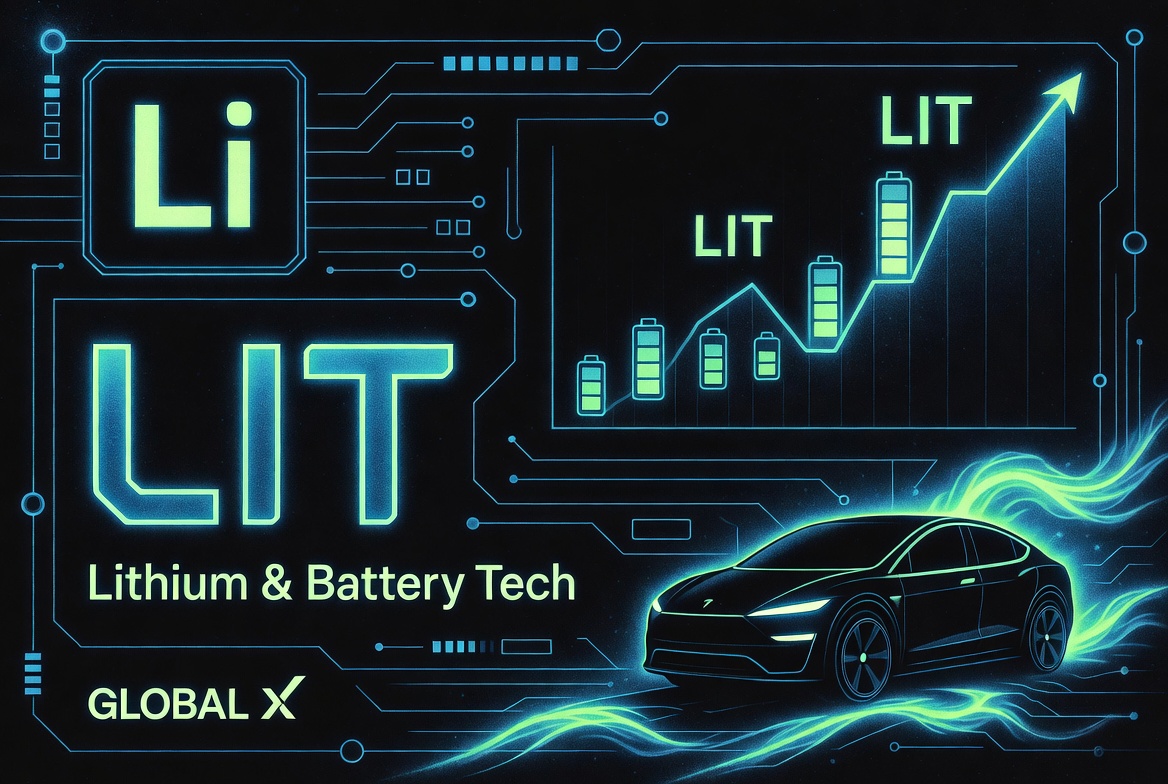
The Relationship Between LIT and the New Energy Market
The relationship between LIT and the new energy market centers on the fact that lithium batteries are key infrastructure within the new energy system. New energy vehicles, energy storage systems, and power grid upgrades all depend on lithium batteries as core tools for energy conversion and storage.
Structurally, the expansion of the new energy market directly drives growth in battery demand, and rising battery demand then feeds through to the lithium mining and materials value chain. This chain structure allows LIT to reflect the broader new energy industry cycle.
During an upward phase in the new energy market, profit expectations for lithium resource companies and battery companies usually rise together, helping push LIT higher.
As a result, LIT’s performance often depends not on individual companies, but on coordinated changes across the entire new energy value chain.
Why Rising Lithium Prices Affect LIT
Rising lithium prices usually have a clear impact on LIT because lithium is a core raw material for power batteries. Changes in lithium prices directly affect battery manufacturing costs and the profit structure of mining companies.
When lithium prices rise, lithium mining companies usually see stronger profitability, which can push related holdings higher. At the same time, the market may also expect stronger new energy demand, driving valuations across the broader value chain upward.
On the other hand, if lithium prices rise too quickly, they may squeeze battery company profit margins and create structural divergence within the value chain.
This two way mechanism makes lithium prices one of the key variables affecting LIT’s volatility.
How New Energy Vehicle Sales Affect LIT Volatility
New energy vehicle sales are a key demand side variable for LIT. New energy vehicle production depends heavily on power batteries, and power batteries rely on lithium resources and material supply.
When new energy vehicle sales grow, battery orders increase, supporting battery company capacity expansion and raising demand for lithium mining. This demand expansion usually supports gains across the entire LIT value chain.
Conversely, when new energy vehicle sales slow, market expectations for battery demand may weaken, putting pressure on valuations of lithium resource and battery companies.
In this sense, the new energy vehicle market is an important transmission link connecting LIT with end demand.
Why Battery Company Profitability Affects LIT’s Performance
Battery companies hold important weight in LIT, and their profitability directly affects the ETF’s performance. Battery company revenue mainly comes from power battery sales and energy storage system orders.
When new energy vehicle demand is strong, battery orders rise, capacity utilization improves, and profitability strengthens. This change is usually reflected in LIT’s upward movement.
At the same time, the development of the energy storage market can also improve the long term stability of battery company orders, making industry valuations more stable.
For this reason, battery companies are not only midstream manufacturers, but also one of the key drivers of LIT’s volatility.
How the Global Energy Transition Drives Changes in the LIT Market
The global energy transition is changing the traditional energy structure, shifting it away from fossil fuels and toward electricity and energy storage systems. This process directly increases the importance of lithium batteries.
As countries advance carbon neutrality goals, demand for new energy vehicles and energy storage systems continues to grow, driving expansion across lithium resources and the battery value chain.
This structural shift means LIT is no longer only a cyclical asset. It is gradually developing long term growth characteristics as well.
The faster the energy transition progresses, the greater the growth elasticity of the lithium battery value chain tends to be, which can strengthen LIT’s long term trend performance.
How Changes in Lithium Supply and Demand Affect LIT’s Risk Structure
Lithium supply and demand are important factors shaping LIT’s risk structure. When lithium supply is tight, prices may rise quickly, pushing up costs across the value chain.
In this situation, lithium mining companies may benefit, while battery manufacturers may face cost pressure, creating divergence within the value chain.
When lithium supply is excessive, lithium prices may fall, putting pressure on mining company profits. At the same time, lower battery manufacturing costs may support downstream demand.
This supply and demand volatility gives LIT’s risk structure clear cyclical characteristics and makes it closely connected to the commodity market.
LIT’s Use Cases in New Energy Trading
LIT is often used to observe overall trends across the new energy value chain. Some market participants use LIT to assess the lithium price cycle and the strength of the new energy vehicle market.
At the trading level, LIT is also often used to build new energy asset portfolios and reduce single company risk.
At the same time, LIT reflects the global energy transition process, so it is often used as a representative indicator of the new energy sector in macro trading strategies.
Its volatility structure makes it suitable for medium to long term trend tracking and cyclical allocation strategies.
Conclusion
LIT’s performance during a new energy rally is mainly driven by lithium prices, new energy vehicle sales, and battery company profitability. As a lithium battery value chain ETF, its price changes reflect shifts in the global new energy supply and demand structure.
As the energy transition continues, LIT’s connection with lithium resources and the battery value chain will become tighter, and its market performance will show stronger cyclical and growth characteristics.
FAQs
Why Does LIT Move with the New Energy Vehicle Market?
Because new energy vehicles require large amounts of power batteries, and batteries depend on lithium resources, changes in vehicle sales affect demand across the entire value chain.
Are Rising Lithium Prices Always Good for LIT?
Not necessarily. Rising lithium prices benefit mining companies, but they may increase costs for battery companies, so the impact can be structurally mixed.
Is LIT More Like a Stock or an Industry Index?
LIT is closer to an industry index. It reflects the combined performance of the entire lithium battery value chain rather than the movement of a single company.
Why Are Battery Companies Important in LIT?
Battery companies sit in the middle of the value chain and serve as the core link between lithium resources and new energy vehicle demand, giving them significant influence on the ETF’s weightings.
Is LIT Suitable for Long Term Investing?
LIT has clear cyclical and growth characteristics, making it more suitable for tracking new energy industry trends than for making a one direction judgment.
Related Articles

How Does PAXG Work? In-Depth Overview of the Physical Gold Tokenization Mechanism

How is the price of PAXG determined? Pegging mechanism, trading depth, and influencing factors

Reflections on Ethereum Governance Following the 3074 Saga

Gate Research: 2024 Cryptocurrency Market Review and 2025 Trend Forecast

Gate Research: BTC Breaks $100K Milestone, November Crypto Trading Volume Exceeds $10 Trillion For First Time
