How Gate DEX Balances User Convenience with Asset Security
Why Security Is a Persistent Issue in On-Chain Transactions
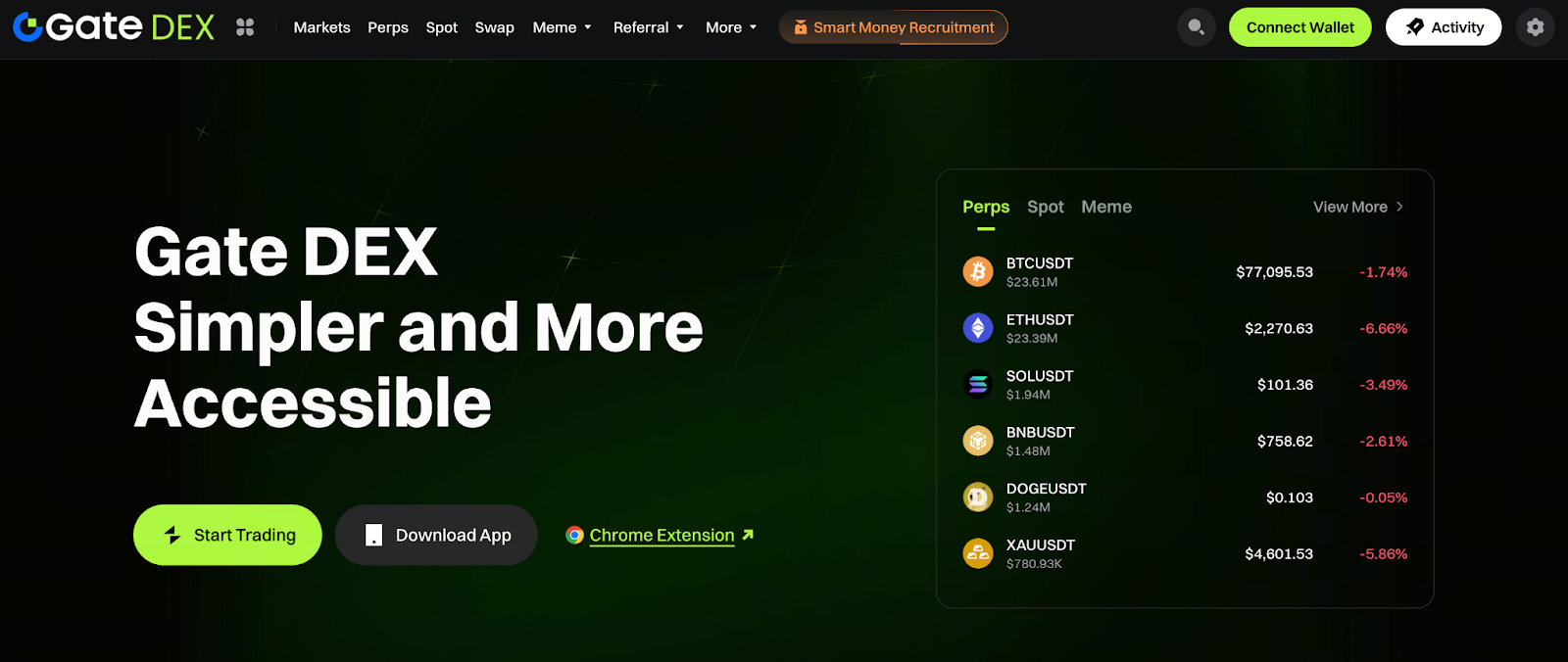
Image: https://web3.gate.com/
In the Web3 ecosystem, asset security remains a top concern for users. Unlike centralized exchanges, decentralized trading gives users full control over their assets, but it also places greater responsibility on them for managing operations.
Any errors in private key management, wallet authorization, or signing can be irreversible. As a result, ensuring security while reducing operational complexity is a core challenge for DEX products.
The Security vs. User Experience Dilemma in Decentralized Trading
The challenge with traditional DEXs isn’t a lack of security, but rather an overemphasis on security mechanisms that make operations cumbersome. Frequent signature confirmations and complex wallet switching processes discourage everyday users from long-term engagement.
This creates a classic dilemma: the higher the security, the greater the barriers to entry; the simpler the experience, the more users worry about asset safety.
Gate DEX’s product design seeks to strike a new balance between these competing priorities.
Gate DEX’s Non-Custodial Asset Model
With Gate DEX, user assets always remain in their own wallets, and the platform never takes custody of user funds. This gives users complete control over their assets. Compared to centralized platforms, this approach reduces concentration risk and aligns with the core principles of decentralized finance.
Users can execute on-chain transactions without transferring assets to a platform account, minimizing the operational costs associated with asset migration.
How TEE Architecture Improves the Trading Experience
Gate DEX’s wallet system is built on Trusted Execution Environment (TEE) technology. TEE executes critical operations in an isolated, secure environment, ensuring sensitive data is protected from external access.
For users, the importance of this technology isn’t about understanding its technical details, but about benefiting from enhanced asset security and fewer manual steps.
Users maintain non-custodial control while enjoying a more seamless trading experience.
Why Most Users Still Find DEXs Challenging
Many users still see DEXs as “complex” or “cumbersome” because early product designs catered primarily to technical users rather than mainstream traders.
Complicated wallet operations and repeated authorization and signing steps make on-chain transactions lengthy, reducing users’ willingness to stick with the platform.
How Gate DEX Lowers the Security Barrier for Users
Gate DEX has optimized onboarding and trading flows. The platform supports one-click login via Gate account, Google account, or wallet, enabling users to quickly enter the on-chain trading environment.
During trading, unnecessary interruptions are minimized, and advanced options like limit orders are supported, making the experience closer to traditional exchange models.
These improvements do not compromise security; instead, they reduce the operational burden for users.
The Evolving On-Chain Trading Experience
As on-chain trading grows, DEX products are shifting from technical tools to mainstream trading platforms. Users’ dual needs for convenience and security are driving ongoing product innovation.
Gate DEX is focused on maintaining the advantages of decentralization while delivering a trading experience that supports long-term use.
The future mainstream adoption of decentralized trading will largely depend on whether more users embrace this balance.
Related Articles

AI-Native Settlement Layers: How United Stables Is Building the Next Financial Rail

The ve(3,3) Flywheel Explained: How AERO Tokenomics Powers Aerodrome’s DeFi Economy

How Does PAXG Work? In-Depth Overview of the Physical Gold Tokenization Mechanism

Aerodrome Tokenomics: How ve(3,3) Powers Base's Most Profitable DEX

How is the price of PAXG determined? Pegging mechanism, trading depth, and influencing factors
