GateClaw vs OpenClaw: Key Differences Between Two Web3 AI Agent Workstations
GateClaw and OpenClaw represent two types of technical environments designed for deploying and running Web3 AI agents. GateClaw is designed as a visual AI agent workstation that connects AI models, tool interfaces, and Web3 networks, allowing agents to execute automated tasks within a unified system. OpenClaw typically appears as an open source AI agent framework, where developers build and run agents through code and extend functional modules according to specific needs.
As Web3 technologies increasingly integrate with artificial intelligence, AI agents require stable runtime environments to manage model execution, task coordination, and on-chain interactions. Different types of AI agent environments therefore follow distinct architectural approaches in system design, deployment methods, and capability structures. The differences between GateClaw and OpenClaw mainly appear in workstation architecture, development models, and intended application goals.
Positioning and Architecture Comparison: GateClaw vs OpenClaw
GateClaw and OpenClaw are both designed as runtime environments for AI agents, but they differ significantly in system positioning and architectural design.
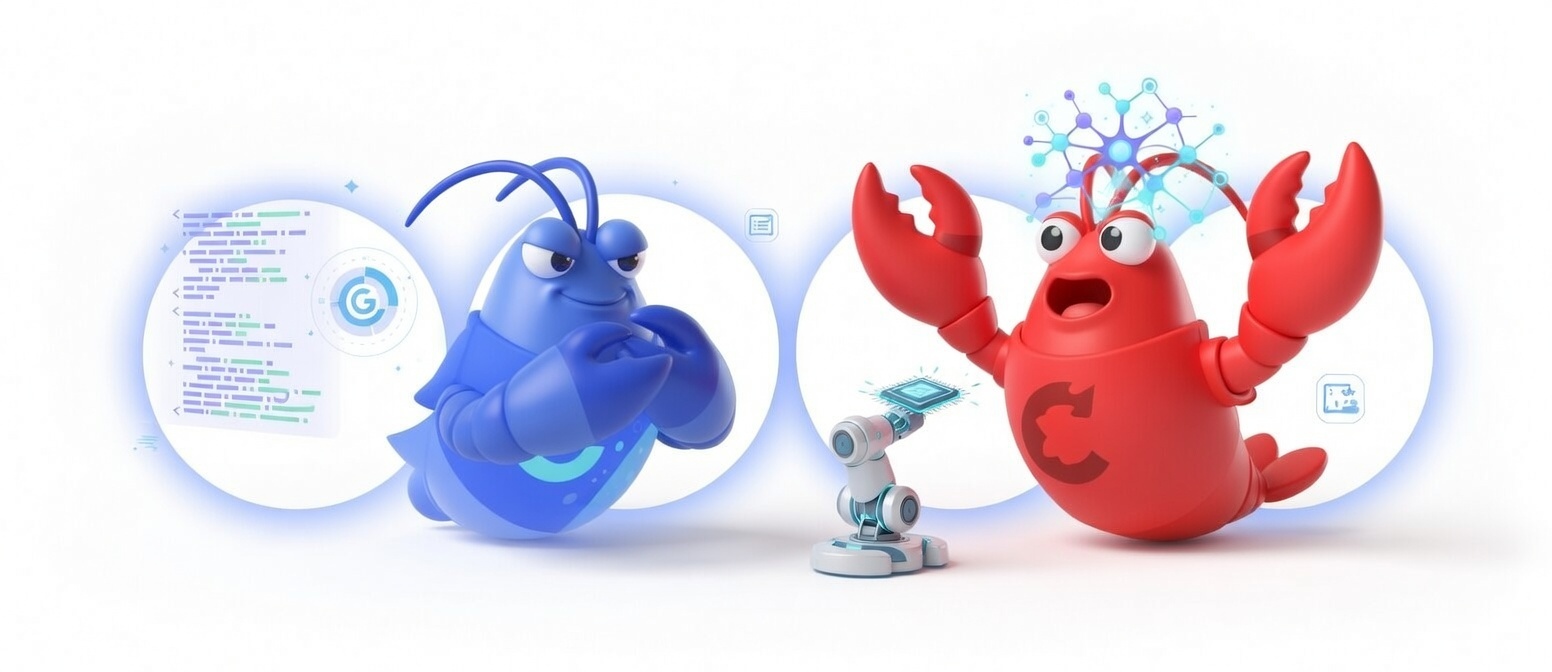
GateClaw is designed as a visualized workstation for Web3 AI agents. Within the GateClaw architecture, agents can be deployed and operated through a unified platform while connecting to AI models, on-chain data interfaces, and automation tool modules. The workstation typically contains several core components, including AI model integration modules, task execution systems, permission management mechanisms, and Web3 tool interfaces.
In terms of capability structure, GateClaw also introduces an AI Skills module that expands the operational abilities of AI agents. AI Skills function as callable components that allow agents to perform specific tasks, such as querying on-chain data, running strategy calculations, executing trades, or performing other automated processes. By combining AI Skills with tool interfaces, agents operating in the workstation environment can complete complex Web3 workflows that include data analysis, strategy evaluation, and blockchain interaction.
OpenClaw follows a structure closer to an open source AI agent development framework. In an OpenClaw environment, developers configure the operational logic of agents themselves, including model invocation methods, connections to external tools, and task scheduling mechanisms. The framework provides the foundational runtime structure, while the specific functionality of each agent is typically implemented through developer-built plugins or custom code. Expansion of functional modules therefore relies primarily on developer implementation rather than platform-provided capability components.
From an overall architectural perspective, GateClaw emphasizes a platform-based runtime environment with modular capabilities, allowing agents to operate within a unified workstation and call AI Skills together with Web3 tool interfaces. OpenClaw, by contrast, focuses on a developer-extensible framework, enabling developers to design and adjust the structure of their agent systems according to specific requirements.
Core Differences Between GateClaw and OpenClaw
The differences between GateClaw and OpenClaw mainly appear in deployment methods, capability structures, and application scenarios. These distinctions reflect the different design goals behind the two systems.
Deployment Approach
GateClaw adopts a visual deployment model. Users configure the AI agent’s model, strategy, and tool interfaces directly within the workstation interface, and agent tasks can be launched through graphical workflows. This visual deployment process lowers the technical barrier and allows even non-developer users to operate AI agents.
OpenClaw typically relies on a developer environment for deployment. Running an AI agent usually requires code configuration, script execution, and environment management. While this approach offers greater flexibility, it also requires stronger development skills.
Capability Structure
GateClaw generally provides a modular capability framework that includes components such as AI Skills, tool interface modules, and automated task systems. Through these modules, AI agents can perform different types of Web3 operations, including data queries, strategy execution, and on-chain interactions.
OpenClaw relies more heavily on developer-built capabilities. Developers create plugins or extension modules to allow agents to connect with external services or perform specific tasks. The completeness of system functionality therefore depends largely on the developer’s implementation.
Application Scenarios
GateClaw is more suitable for environments where AI agents need to be deployed quickly, such as automated trading, on-chain data analysis, and Web3 application automation. The unified workstation environment allows agents to execute tasks reliably while supporting centralized management and monitoring.
OpenClaw is more commonly used in development and experimentation settings, such as testing new AI agent architectures, building customized automation systems, or conducting technical research. Within an open-source environment, developers can freely modify the operational logic of agents and experiment with different system configurations.
The following comparison provides a clearer view of the differences between the two systems:
| Comparison Dimension | GateClaw | OpenClaw |
|---|---|---|
| System Positioning | Web3 AI agent workstation | Open source AI agent framework |
| Deployment Method | Graphical deployment | Developer-configured deployment |
| Capability Structure | Modular capability components | Developer-defined extensions |
| Technical Barrier | Relatively lower | Relatively higher |
| Application Environment | Automated Web3 applications | Development and research environments |
From a structural perspective, GateClaw emphasizes platform integration and usability, while OpenClaw focuses more on openness and developer flexibility.
GateClaw vs OpenClaw: Application Scenario Analysis
In practical use, GateClaw and OpenClaw typically serve different types of user groups.
GateClaw is better suited for scenarios that require AI agents to operate in a stable and continuous environment. In applications such as automated trading, strategy execution, and on-chain data analysis, agents can run persistently within the workstation while calling various tools to complete tasks. The unified interface and modular components also make the system easier to manage and maintain.
OpenClaw is more appropriate for developer-oriented environments. During technical research or product development stages, developers may need to test new agent architectures or build customized tools. The open-source framework offers greater flexibility, allowing developers to modify and experiment with the operational logic of agents.
Within the broader Web3 AI ecosystem, these two systems often play complementary roles, with GateClaw functioning as an application-layer tool and OpenClaw serving as a developer framework.
Limitations to Consider When Using GateClaw or OpenClaw
When operating Web3 AI agent environments, several technical limitations should be considered.
First, executing on-chain tasks may involve permission and security management challenges. When agents need to access wallets or perform transactions, the system must ensure that key management mechanisms and permission control policies effectively protect digital assets.
Second, operational costs may influence long-term system performance. AI model calls, on-chain transaction fees, and computational resource consumption can all affect the overall efficiency and sustainability of running AI agents.
In addition, differences may exist in the tool ecosystems supported by different work environments. Certain plugins, interfaces, or modules may be designed for specific platforms only. For this reason, ecosystem compatibility and available integrations should be considered when selecting an AI agent environment.
Conclusion
GateClaw and OpenClaw both provide technical environments for deploying and operating Web3 AI agents, yet they differ significantly in design philosophy and usage approach. GateClaw emphasizes visual operation, modular capabilities, and platform-based management, enabling users to deploy and manage AI agents within a unified workstation environment. OpenClaw follows a different path, functioning as an open-source development framework that offers developers greater customization capabilities and system flexibility.
As Web3 AI technologies continue to evolve, different types of AI agent environments may serve different user needs. Understanding the differences between GateClaw and OpenClaw helps clarify the broader technical direction of Web3 AI agent infrastructure.
FAQ
- What Are the Main Differences Between GateClaw and OpenClaw?
GateClaw emphasizes visual deployment and modular capabilities, allowing AI agents to operate within a unified workstation environment. OpenClaw functions more as a developer framework, where agents are configured through code or scripts.
- Is GateClaw More Suitable for Non-Developer Users?
The graphical interface and modular tools available in GateClaw lower the technical barrier for deploying AI agents. This structure makes it more suitable for users who want to run automated tasks without extensive development experience.
- What Types of Use Cases Are Better Suited for OpenClaw?
OpenClaw is generally better suited for developers or researchers who require higher system flexibility. These users often need to build customized AI agents or experiment with new technical architectures.
- What Is the Purpose of a Web3 AI Agent Workstation?
A Web3 AI agent workstation provides an environment for deploying and managing intelligent agents. It allows agents to connect with AI models and blockchain networks while executing automated tasks.
- What Are Common Application Scenarios for AI Agents in Web3?
AI agents can be used in scenarios such as automated trading, on-chain data analysis, strategy execution, and Web3 application automation.
Related Articles
Arweave: Capturing Market Opportunity with AO Computer
The Upcoming AO Token: Potentially the Ultimate Solution for On-Chain AI Agents

AI+Crypto Landscape Explained: 7 Major Tracks & Over 60+ Projects
0G vs Bittensor: Key Differences Between AI Infrastructure Layer and Decentralized AI Model Network

What is AIXBT by Virtuals? All You Need to Know About AIXBT