Gate Leveraged ETF: A Strategy-Oriented Way to Amplify Market Trends via Spot Trading
The Role of Leveraged ETFs Is Evolving
Traditionally, ETFs have been associated with long-term holding, risk diversification, and passive index tracking, serving as stable allocation vehicles. As volatility in the crypto market accelerates, however, more traders are seeking tools that can respond instantly to market conditions without the complexity of active management.
In this new landscape, leveraged ETFs have shifted from the periphery to become a core tool for trend-driven traders. They are particularly attractive to those who want to amplify market movements without engaging directly in the derivatives market.
Design Logic of Gate Leveraged ETF Tokens
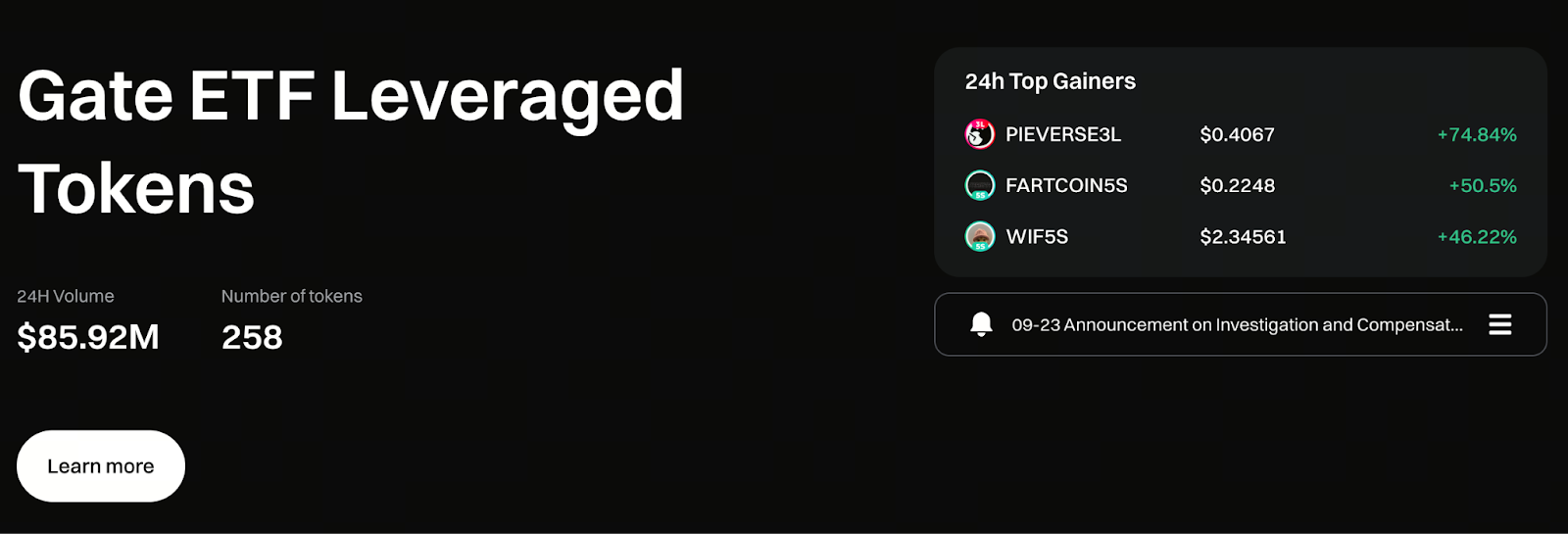
Gate leveraged ETF tokens are not traditional fund products. Instead, they are trading tokens underpinned by perpetual contracts, with positions automatically managed by the system. Each token maintains a fixed leverage ratio—typically 3x or 5x—and the system adjusts positions in real time based on market fluctuations.
Users don’t need to operate a derivatives account. By simply trading the corresponding tokens on the spot market, they can access amplified market moves. This design makes leveraged strategies more intuitive and accessible, moving them beyond the realm of professional trading.
Start trading Gate ETF leveraged tokens now: https://www.gate.com/leveraged-etf
Achieving Leverage with Spot Trading
Unlike traditional derivatives, leveraged ETFs delegate complex risk control and position management to the system. Traders do not need to calculate margin, account for borrowing costs, or worry about forced liquidations. This structure makes the trading experience similar to spot trading but with the added benefit of amplified price movements during market trends. For those aiming to minimize psychological stress and focus on market direction, leveraged ETFs offer a more user-friendly solution.
How Is Fixed Leverage Maintained in the Market?
The ongoing viability of leveraged ETFs relies on automated adjustment mechanisms. Each product is linked to an independent derivatives position, and the system dynamically adjusts position sizes in response to market volatility to maintain target leverage. The platform also performs scheduled rebalancing to prevent leverage from drifting away from its design target during periods of high volatility. For users, this means there’s no need for manual strategy adjustments or hands-on management.
Why Are Leveraged ETFs a Choice for Short-Term Traders?
The appeal of leveraged ETFs lies in their efficiency during clear market trends, not in long-term holding. When market direction is evident, leverage accelerates capital response, resulting in more pronounced outcomes for the same market call. Additionally, the absence of forced liquidation mechanisms ensures a steadier trading rhythm. For users who want to avoid being forced out by temporary counter-trend moves, leveraged ETFs offer a more controllable risk profile.
Key Risks and Limitations to Understand
While leveraged ETFs are intuitive to use, they remain high-volatility instruments. It’s crucial to understand their features before trading:
- Price swings are significantly greater than in spot trading
- Frequent rebalancing during sideways markets can erode performance
- Actual returns may differ from the stated leverage multiple
- Management fees and hedging costs are reflected in prices over time
As a result, leveraged ETFs are best suited for strategic trading rather than long-term passive holding.
Why Management Fees Exist
To ensure the stable operation of leveraged ETFs, the platform must continuously cover several costs, including:
- Opening and closing fees for derivatives contracts
- Perpetual contract funding rates
- Hedging and liquidity management expenses
- Slippage losses during rebalancing
The daily management fee of 0.1% covers these essential expenses. This fee structure is standard in the leveraged ETF market and critical for product stability.
The Right Approach to Using Leveraged ETFs
Leveraged ETFs are not set-and-forget tools. They require strategic use—combining trend analysis, stop-loss planning, and capital allocation. When users have a clear view of market direction and integrate risk management into their trading plan, leveraged ETFs can deliver their intended amplification benefits.
Conclusion
Gate leveraged ETFs offer a strategic middle ground between spot and derivatives trading, enabling participants to access amplified market moves with lower operational barriers. However, both returns and risks are magnified. Only with a thorough understanding of the product’s mechanics and a disciplined trading approach can leveraged ETFs enhance your strategy, rather than unintentionally increase losses.
Related Articles

AI-Native Settlement Layers: How United Stables Is Building the Next Financial Rail

The ve(3,3) Flywheel Explained: How AERO Tokenomics Powers Aerodrome’s DeFi Economy

How Does PAXG Work? In-Depth Overview of the Physical Gold Tokenization Mechanism

Aerodrome Tokenomics: How ve(3,3) Powers Base's Most Profitable DEX

How is the price of PAXG determined? Pegging mechanism, trading depth, and influencing factors
