Gate GTETH: Reclaiming Liquidity and Control in Ethereum Staking
When Staking Challenges Emerge
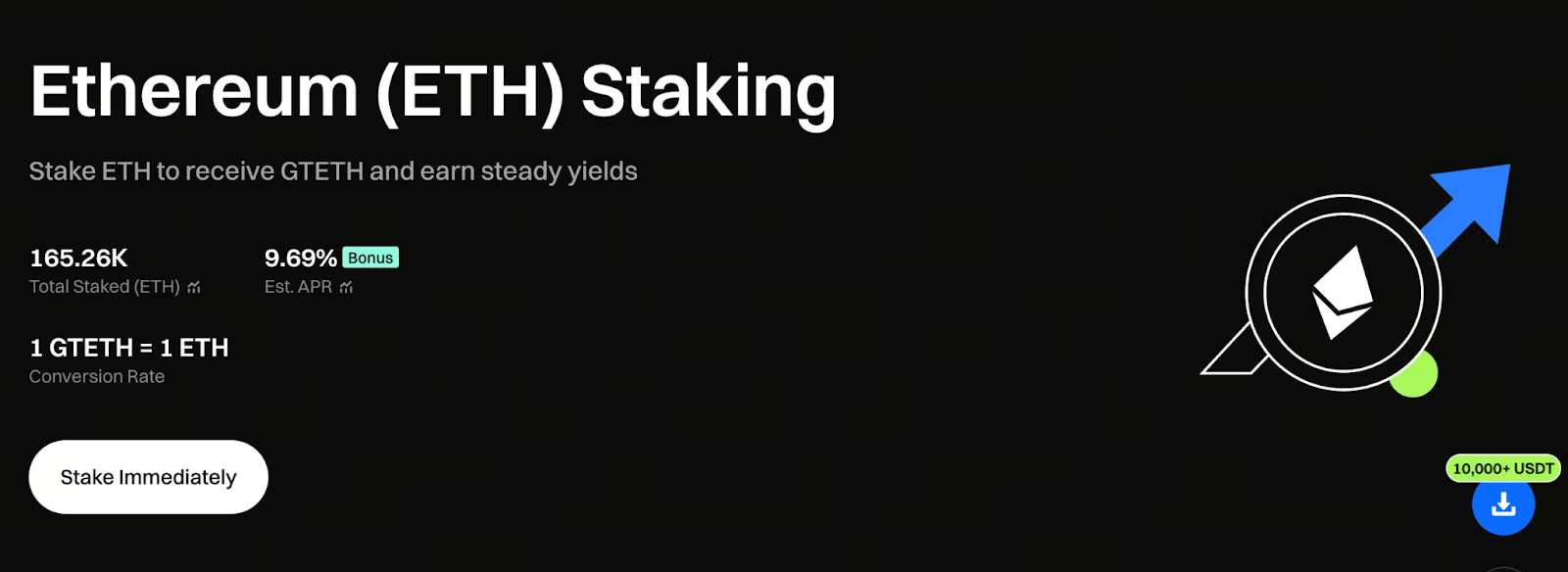
After Ethereum fully adopted the PoS mechanism, staking became a default option for ETH holders. As market volatility increased and capital rotations accelerated, the traditional staking model began to reveal structural shortcomings. The real concern for users is not the yield itself, but whether funds can be reallocated at critical moments. Once assets are locked, any market shift must be absorbed passively—an approach that clashes with today’s fast-paced trading environment.
The Overlooked Core Cost
For most users, the greatest limitation of ETH staking is not technical complexity, but the inflexible state of assets. In practice, common issues include:
- Positions cannot be adjusted immediately when the market reverses
- Staking returns are isolated, making it difficult to assess alongside the overall portfolio
- Locked ETH cannot be used for other strategic allocations
Over time, staking shifts from an asset allocation tool to a static position that is both immobile and difficult to evaluate.
GTETH Redefines Staking
GTETH is not designed to make staking more complicated for users. Instead, it reimagines how staking is presented. By converting ETH into GTETH, staking becomes an inherent feature of the asset itself—no waiting required. Once converted, GTETH is an ETH-based asset that can be held, traded, and allocated. Staking is seamlessly integrated into day-to-day fund management, rather than being siloed from strategic planning.
Returns Are Naturally Embedded in Value
GTETH features a yield-inclusive structure. Base rewards from Ethereum PoS, along with additional GT incentives from Gate, are gradually reflected in GTETH’s total value over time. Users do not need to claim rewards periodically or track multiple income sources—simply holding GTETH allows returns to accumulate naturally. All reward sources remain verifiable on-chain, ensuring transparency and traceability.
Liquidity Is No Longer the Price of Staking
Unlike traditional ETH staking, GTETH does not require locked positions. Holders can redeem GTETH for ETH at any time, or trade directly in the market, without waiting for a fixed unlocking period. This design allows yield and liquidity to coexist in a single asset, enabling staking to move in step with market dynamics for the first time.
From Passive Returns to a Configurable ETH Allocation Unit
With liquidity constraints removed, GTETH’s role transforms. It’s not just a staking alternative, but an ETH unit that fits into overall asset allocation. Whether you’re reducing exposure during heightened risk or quickly shifting positions when opportunities arise, GTETH enables adjustments while preserving staking yield, ensuring ETH is no longer forced to remain idle.
Clear Yield Structure and Quantifiable Long-Term Efficiency
GTETH’s returns are straightforward, comprised mainly of:
- Ethereum PoS staking yield: approximately 2.69% annualized
- Additional GT incentives from Gate: approximately 7% annualized
All returns are consolidated when GTETH is redeemed for ETH, making long-term holding efficiency easier to calculate and compare.
Participate in Gate ETH staking now and start your on-chain mining rewards journey: https://www.gate.com/staking/ETH?ch=ann46659
VIP Levels Impact Long-Term Compound Returns
GTETH’s fee structure is tied to Gate VIP levels. The base fee rate is 6%, with discounts by level:
- VIP 5–7: 20% fee discount
- VIP 8–11: 40% fee discount
- VIP 12–14: 60% fee discount
While differences may be subtle in the short term, over the long run—especially with compound returns—fees become a crucial variable affecting final yield.
A Distinct Design Logic from Mainstream LSTs
Most liquid staking tokens are essentially representations of locked positions, offering limited strategic flexibility. GTETH, however, functions as a daily asset management tool. Its value adjusts naturally with yield and allows unrestricted market entry and exit. With this design, staking is no longer a passive commitment, but an ETH management approach that adapts in real time to strategic needs.
Summary
GTETH does not make ETH staking more complex—it redefines its role in asset allocation. By preserving PoS stable yield potential and removing locked position constraints on capital efficiency, staking can truly integrate with the fast pace of modern Web3 operations. As market changes become the norm, ETH staking is no longer a rigid long-term commitment, but a flexible choice balancing liquidity and returns.
Related Articles

AI-Native Settlement Layers: How United Stables Is Building the Next Financial Rail

The ve(3,3) Flywheel Explained: How AERO Tokenomics Powers Aerodrome’s DeFi Economy

How Does PAXG Work? In-Depth Overview of the Physical Gold Tokenization Mechanism

Aerodrome Tokenomics: How ve(3,3) Powers Base's Most Profitable DEX

How is the price of PAXG determined? Pegging mechanism, trading depth, and influencing factors
