Gate for AI: How Intelligent Trading Is Transforming Digital Asset Markets
AI Is Transforming Digital Asset Trading
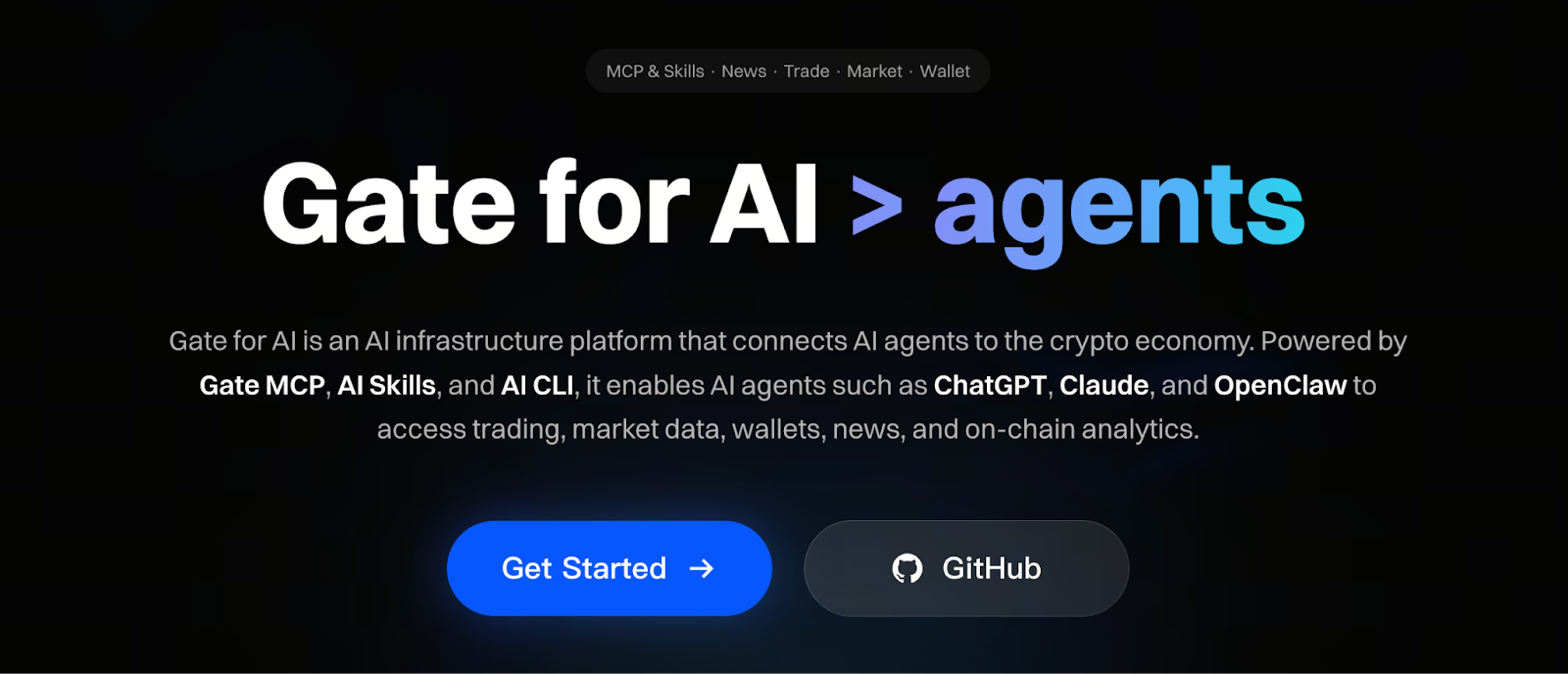
A defining characteristic of the crypto market is its overwhelming volume of information and the lightning-fast pace of updates. Price swings, changes in filled amount, and shifts in market sentiment can all move the market in a matter of moments. For traders, the challenge has always been how to absorb this information and make sound decisions within tight timeframes.
As artificial intelligence technology advances, trading methods are undergoing a transformation. AI is no longer just a supporting tool for data analysis—it is becoming a key player throughout the trading lifecycle, from market surveillance and strategy development to direct trade execution.
Core Operating Model of Gate for AI
Gate for AI streamlines complex trading workflows by breaking them into modular components and linking them with AI, driving greater efficiency and automation across the process.
-
Continuous Market Data Analysis
The system constantly monitors multiple market indicators, including price trends, filled amount fluctuations, and market momentum. Leveraging model-based analysis, AI rapidly spots potential market signals, enabling users to seize emerging trading opportunities. -
Auto-Generated Trading Strategies
After data analysis, AI develops trading strategies based on established models. These strategies may be rooted in technical indicator analysis, historical backtesting, or risk management frameworks, ensuring decisions are grounded in data and logic rather than just subjective judgment. -
Automated Trade Execution
When market conditions align with strategy parameters, the system automatically places orders. This automation minimizes manual delays and keeps trading in step with real-time market movements. -
Dynamic Strategy Adjustment
Because market environments are always evolving, AI continuously monitors conditions. When new trends or unusual volatility arise, the system adjusts strategies according to preset criteria, maintaining operational stability.
Making Smart Trading More Accessible
Previously, building an automated trading system required programming or quantitative trading expertise—an obstacle for many retail investors. Gate for AI removes this barrier with a simplified interface and modular design, allowing users to select preset strategies and quickly launch trading plans. Even without technical expertise, users can leverage platform tools for intelligent trading.
The system also supports natural language interaction, so users can directly request market data or strategy recommendations, making the experience more intuitive.
Why AI Trading Is Gaining Traction
AI-driven trading holds clear advantages over approaches that rely solely on human judgment, which is why it is drawing increasing interest in the market.
- AI continuously monitors the market and automatically analyzes data, saving traders significant time. There's no need for constant screen-watching to stay informed.
- AI excels at processing massive datasets, uncovering potential market signals that humans might miss and improving decision quality.
With preset strategies and an intuitive interface, the entire workflow is greatly simplified, making automated trading accessible to a wider audience. The crypto market operates 24/7, and AI systems can run nonstop, ensuring no trading opportunity slips by.
The Future of AI Trading Systems
AI’s role in trading continues to evolve. As models become more accurate and data sources expand, future trading systems may incorporate additional layers of insight—such as on-chain data, cross-market capital flows, or group sentiment metrics.
Under this trend, smart trading systems will move beyond being mere execution tools, gradually developing more autonomous decision-making capabilities. Gate for AI will keep refining its system architecture to connect analysis, strategy, and trade execution more effectively, minimizing the lag between market signals and action.
Learn more about Gate for AI: https://www.gate.com/gate-for-ai
Summary
Artificial intelligence is ushering in a new era for trading markets. By integrating market analysis, strategy development, and automated execution, Gate for AI transforms complex trading processes into streamlined, systematic workflows. For investors, this signals not only the evolution of trading tools but also a shift in the competitive landscape. As information density and market velocity continue to increase, traders who harness AI tools will be best positioned to boost decision-making efficiency and keep pace with rapidly changing markets.
Related Articles

AI-Native Settlement Layers: How United Stables Is Building the Next Financial Rail

The ve(3,3) Flywheel Explained: How AERO Tokenomics Powers Aerodrome’s DeFi Economy

How Does PAXG Work? In-Depth Overview of the Physical Gold Tokenization Mechanism

Aerodrome Tokenomics: How ve(3,3) Powers Base's Most Profitable DEX

How is the price of PAXG determined? Pegging mechanism, trading depth, and influencing factors
