Bitcoin Rises 2% to $93,500 as Inflation Data Boosts Rate Cut Expectations, Driving a BTC Rebound
Bitcoin Market Review: Back Above $90,000
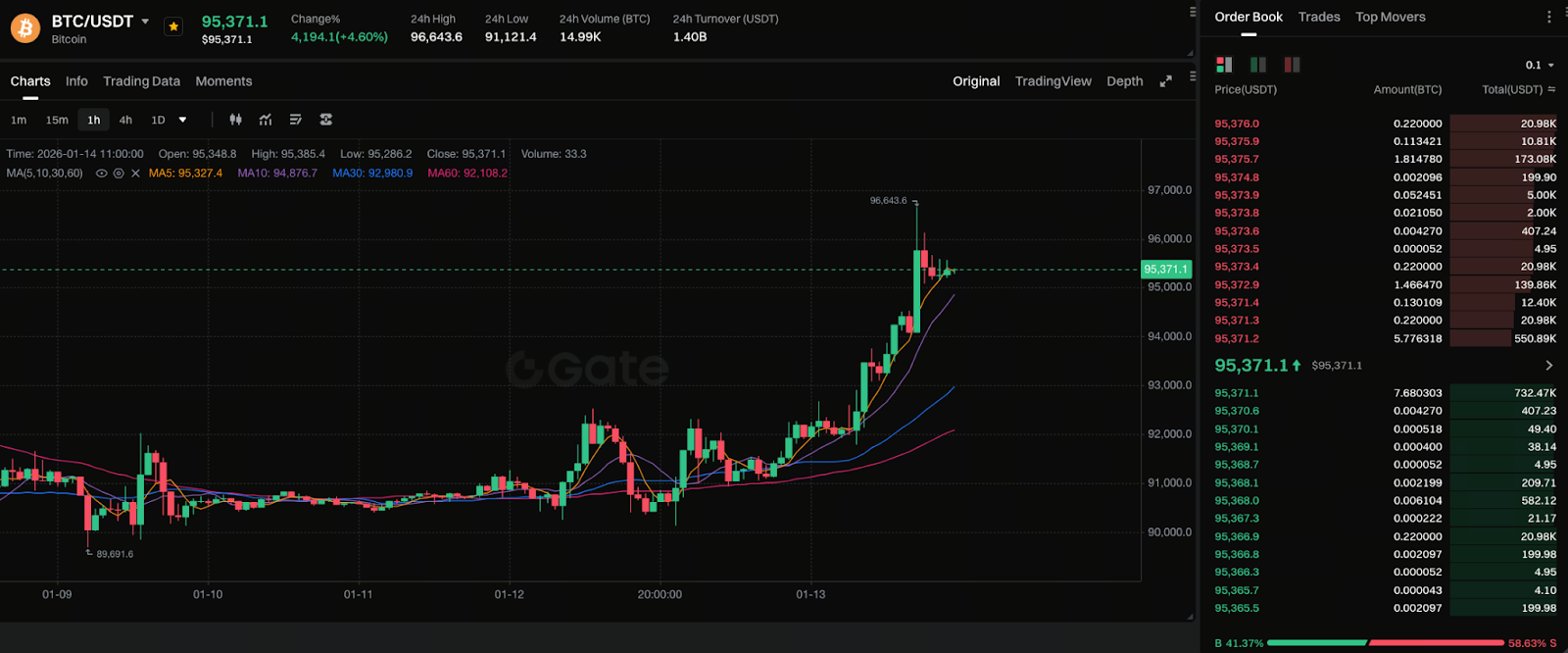
Chart: https://www.gate.com/trade/PEPE_USDT
Bitcoin (BTC) posted a sharp rebound in mid-January 2026, climbing roughly 2% in a single day to reach $93,500. Crucially, the asset reclaimed the psychological $90,000 support level. This rally reversed the previous short-term correction and sparked a modest recovery across the broader crypto market.
US Inflation Data: Market Implications
The latest figures from the US Bureau of Labor Statistics (BLS) show:
- December CPI rose about 2.7% year-over-year, broadly in line with market expectations;
- Core CPI (excluding food and energy) came in slightly below analysts’ consensus.
The market generally sees this as evidence that inflationary pressures are easing, leaving room for monetary policy to remain accommodative or shift further toward easing. This result has reduced concerns about resurging inflation and provided short-term support for risk assets.
Within the framework of interest rate expectations, weaker inflation → rising rate cut expectations → support for risk assets. This dynamic is again playing out in the crypto market.
Fed Rate Cut Outlook and Risk Asset Performance
Analysts point out that Core CPI coming in below expectations helps reinforce the market’s belief that the US economy may achieve a “soft landing.” Typically, this expectation:
- Reduces the appeal of long-term bond yields;
- Weakens the US dollar;
- Drives capital into equities and crypto assets as risk assets.
While prediction markets still see limited likelihood of a near-term rate cut (this month or the next Fed meeting), expectations for mid-term and full-year 2026 rate cuts are rising. This forward-looking sentiment is a key factor driving BTC’s short-term price gains.
Bitcoin Technical Analysis Early 2026: Key Resistance Levels in Focus
Technically, Bitcoin remains in a crucial range-bound phase. Most analysts agree that BTC needs to break decisively above the $93,500–$95,000 resistance zone to confirm a more sustained rebound.
Key technical levels to watch include:
- Short-term support: around $90,000
- Key resistance zone: $93,500–$95,000
- Mid-term psychological threshold: $100,000
Until BTC breaks through the key resistance, prices are likely to remain volatile, with elevated short-term fluctuations.
Investor Sentiment and Macro Uncertainty
While inflation data has provided short-term support for risk assets, overall market sentiment remains cautious. Investors should keep an eye on these potential risks:
- Macro policy uncertainty: including recurring inflation and shifts in fiscal policy;
- Global financial market volatility: corrections in equities or bonds could dampen risk appetite;
- Geopolitical and political risks: may intermittently affect capital flows.
As a result, the current BTC rebound is largely driven by expectations, rather than a sustained one-way trend.
The Verdict: Can Bitcoin Break $100k?
In summary, Bitcoin’s recent rally to around $93,500 was mainly driven by moderate US inflation data and rising expectations for rate cuts. As inflationary pressures settle, short-term demand for BTC and other crypto assets has increased.
Looking ahead:
- If the Fed signals a more definitive easing stance, BTC could continue to challenge the upper resistance zone;
- If inflation data rebounds or policy expectations shift, market volatility may intensify again.
However, investors must continue to monitor macro data, as any rebound in inflation could reignite volatility.
Related Articles

AI-Native Settlement Layers: How United Stables Is Building the Next Financial Rail

The ve(3,3) Flywheel Explained: How AERO Tokenomics Powers Aerodrome’s DeFi Economy

How Does PAXG Work? In-Depth Overview of the Physical Gold Tokenization Mechanism

Aerodrome Tokenomics: How ve(3,3) Powers Base's Most Profitable DEX

How is the price of PAXG determined? Pegging mechanism, trading depth, and influencing factors
