Bitcoin Holds Firm at $92,000 as the Nikkei Hits a Record High: An Analysis of Global Market Linkages After the Wall Street Rebound
Market Overview: Bitcoin, Nikkei Index, and Wall Street Performance
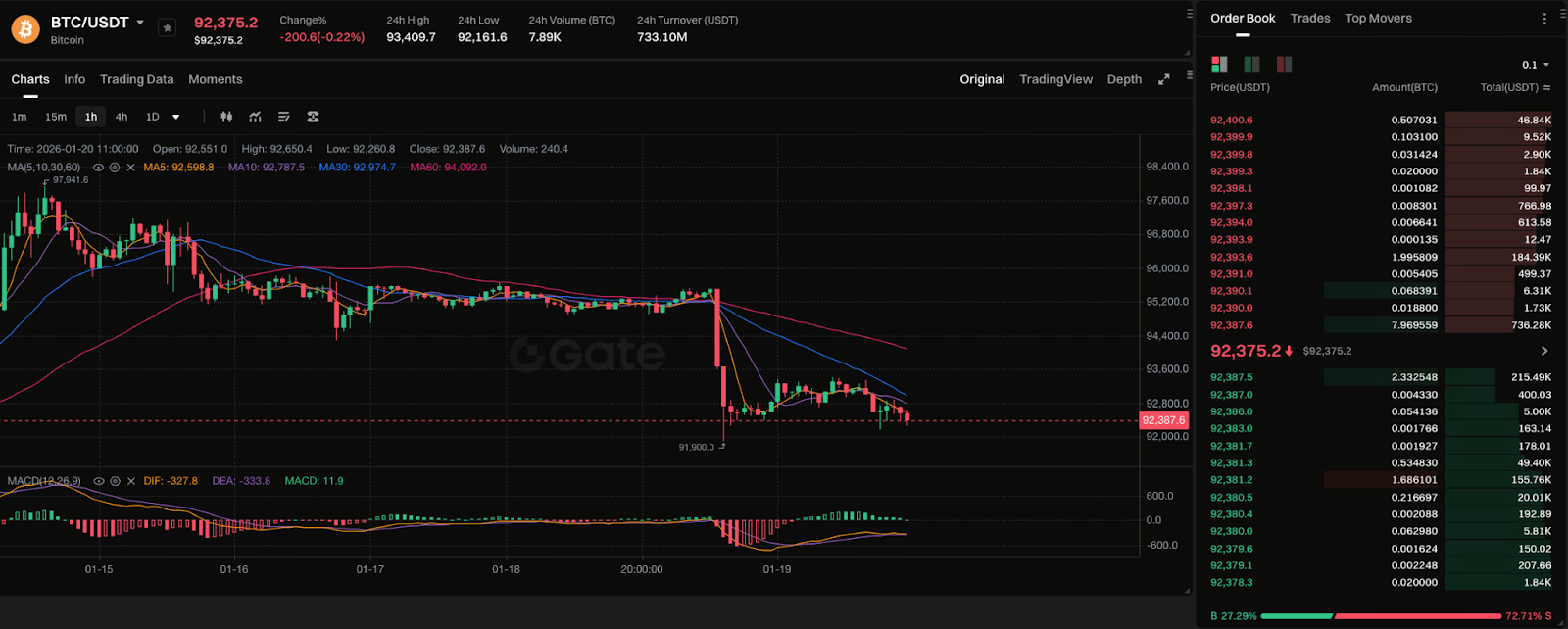
Bitcoin has recently held steady near $92,000, while global equity markets continue to climb. As of January 20, 2026, Bitcoin traded around $92,363, showing only minor corrections and maintaining a strong consolidation at elevated levels.
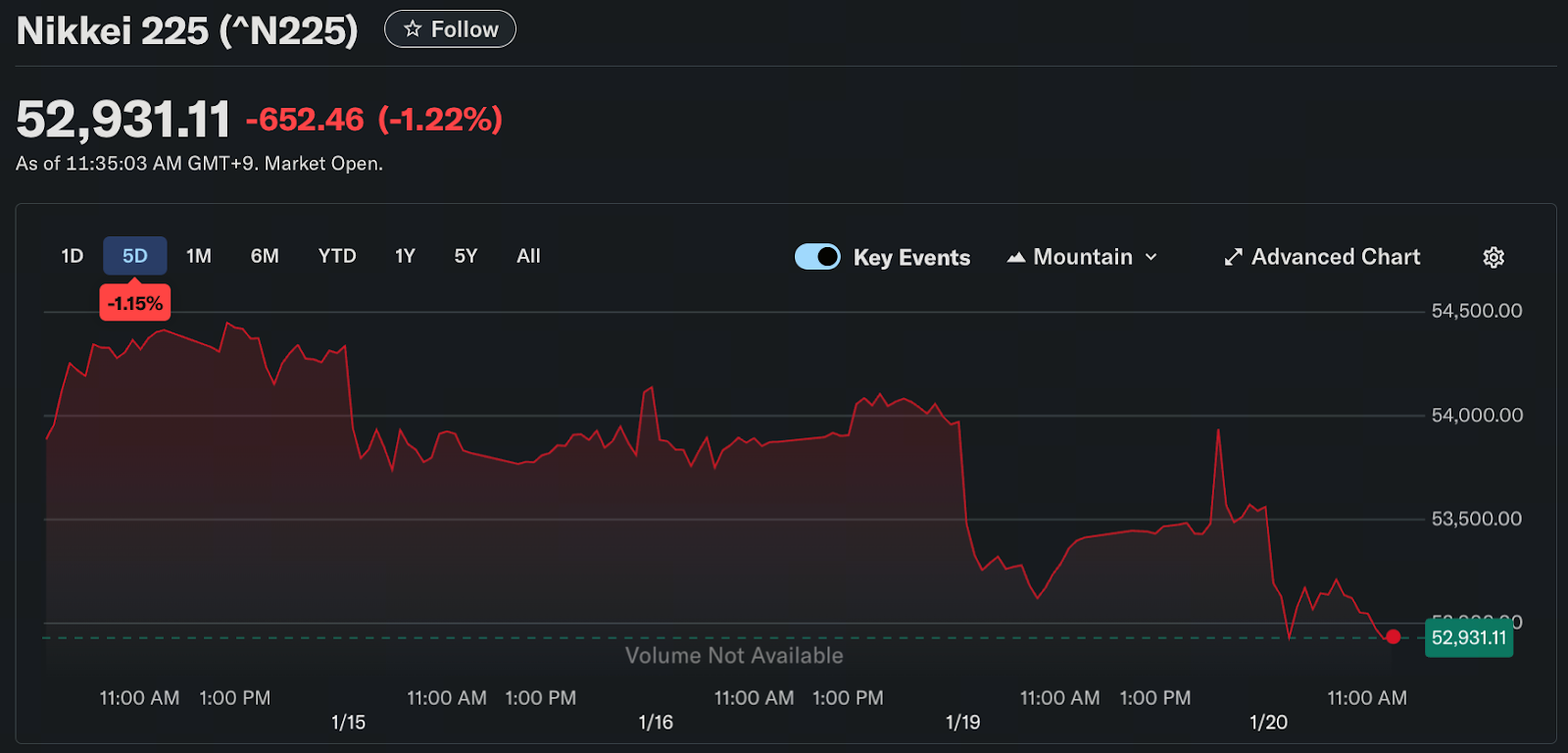
Source: https://finance.yahoo.com/quote/%5EN225/
Japanese equities have also delivered impressive results, with the Nikkei 225 Index reaching an all-time high and further fueling risk-on sentiment across Asian markets.
These market trends reflect not only internal supply and demand dynamics but also global macroeconomic and liquidity conditions. These are critical factors for understanding the current market landscape.
Wall Street Rally Drives Global Risk Assets
Before Asian markets opened, major Wall Street indices posted strong gains, with both the S&P 500 and Dow Jones hitting record highs. Despite ongoing developments in Federal Reserve policy, inflation data, and shifting expectations for interest rates, the market remains broadly inclined toward risk assets.
In an environment of macroeconomic uncertainty, equity rallies often signal capital flowing into risk assets—especially when investors anticipate policy support, technology sector growth, and improved corporate earnings.
This appetite for risk has spilled over to the crypto market, providing upward support for assets like Bitcoin.
Asian Market Rebound: Nikkei Hits New High, Yen Weakens
Beyond the influence of U.S. markets, regional factors have also driven the Nikkei’s performance. Expectations for Japanese economic stimulus, potential fiscal expansion, and speculation about early elections have all contributed to the index’s rally.
Meanwhile, the yen has weakened (trading near the 158 level against the dollar), boosting profit expectations for Japanese exporters and further supporting equity gains. Investors typically view yen depreciation as a tailwind for Japanese export-oriented assets, which also shapes overall market sentiment.
Bitcoin Market Dynamics Analysis
Key drivers of Bitcoin’s recent price consolidation include:
- Macro liquidity and interest rate expectations: Shifting expectations for future rate cuts may impact Bitcoin’s risk pricing.
- Dollar trends and global risk sentiment: A weaker dollar tends to drive investors toward risk assets, while dollar strength can increase price volatility.
- Policy and regulatory progress: As ETF and regulatory frameworks mature, Bitcoin is gaining broader institutional attention.
Currently, Bitcoin is consolidating near $92,000, reflecting ongoing trading and profit-taking at elevated levels. However, the medium- and long-term trend remains supported by multiple factors.
Macroeconomic Factors Impacting Asset Prices
Global economic trends play a pivotal role in asset pricing. For example, the upcoming U.S. Consumer Price Index (CPI) data will influence expectations for interest rate policy and, in turn, affect global risk asset performance.
Additionally, monetary policy decisions by the Bank of Japan and other central banks will continue to shape the relationships among the yen, equities, and crypto assets.
Risk Warnings and Outlook
While current market sentiment is broadly positive, investors should remain mindful of the following risks:
- Uncertainty regarding interest rate trends and inflation data
- A strong dollar may weigh on risk assets
- The inherent volatility of the crypto market can lead to rapid reactions to macro events
Over the long term, if risk appetite persists, risk assets—including equities and Bitcoin—may continue to rise. However, if macro fundamentals deteriorate, a market correction is possible.
Summary and Key Observations
In summary, Bitcoin’s consolidation around $92,000 highlights elevated market positioning, while the Nikkei’s record high underscores increasing global risk appetite. Investors should closely monitor macroeconomic data, central bank policy signals, and dollar trends to gauge future market direction.
Related Articles

AI-Native Settlement Layers: How United Stables Is Building the Next Financial Rail

The ve(3,3) Flywheel Explained: How AERO Tokenomics Powers Aerodrome’s DeFi Economy

How Does PAXG Work? In-Depth Overview of the Physical Gold Tokenization Mechanism

Aerodrome Tokenomics: How ve(3,3) Powers Base's Most Profitable DEX

How is the price of PAXG determined? Pegging mechanism, trading depth, and influencing factors
