Behind ClawdBot's meteoric rise: Founder Peter Peter and his second life
Recently, ClawdBot, a personal AI assistant, has taken social media by storm. Open-source, locally deployable, and highly personalized, it’s sparked a frenzy among developers and even unexpectedly boosted sales of the Apple Mac mini. Yet, the spotlight is just as much on its creator—serial entrepreneur Peter Steinberger.
Steinberger, a veteran developer from Vienna, Austria, previously founded a successful B2B software company and achieved financial independence, only to experience a profound sense of emptiness after retiring. Driven by a renewed passion for AI and deep insights into the nature of entrepreneurship, he’s now back at the center of the tech wave, with ClawdBot as his new starting point.
13 Years of PSPDFKit
Peter Steinberger’s first startup journey revolved around PSPDFKit, a company specializing in document processing SDKs that deliver PDF collaboration, signing, and annotation tools to developers worldwide.
In 2011, Peter received a job offer in San Francisco at a WWDC party. As a freelancer, the opportunity was irresistible—living in San Francisco, immersing in startup culture, and working with industry elites. He accepted and began the wait for his work visa.
The wait dragged on for more than six months.
During this period, Peter halted all freelance work and suddenly had ample free time. “My mind was freed from all freelance projects, so I naturally filled the time with other pursuits.”
Inspired by friends, he decided to try building paid components. That’s how PSPDFKit was born.
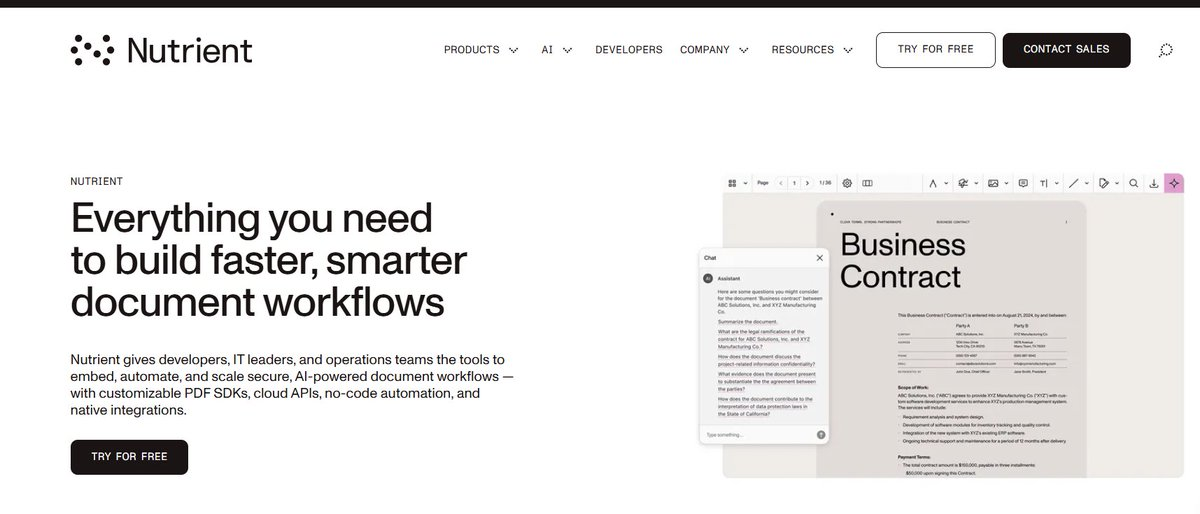
Nutrient (formerly PSPDFKit)
PSPDFKit started as a side experiment, but it quickly attracted paying developers. Even before his visa was approved, the project had become a viable business—“earning more than I could have made working full time.”
Despite this, Peter still chose to move to San Francisco for the job. “Everything was geared toward San Francisco, so I accepted the offer. Now it was all about the experience. I truly believed I could do it.”
But reality soon set in. Managing a 40+ hour job while running a full-time business left him exhausted. “After burning myself out for a while,” he had to make a choice.
In April 2012, after attending NSConference, Peter made up his mind. “So many amazing people genuinely loved what they did—after experiencing that, you can never go back to the old nine-to-seven grind. And seeing users truly enjoy your product is the best feeling in the world.”
His time in San Francisco helped him realize his true calling. “It helped me recognize what I really wanted to do.” So he returned to Vienna and made PSPDFKit his full-time focus. What began as a “passive” project due to visa delays turned into a 13-year entrepreneurial journey.
PSPDFKit grew from a solo project into a global remote team of 60–70 people, serving top companies like Dropbox, DocuSign, SAP, IBM, and Volkswagen. Remarkably, the company remained fully bootstrapped for 13 years, never taking outside funding.
Peter has admitted in his blog that he invested immense time and energy to build the best product possible. His relentless pursuit of quality and deep understanding of the B2B market made PSPDFKit a benchmark for industry success.
In October 2021, Insight Partners invested $116 million (around €100 million) in PSPDFKit. This was the company’s first external funding and marked the perfect close to Peter’s first entrepreneurial chapter. He and co-founder Martin Schürrer officially stepped down from full-time management.
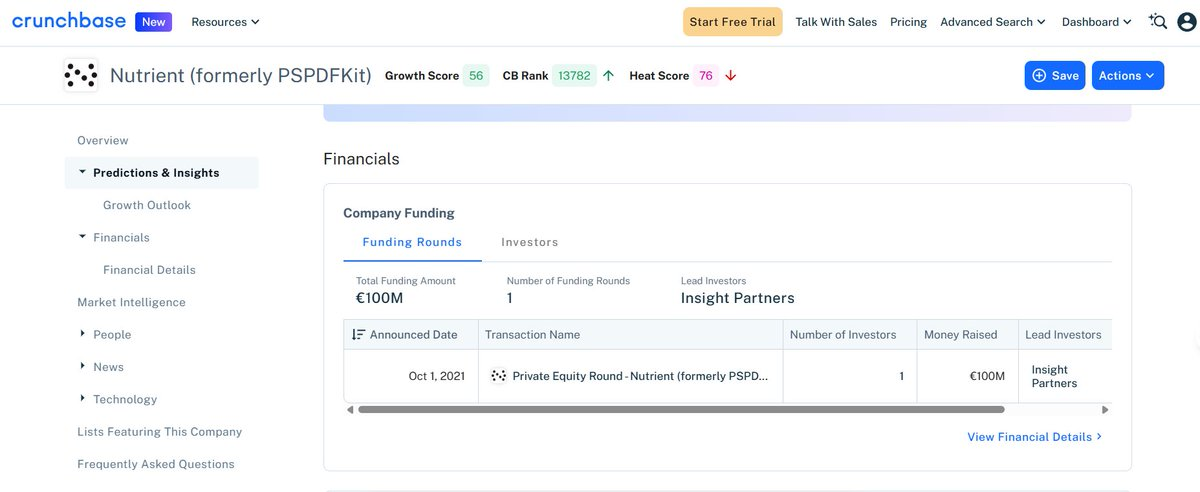
Behind this impressive ending were 13 years of working nearly every weekend. Peter has openly acknowledged in public talks that this journey ultimately led to severe burnout.
Emptiness and Awakening After Retirement
After selling PSPDFKit, Peter entered a so-called “retirement.”
For a tech entrepreneur who achieved financial freedom early, this should have been the ideal state. He should have had plenty of time to recharge and make up for the life he missed over the past 13 years.
Yet, this freedom brought an unexpected sense of emptiness.
In his blog “Rediscovering Passion,” he wrote: “After selling my shares in PSPDFKit, I felt completely broken. I had poured 200% of my time, energy, and heart into the company—it was my identity. When it was gone, there wasn’t much left. I’ve heard it’s common for founders to fall into a slump and take a year off after leaving their company. The typical lifecycle of a company is only 4–5 years. So, looking back at those 13 years, I realize I just needed more time to find new goals.”
Parties, therapy, moving to new countries, chasing various pleasures—he tried many ways to fill the void. Eventually, he realized: “You can’t find happiness by moving. You can’t find purpose; you have to create it.”
This awakening led him back to what he loved most—creating and building.
In early 2024, the AI wave was just starting, but at the time, AI tools were far from ideal—simple math problems were wrong, logic was flawed, and generated code was buggy. Yet, as technology advanced rapidly, Peter found AI shifting from “not very useful” to “genuinely interesting.”
A new technological paradigm was emerging, and he decided not to sit on the sidelines.
Peter wrote on his homepage: “Came back from retirement to mess with AI.” This understated remark signaled the start of his second act.
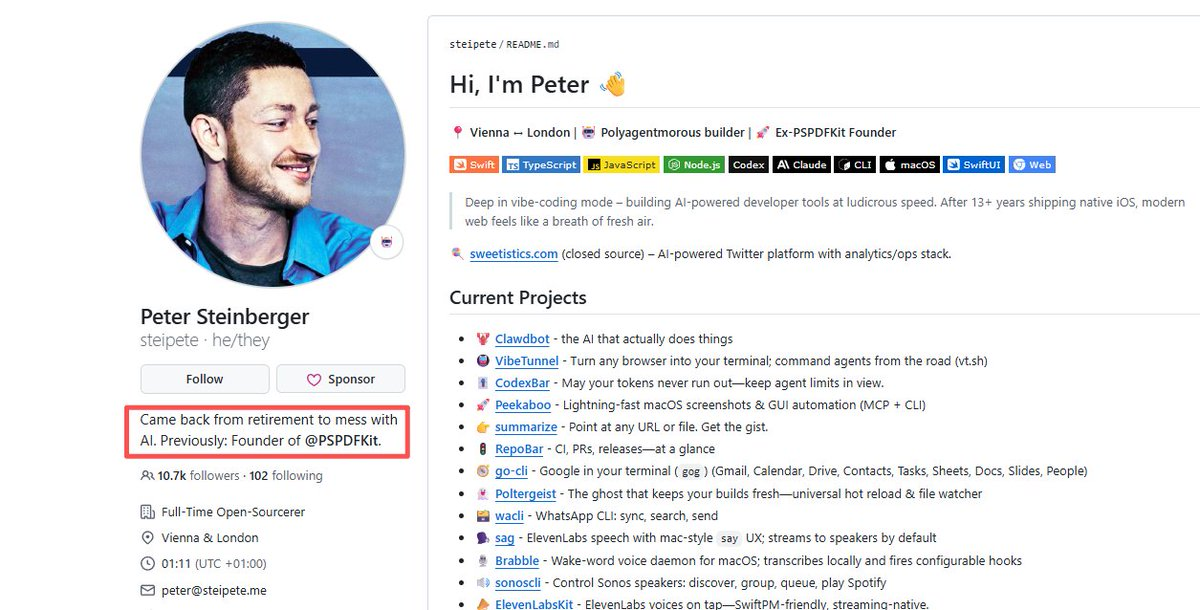
Peter Steinberger GitHub Homepage
ClawdBot: A Hit Built in an Hour
ClawdBot originated from Peter’s own needs, much like PSPDFKit did 13 years earlier.
In April 2024, he began conceptualizing a “life assistant” project, but AI models at the time weren’t capable enough to support his vision. He shelved the idea for a while, thinking big companies would surely build such products, so there was little point in doing it himself.
By November, he realized a key issue: big companies hadn’t built AI assistants that truly met individual needs.
AI tools on the market were either too limited, had poor data privacy, or were too complex to use.
So, he decided to build it himself.
Amazingly, it took Peter just one hour to go from idea to prototype.
In an “Open Source Friday” interview, he recalled: “That month, I spent an hour cobbling together some very rough code. It sent messages on WhatsApp, forwarded them to Claude Code, and then returned the results. Basically, it just glued a few things together. Honestly, it wasn’t hard, but it worked surprisingly well.”
Initially called “V Relay,” the project was essentially a WhatsApp relay. But soon, it showed a “spontaneous adaptability” that even surprised Peter.
Once, while working at a hotel in Marrakesh, Morocco, Peter joked to his AI assistant: “The door lock at my Marrakesh hotel isn’t very reliable. Hope you don’t get stolen, since you’re running on my MacBook Pro.”
The AI’s response stunned him: “No problem, I’m your agent.” Then, the assistant detected the network, found it could connect to Peter’s computer in London via Tailscale, and migrated itself there.
Peter later recalled: “Maybe it’s not AGI yet, but at that moment I realized the ‘spontaneous adaptability’ of these things had exceeded my expectations. That’s how Skynet begins.”
The project’s evolution was also full of serendipity. Later, while developing Claude features, a developer submitted a Discord PR request. Peter hesitated: “I wondered if I should add Discord support, since it was no longer limited to WhatsApp.” He eventually accepted the PR, but the project needed a new name.
What to call it? Peter simply asked Claude for suggestions. Claude proposed “ClawdBot”—a name that referenced itself and evoked the image of a “claw.” And so, ClawdBot was born.
The name also hints at the project’s core philosophy: giving AI a pair of hands to become a true personal assistant running on your own device.
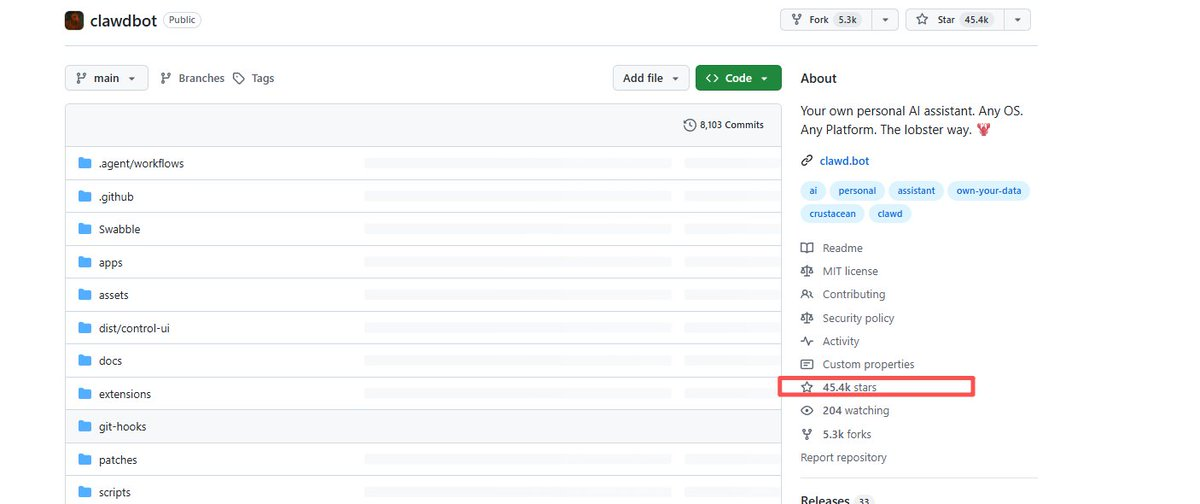
Today, ClawdBot has exploded in communities worldwide. Its GitHub stars have surpassed 40,000. Even more dramatically, the project has boosted sales of the Apple Mac mini, as many users choose it as the device to run ClawdBot. Its affordability, compatibility, low power consumption, quiet operation, and small footprint have made it popular—even Google DeepMind product manager Logan Kilpatrick couldn’t resist buying one.
But this viral success wasn’t easy.
Peter admitted he had no idea how to communicate the product’s value to the public.
“Interestingly, when I showed it to friends last November, they all exclaimed ‘That’s so cool.’ But when I posted about it on Twitter, the response was flat.” Peter recalled, “It wasn’t until December, when I demoed it in person, that friends would say ‘I need this.’ Yet I realized I had no idea how to explain its appeal to more people.”
This “great in-person demo, tough online promotion” dilemma highlights ClawdBot’s uniqueness—its value can only be appreciated through direct experience. By January, as the community spread the word organically, it ignited a collective resonance among developers.
Peter describes himself as “stopped reading code, started watching code flow by.” While it sounds like a joke, it perfectly captures the fundamental shift in developers’ roles in the AI era. ClawdBot’s success shows that Peter Steinberger, after a period of quiet, has not only rediscovered his “spark,” but also returned to the forefront of technology with a more forward-looking and philosophical approach. He’s transformed from a traditional B2B software entrepreneur into a futurist who embraces AI and pursues highly personalized experiences.
From PSPDFKit to ClawdBot, both ventures are huge successes. But more importantly, both times, he solved real problems he faced and then shared the solutions with the world.
In recent interviews, Peter repeatedly emphasized ClawdBot’s mission: empowering everyone to control their own data, rather than handing it over to big companies.
This kind of technological idealism was less evident in his first startup. PSPDFKit was more like a traditional B2B software company—excellent, but fundamentally built for commercial success.
Now, Peter has shed the commercial burden and returned to his technical roots. ClawdBot is fully open-source, forever free, and supports local models. These choices may not be “smart” business moves, but they’ve earned widespread respect in the developer community.
Build tools to solve your own problems, then share them with the world—that’s what open source is all about.
A Second Life, Still Unfolding
As of this writing, ClawdBot’s GitHub stars have surpassed 40,000.
Unlike the 13 years of struggle in his first venture, this time he’s at ease—no KPI pressure, no external demands, just the pure joy of creation.
In an interview, Peter shared a moment that deeply moved him. A user who used to feel anxious about contacting customer support now relies on his smart assistant to handle it.
Peter recalled: “I never imagined I could solve problems this way. That moment, I felt incredibly humble, even a bit overwhelmed: wow, just because that initial idea came from me, we really changed something and genuinely improved someone’s life. Making someone’s life better—that feels really good.”
Peter Steinberger’s second entrepreneurial journey continues. But one thing is clear: in an era where AI is reshaping the world, those who dare to create and embrace the future will never be left behind.
—END—
Statement:
- This article is republished from [kricspan], copyright belongs to the original author [ 一只鱼 ]. If you have any objections to this republication, please contact the Gate Learn team, and we will handle it promptly according to relevant procedures.
- Disclaimer: The views and opinions expressed in this article are solely those of the author and do not constitute investment advice.
- Other language versions of this article are translated by the Gate Learn team. Unless Gate is mentioned, the translated article may not be copied, distributed, or plagiarized.
Related Articles

The Future of Cross-Chain Bridges: Full-Chain Interoperability Becomes Inevitable, Liquidity Bridges Will Decline

Solana Need L2s And Appchains?

Sui: How are users leveraging its speed, security, & scalability?

Navigating the Zero Knowledge Landscape

What is Tronscan and How Can You Use it in 2025?
