As X Bans InfoFi Reward Apps, Kaito Phases Out Yaps, Triggering a 20% Token Drop
As social media platform X tightens its policies on InfoFi applications, crypto platform Kaito is undergoing a significant transformation. In mid-January, X announced updates to its developer API policy, prohibiting all applications that reward users for posting or interacting—known as InfoFi reward apps—in an effort to curb low-quality, AI-generated content and spam.
This policy directly challenges the InfoFi business model. InfoFi (Information Finance) uses decentralized incentive mechanisms to turn user posts and interactions into economic rewards on social platforms. Kaito’s “Yaps” is a classic example, encouraging users to create content through points or token rewards.
Kaito Retires Yaps, Token Price Plummets
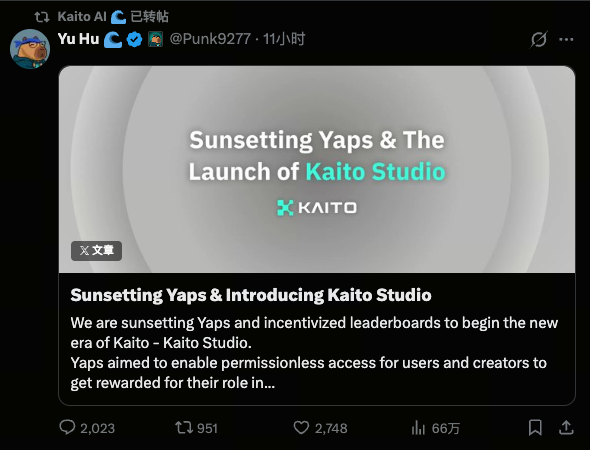
Source: https://x.com/Punk9277/status/2011837292907020605
After X’s policy change, Kaito announced it would gradually retire the “Yaps” reward mechanism and shift its product strategy. Following the announcement, **Kaito’s native token KAITO dropped by roughly 15–17% in the short term.
Market data shows KAITO’s price fell from around $0.70 to approximately $0.53—a nearly 20% decline—prompting a swift turn toward caution in market sentiment.
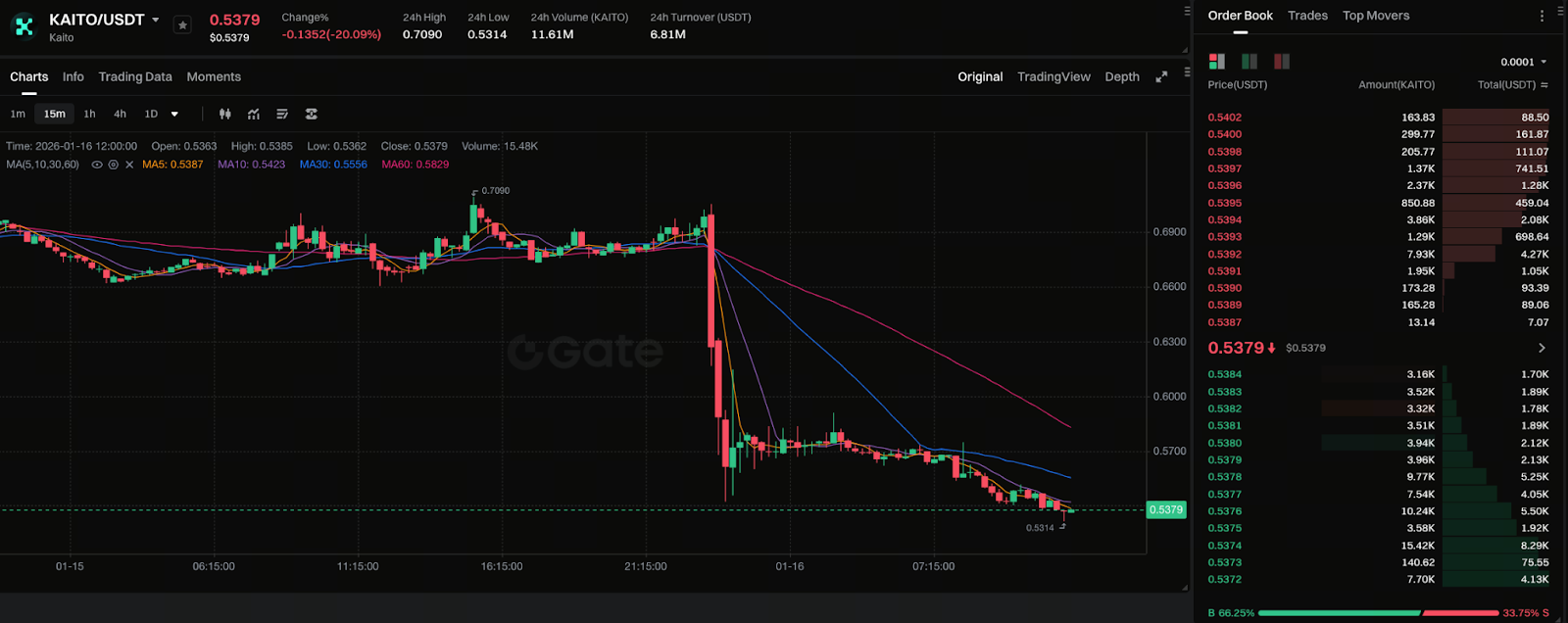
Source: https://www.gate.com/trade/KAITO_USDT
This price drop not only reflects skepticism about the InfoFi reward model but also underscores investor concerns regarding decentralized projects reliant on centralized platform policies. After the announcement, other InfoFi-related tokens such as Cookie DAO (COOKIE) and LOUD also declined to varying degrees, tightening overall market sentiment.
Regulatory Pressure and Risks in the InfoFi Model
With the surge in AI-generated content and deteriorating user experience, X’s increased oversight is seen as a step toward normalizing platform governance. Policymakers argue that incentives from the InfoFi model do not always foster high-quality, genuine interactions and may instead drive automated engagement and AI-generated spam.
This regulatory environment exposes key risks in the InfoFi model:
- Dependence on centralized platform rules
- Susceptibility to automation and bot exploitation
- Extreme market sensitivity to incentive structures
Kaito’s Strategic Shift and Future Outlook
Faced with regulatory headwinds and market turbulence, Kaito announced it would move away from exclusive reliance on “Yaps” and refocus on the more structured Kaito Studio. According to the company, this new approach emphasizes collaboration with brands and content creators, aligning more closely with traditional marketing platforms rather than a purely decentralized incentive system.
Kaito’s founder also indicated plans to expand to additional platforms—including YouTube and TikTok—and to more mature content ecosystems, moving beyond the single model of rewarding user posts.
How Investors Can Navigate This Shift
For current holders and prospective investors, the lessons from Kaito’s recent developments are clear:
- Be cautious of projects heavily dependent on a single platform’s policies
- Monitor changes in project fundamentals and strategic direction
- Evaluate long-term potential alongside short-term volatility
- Stay attuned to regulatory developments
In today’s environment, InfoFi remains an emerging model with room for innovation. However, projects that overly depend on centralized ecosystems and incentive rewards must adopt more resilient long-term strategies to manage evolving rules and shifting market expectations.
Related Articles

AI-Native Settlement Layers: How United Stables Is Building the Next Financial Rail

The ve(3,3) Flywheel Explained: How AERO Tokenomics Powers Aerodrome’s DeFi Economy

How Does PAXG Work? In-Depth Overview of the Physical Gold Tokenization Mechanism

Aerodrome Tokenomics: How ve(3,3) Powers Base's Most Profitable DEX

How is the price of PAXG determined? Pegging mechanism, trading depth, and influencing factors
